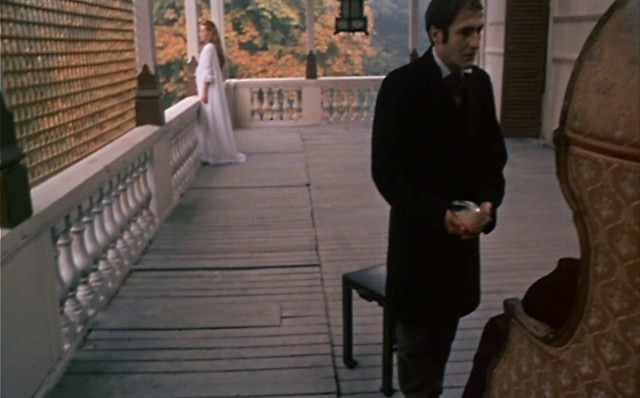
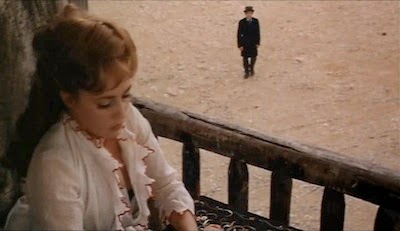
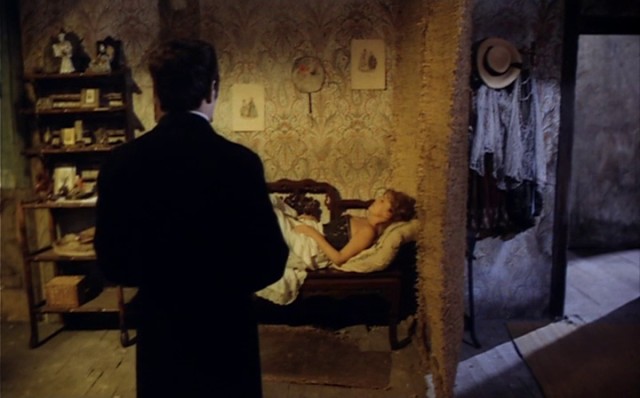
Written for Criterion‘s DVD and Blu-Ray of The Immortal Story, released in 2016. — J.R.
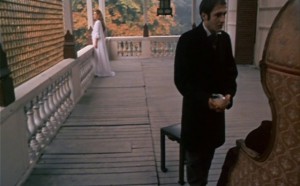
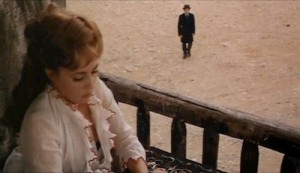
Where the story-teller is loyal, eternally and unswervingly loyal to the story, there, in the end, silence will speak. Where the story has been betrayed, silence is but emptiness. But we, the faithful, when we have spoken our last word, will hear the voice of silence…
— Grandmother in Isak Dinesen’s “The Blank Page” (Last Tales)
Virginie had a taste for patterns; one of the things for which she despised the English was that to her mind they had no pattern in their lives. She frowned a little, but let Elishama go on. “Only,” he went on, “sometimes the lines of a pattern will run the other way of what you expect. As in a looking-glass.”
“As in a looking-glass,” she repeated slowly.
“Yes,” he said. “But for all that it is still a pattern.”
— Dinesen’s “The Immortal Story” (Anecdotes of Destiny)
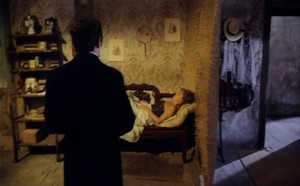
Aside from William Shakespeare, no writer excited Orson Welles’ imagination more than Isak Dinesen (1885-1962) — a Danish baroness who wrote mainly in English — especially when it came to the films he wanted to make. Read more
From American Film (November 1981). — J.R.
Old Wave Saved from Drowning
By Sandy Flitterman and Jonathan Rosenbaum
Think of French cinema, and the New Wave springs immediately to mind. This association is hardly accidental. History, it is often said, gets written by the victors. And the victories recounted in the standard film histories — whether they are critical successes or box-office triumphs — are inevitably at the expense of other movies, individuals, or social trends that presumably failed to scale the same heights.
But the New Wave, like other movements in film history, is significant not only for what it gave us — films like Truffaut’s The 400 Blows, Godard’s Breathless, and Resnais’ Hiroshima, mon amour — but also for what it took away, for the films it rebelled against, repudiated, buried in the dustbin of history. Now a fascinating new program of forty-six subtitled French films made between 1930 and 1960 helps sketch out the rudiments of just such an alternative history.
This group of films, appropriately entitled “Rediscovering French Film,” has been put together by New York’s Museum of Modern Art in cooperation with the French government and, after premiering in Manhattan this month, is scheduled to travel next year to Washington, Berkeley, Los Angeles, Houston, and Chicago. Read more