“We can bet that this film will be a flop,” blurbed Jean Eustache about his fellow post-New-Wave underachiever and pal Luc Moullet’s Anatomy of a Relationship (1975), an early exercise in self-scrutiny coauthored by Moullet’s partner Antoinetta Pizzorno. “That’s the best for me: I’ll plunder it more easily.” In comparable fashion, a 1964 commercial flop made by one of the masters of both Eustache and Moullet, Jean-Luc Godard — who incidentally had helped to launch the careers of both of these disciples — was successfully plundered by Jim Jarmusch twenty years later in Stranger Than Paradise. More specifically, Jarmusch appropriated a black-on-white principle exploited by Godard mostly in interiors to depict a deadbeat trio of two male lowlifes secretly smitten by a foreign female while planning their inept capers in drab surroundings — Claude Brasseur, Sami Frey, and Anna Karina (a Dane in France) in Band of Outsiders; John Lurie, Richard Edson, and Eszter Balint (a Hungarian in the U.S.) in Stranger Than Paradise. The white void seen here by Jarmusch’s trio in a suburban Ohio snowscape, subsequently replicated by a white void in a suburban Florida seascape, is mostly physical — unlike the metaphysical void faced by Godard’s trio in a Paris suburb, who have only movie clichés to fill their plans and imaginations.
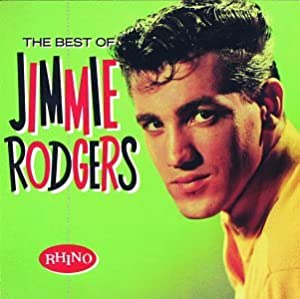
For most of my life, I’ve been both haunted and baffled by a line in a popular song of the 50s (https://www.youtube.com/watch?v=-4X2RVm8R4Q), one of those just-plain-folks outbursts in which the male vocalist, nostalgically and wistfully reflecting on his wife in particular and his life in general, notes at one point that “our children numbered just about four”. Apart from the obvious need of a lyricist to fill out a line, I’ve been wondering for decades now what this could possibly mean. Virtually all the plausible explanations have dark implications: That the narrator never learned how to count up to four with any confidence; that he used to know how until either senility robbed him of that talent or Alzheimer’s gutted his memory; that he and his beloved actually birthed five children, two of whom were only half formed when they emerged (leading to his uncertainty about the precise number). All the possible answers to this query are decidedly grim, yet the song itself is indefatigably cheerful. [7-8-2020] Read more
An exchange done via email for MUBI in November 2020. — J.R.
Jonathan Rosenbaum: What were the personal (or autobiographical) aspects of your film Farpões Baldios (Barbs, Wastelands), and what were the less personal aspects?
Marta Mateus: In any art, everything’s autobiographical, isn’t it? This film is based, first, on the experience and history of the people I grew up with, on the stories they shared with me since my childhood. These stories are in their hands, their gazes, in what binds us together, perhaps also in our blood and in our dreams. Landscapes also participate in it: it’s the source, the roots, a matter of fertility, hope, grief, shadow, solitude, birth, rebirth, joy, struggle. Therefore, there is also collective experience, historical memory and the landscape has its marked wounds, just like us. Thousands of years of exploitation, of nature and of man by man. There was a very clear route to follow, for us all, but no need to be spoken. Filming was a form of communion, in search of our other selves and each other–maybe a ritual, not “recreation” or narration but action. It was a very long process but made in a state of emergency; we only became aware of some things afterwards. Read more
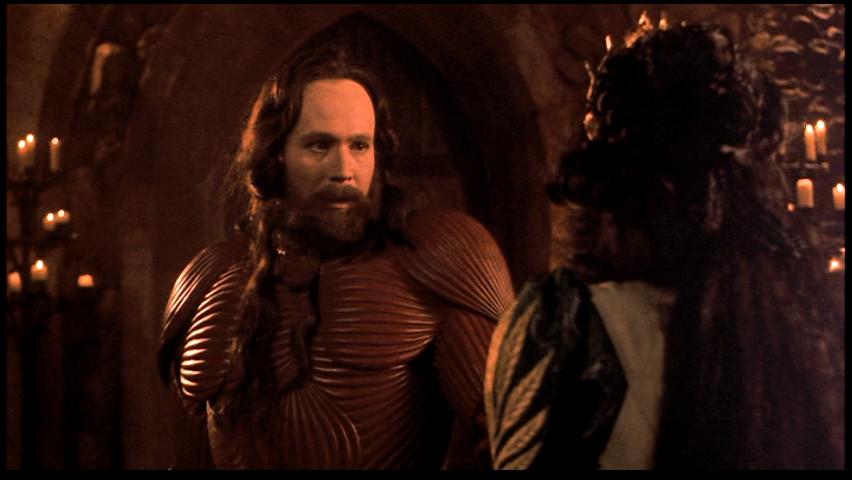
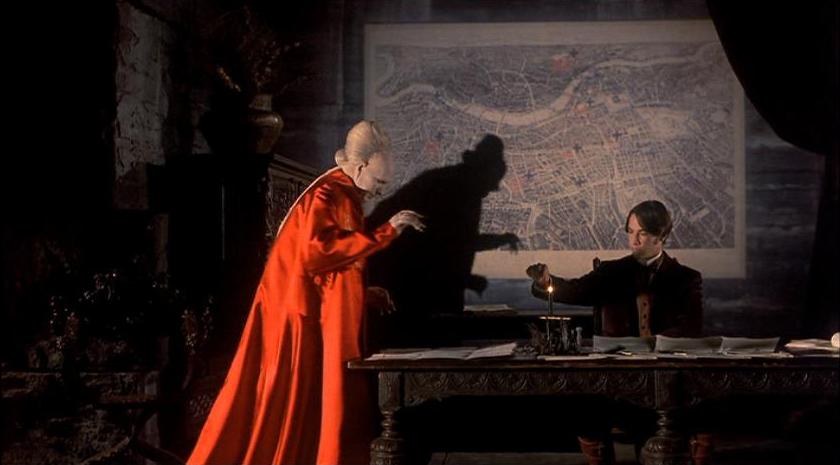
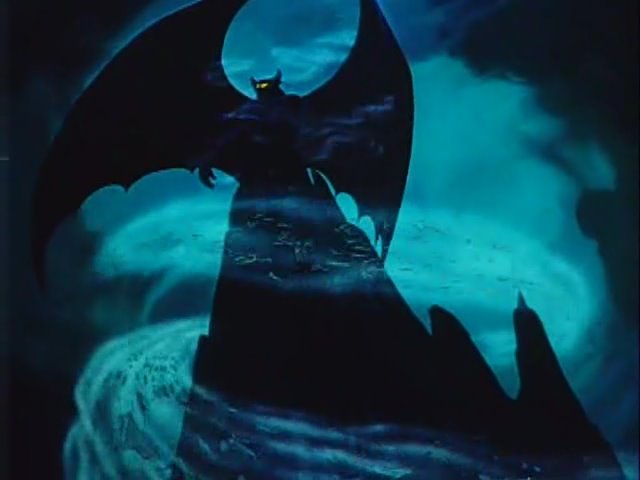
A good reason for including the name of the original author in the title of Francis Ford Coppola’s ambitious version of the famous vampire story is that most previous film versions have been based not on the 1897 novel but on Hamilton Deane and John Balderston’s 1927 stage adaptation. This version, written by coproducer James V. Hart, brings back the multiple narrators of the novel, leading to a somewhat dispersed and overcrowded story line that remains fascinating and often affecting thanks to all its visual and conceptual energy. (Some of this derives from the filmmakers’ musings about what was going on culturally in Europe at the turn of the century, including the decadent art of people like Beardsley, Klimt, and Huysmans and the birth of both movies and psychoanalysis.) Still the overreacher, Coppola suffers at times from a surfeit of ideas (rather than a dearth, like most of his colleagues); there are times when he squanders his effects (as he did in Rumble Fish), or finds some of them in unlikely places. (Murnau’s Faust has apparently exerted more of an influence than his Nosferatu, for instance.) But this is still the best vampire movie in ages — a visual feast with ideas, more disturbing than scary, though a rich experience in many other respects. Read more
From the Chicago Reader, June 18, 1993. (This is also reprinted in my 1997 collection Movies as Politics.) — J.R.
Who is correct? Are we becoming better off or worse off? Where are we heading? It depends on whom you mean by “we.” — Robert B. Reich, The Work of Nations
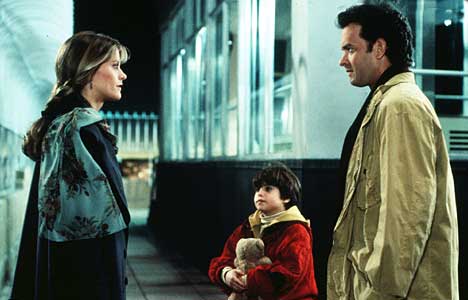
“Men never get this movie,” a woman says to her friend in Nora Ephron’s Sleepless in Seattle, referring to Leo McCarey’s 1957 An Affair to Remember, with Cary Grant and Deborah Kerr, which is showing on TV. In fact, we’re told this again and again. Another woman tearfully describes the last scene of An Affair to Remember to the hero, who remarks, “That’s a chick’s movie.” To clinch the point, female characters in this romantic comedy are repeatedly shown watching this movie and sobbing (as if the TV stations in Seattle and Baltimore, where most of the action takes place, showed little else), and men are never seen watching it at all. And just in case we’re left with any doubts about the matter, the review of Sleepless in Seattle in Variety assures us that An Affair to Remember‘s “squishy romantic elements appeal to women more than men.” Read more
This is the second and final part of an article published in the January-February 1975 Film Comment. — J.R.
Towards an aesthetic evaluation. For critics of the Thirties and the early Forties, Disney was an essential figure in the arts. Eisenstein declared him to be the most interesting filmmaker in America, and over the decade that followed, Erwin Panofsky praised the early cartoons and “certain sequences” in the later ones as “a chemically pure distillation of cinematic possibilities”; Gilbert Seldes offered many sympathetic critiques; and even E.M. Forster published a brief tribute to Mickey Mouse. Lewis Jacobs’ assessment of Disney in The Rise of the American Film is certainly more likely to raise eyebrows today than it was in 1939:
“In the realm of films that combine sight, sound, and color Disney is still unsurpassed. The wise heir of forty years of film tradition, he consummates the cinematic contributions of Méliès, Porter, Griffith, and the Europeans [sic]. He has done more with the film medium since it added sound and color than any other director, creating a form that is of great and vital consequence not only for what it is but for what it portends. Read more
From Film Comment (January-February 1975). Although this is obviously dated in many respects, and most likely contains some errors, I’ve made only a few revisions while transcribing it. Given the length, I’ve decided to post this in two parts, with the second part to be posted later today.
This is a much-expanded entry written originally for Richard Roud’s two-volume Cinema: A Critical Dictionary (1980). It was mainly researched while I was still living in Paris in the mid-1970s, and I can recall having had lots of difficulties attending various kids-only screenings of Disney cartoon features, and convincing various theater managers that my interests were strictly scholarly and I wasn’t a dirty old man. — J.R.
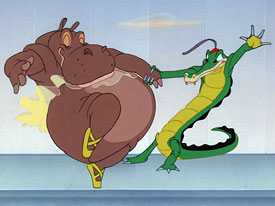
In some respects, there may be no cultural figure in the West as potentially controversial as Walt Disney, even though love and hatred for what Disney represents are frequently felt by the same people. At the same time, there is certainly no other filmmaker whose aesthetic and ideological preoccupations have permeated so much of modern life that, paradoxically, his omnipresence verges on invisibility. Even beyond the grave, continuing manifestations of his vision have become some integral to American society that they are commonly regarded as natural and relatively unquestioned parts of the landscape, like a salt shaker or a babysitter or a place to go on vacation. Read more
This essay was commissioned in fall 2018 for an exhibition devoted to Michelangelo Antonioni in Tehran curated by Sami Astan. — J.R.
[Antonioni’s] trilogy was concerned with differing aspects of love as the medium of hope in our world.This film [Red Desert] is stripped to naked essence — hope or nonhope unadorned: the prospect of human life in the midst of whirling changes. We live,as we know, in the age of the swiftest transition inhistory, and all indications are that the speed ofchange will increase: in everything from householdappliances to concepts in philosophy, the whole architecture of thought. Antonioni seems to be saying, without effervescent cheeriness, that what was valuable can be preserved or can be transmuted to a new viability: that the future may contain new, at present inconceivable, values. — Stanley Kauffmann, The New Republic, March 23, 1963
There seems little doubt that Red Desert (1964) represented a major turning point in both the art and the career of Michelangelo Antonioni, and not only because it was his first film in color. Read more
An unfortunate danger of the journalistic mission to make radical art accessible through simplification is the possible removal of what makes it radical. Malcolm Cowley probably did more for William Faulkner’s reputation (with The Portable Faulkner in 1946) than anyone else did, but the occasional distortions this entailed also had some lasting and lamentable effects.
I haven’t yet read Gerald Howard’s The Insider: Malcolm Cowley and the Triumph of American Literature, which just arrived in the mail, but I’m astonished to discover that the novel I regard as Faulkner’s greatest, Light in August (1932 ) — in
part because it has the most to say about Southern racism — doesn’t appear even once in The Insider’s index. Back in my graduate school days in the mid-1960s, I discovered that Cowley’s excerpting of the murder and castration of Joe Christmas in The Portable Faulkner entailed identifying Christmas as a “negro” [sic], which Faulkner never does, because a central aspect of Christmas’s tragedy is that neither he nor the reader could ever know his racial identity, even though his murder and castration is motivated by a supposition that Cowley opted to share for the sake of journalistic “clarity” (i.e. simplification). This is one among many changes and editorial decisions Cowley submitted for Faulkner’s approval in a single letter, and Faulkner’s tacit acceptance was clearly an oversight, as evidenced by his subsequent statements about Joe Christmas to college students in Virginia.Read more
Arguably, one of the more questionable and limited practices of film historians is the classifying of films and filmmakers according to a certain form of tribalism known as nationality. The problem with this admittedly convenient and obvious method of cataloging is that important elements–perhaps even essential ones–that elude or defy tribalism may get lost in the shuffle.
For starters, many of our greatest filmmakers – Chaplin, Dreyer, Hitchcock, Jancsó, Murnau, Renoir, Sirk, Stroheim, Welles — can’t be tied to a single country or tribe without being drastically oversimplified in the process. And even though most of what we call neorealism is Italian, this tends to overlook the fact that comparable examples can be found elsewhere in the world, not only in the 20th century but in the new millennium as well.
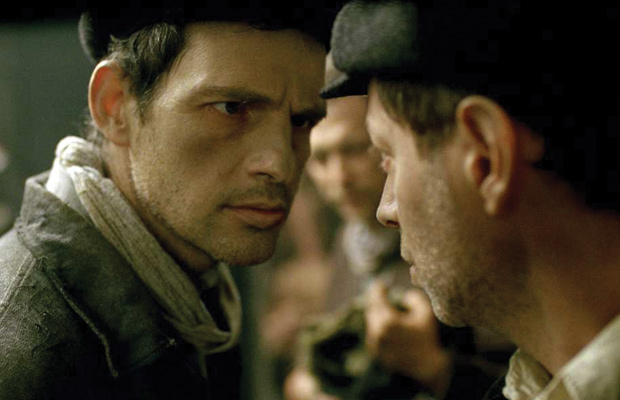
In the two short films that Nemes Jeles László made for the Inforg studio in 2007 and 2009, Try a Little Patience and The Counterpart, one can already find not only the same camera techniques, themes, and even emotions that will characterize his 2015 masterpiece Son of Saul — such as a mise en scène constructed in relation to close-ups, the experiences of a war prisoner, and a male adult’s feeling of tenderness towards a boy — but also, even more fundamentally, a sense of universality that goes beyond nationalism and tribalism. Read more
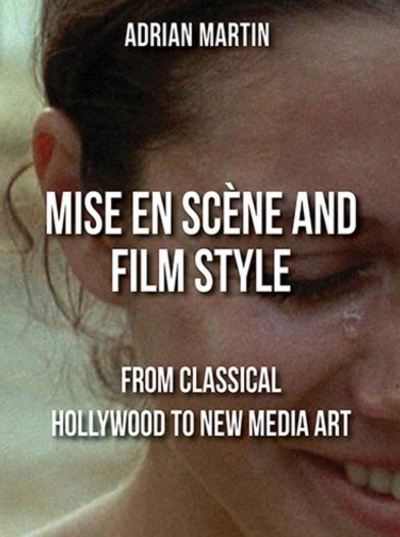
It’s a genuine pity that this remarkable new book — a kind of summation and extension of Adrian Martin’s work in film analysis and the history of film criticism in Australia, France, Spain, the U.K., and the U.S. over the past two decades — is commercially available only at the whopping price of $80.75 on Amazon — or $76, if you’re willing to settle for a Kindle edition. As a longtime friend, colleague, and collaborator of Martin’s, I was fortunate enough to receive a free inscribed copy, but most of the rest of you will have to either shell out a fortune or wait for a softcover edition. All I can do now, really, having received this book only yesterday, is signal just a few of its many riches. Girish Shambu, Adrian’s irreplaceable coeditor at LOLA, has already posted a helpful summary of the book’s “four [interests] that animate the work” on his web site, so the most I can hope to do here is cite just a few treasured and brilliant passages that already have either sent me back to the films and texts being discussed or extended my current (re)reading and (re)viewing lists:
G. Cabrera Infante writing in 1957 about Tea and Sympathy (Vincente Minnelli, 1956), pp, 6-7. Read more
From the Chicago Reader (May 24, 1991). What prompted me to repost my thoughts about Andrew Dice Clay in 2017 was, oddly enough, the Summer issue of the French quarterly magazine Trafic, which arrived in yesterday’s mail and where the lead article, about our Madman-in-Chief, cites J. Hoberman’s excellent analysis of Trump, which alludes pertinently to Clay. — J.R.
TRUTH OR DARE
*** (A must-see)
Directed by Alek Keshishian
With Madonna.
DICE RULES
* (Has redeeming facet)
Directed by Jay Dubin
Written by Andrew Dice Clay and Lenny Shulman
With Andrew Dice Clay.
“I know I’m not the best singer or the best dancer. I’m interested in pushing other people’s buttons.”
— Madonna in Truth or Dare
“I have no tolerance for anyone or anybody.”
— Andrew Dice Clay in Dice Rules
Madonna’s Truth or Dare and Andrew Dice Clay’s Dice Rules are performance films about sex and defying taboos that are clearly conceived as statements from and about their stars. The movies are radically different, but they have a few things in common: an adolescent sense of outrage spurred by adolescent fans and energies, a postmodernist reliance on movie-star models, a preoccupation with narcissism and masturbation, and a painstaking effort on the part of their stars to “explain” themselves. Read more
Written for MUBI, who published it in January 2024.
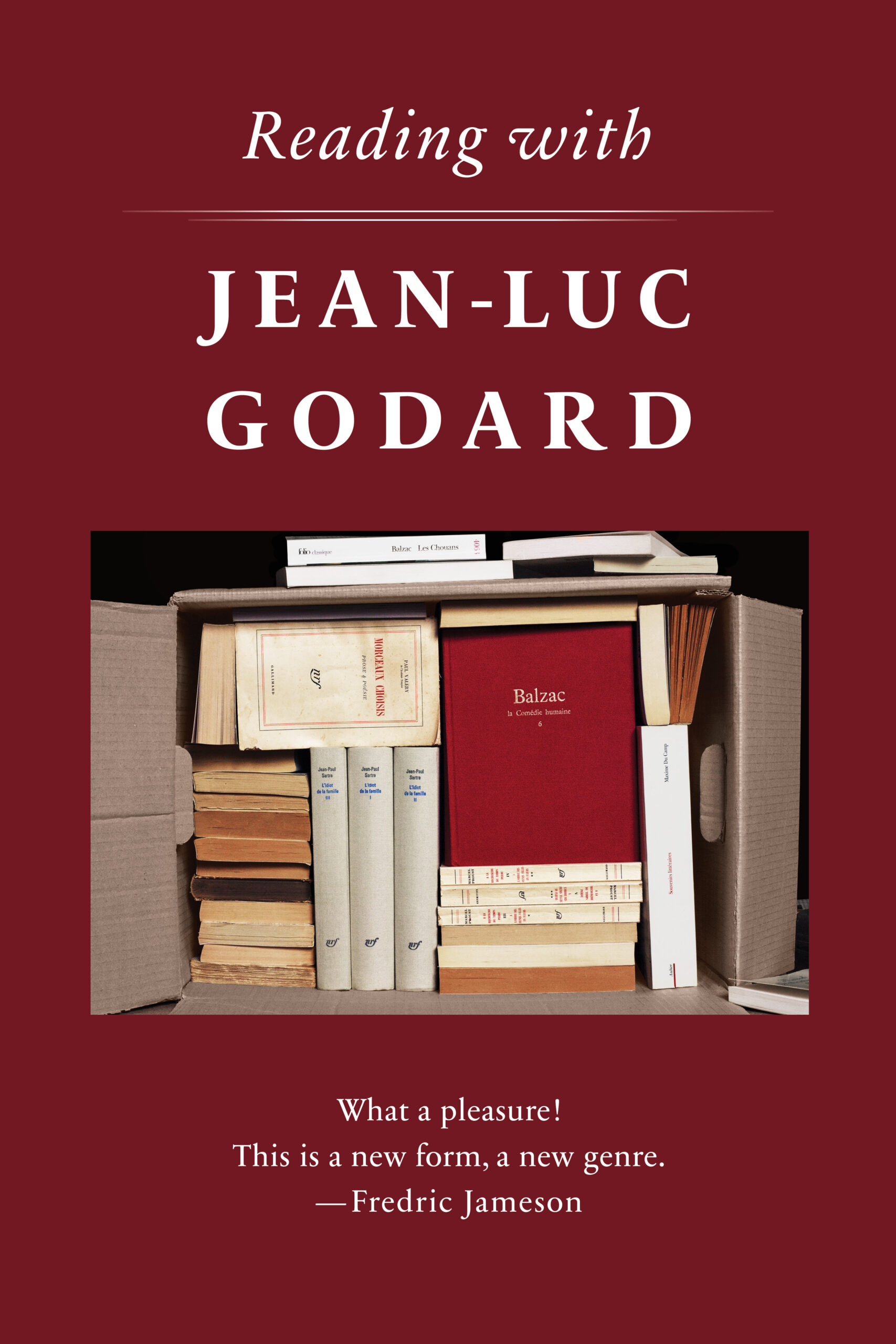
According to the literary scholar Fredric Jameson, who contributes an enthusiastic preface and afterword, Reading with Jean-Luc Godard — a compendium of 109 three-page essays by 49 writers from a dozen countries — launches “a new form” and “a new genre”. It can be described as a user-friendly volume designed to occupy the same space between academia and journalism staked out by MUBI while proposing routes into Godard’s work provided by his eclectic reading — a batch of writers ranged alphabetically and intellectually from Louis Aragon, Robert Ardrey, Hannah Arendt, and Honoré de Balzac to François Truffaut, Paul Valéry, A.E. Van Vogt, and Virginia Woolf. (Full disclosure: I contributed one of the two pieces on Truffaut, devoted to how his best piece of Alfred Hitchcock criticism helped to shape Godard’s and why Truffaut omitted that major text from his own books.) Some authors, such as Marguerite Duras, Martin Heidegger, and Edgar Allan Poe, get more than one entry, and coeditor Timothy Barnard wrote all four of those devoted to André Malraux. Indeed, he and coeditor Kevin J. Hayes are responsible for almost half of the entries.
One of the book’s fringe benefits is canonical, offering a list of writers that includes many obscure names worthy of discovery. Read more
Perhaps it is time to study discourse not only according to its expressive values, or in its formal transformations, but also according to its modes of existence: the modes of circulation, attribution and appropriation of discourse vary with each culture. . . . [T]he effect on social relationships can be more directly seen, it seems to me, in the interplay of authorship and its modifications than in the themes or concepts contained in the works.
— Michel Foucault, “What Is an Author?”
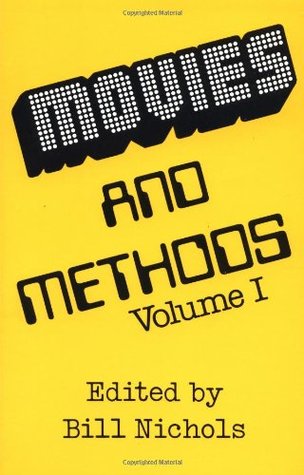
It seems likely that Hollywood Directors 1914–1940 and Movies and Methods[*] are the two most interesting anthologies of writing about film recently published in English. Each marks a substantial foray beyond the standard recycling operations of most anthologies, making available a wealth of helpful material that is otherwise hard to come by. An easy enough assessment, on the face of it, yet one that conceals a nagging question: what do we mean by “interesting” and “helpful”? In what way can both books be considered deserving of the same ambiguous adjectives? How far do they allow themselves to be considered within the same universe of discourse?