Debra Paget and Mark Rappaport, For Example
Commissioned by Fandor Keyframe in late January 2016. — J.R.
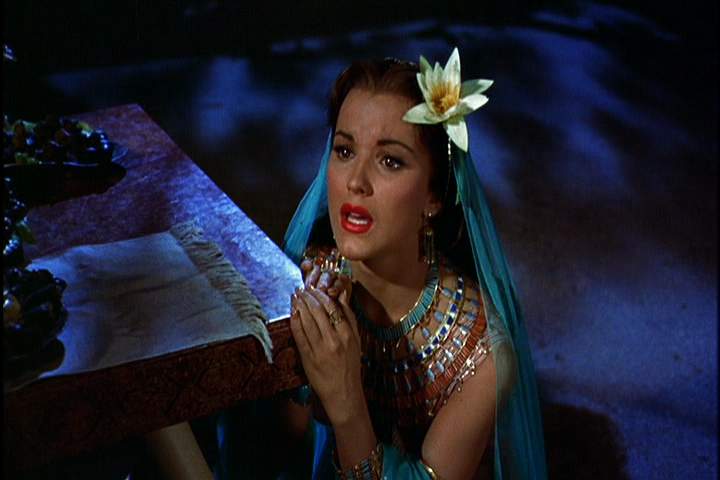
Mark Rappaport and I have been friends for well over three decades. He’s a year older than me, and even though our class and regional backgrounds differ, we’re both film freaks and film historians who grew up with the same Hollywood iconographies, for better and for worse. How these experiences might qualify as better or worse have been the source of countless friendly arguments, all the more so when they converge on the same objects of fascination — as the title of his latest video puts it, Debra Paget, For Example.

Thirty-six minutes and thirty-six seconds long, this juicy video about the 15-year screen career of Debra Paget (1948-1963, ages 14 to 29, including a busy eight-year stretch as contract player at Fox, 1950-1957) seems at times to cover almost as much material and as much cultural ground as Rappaport’s two star-centered film features, Rock Hudson’s Home Movies (1992) and From the Journals of Jean Seberg (1995), both of which I’ve reviewed in the past. (See www.jonathanrosenbaum.net/1992/11/rock-criticism and www.jonathanrosenbaum.net/2022/12/riddles-of-a-sphinx for specifics.) It might even be called a compendium of Rappaport’s rhetorical strategies, such as using an actor to play the star in question — as in those two features, although here only offscreen (as was also done in his brilliant recent video I, Dalio, or The Rules of the Game), with Paget voiced by Caroline Simonds — and using Rappaport’s own voice, as in another recent video, The Circle Closes. Read more