
Global Discoveries on DVD: First Looks, Second Thoughts
From the Summer 2018 issue of Cinema Scope. — J.R.
1. Second Thoughts First
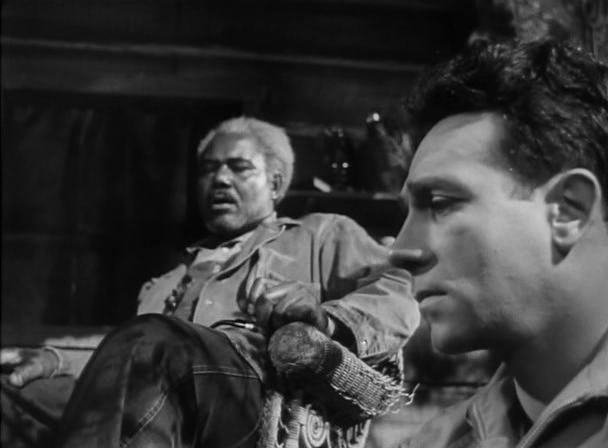
In the introduction to my forthcoming collection Cinematic Encounters: Interviews and Dialogues, I make the argument that although Truffaut’s book-length interview with Hitchcock doesn’t qualify precisely as film criticism, it nonetheless had a decisive critical effect on film taste. By the same token, on Criterion’s very welcome Blu-ray edition of Frank Borzage’s Moonrise (1958), Peter Cowie’s interview with Borzage critic/biographer Hervé Dumont — whose book on the director should be shelved and considered alongside Chris Fujiwara’s book for the same publisher (McFarland) on Jacques Tourneur — primed me perfectly for my second look at this masterpiece, and made it register far more powerfully this time. It certainly performs this task better than Philip Kemp’s accompanying essay, which, in spite of much useful information, falters in its insistence on framing Moonrise through the lens of film noir, and even more when, while rightly praising the character of Rex Ingram’s Mose, the author remarks that “It would be hard to think of another American film of the period where a black man acts as adviser and mentor to a white Southerner.” It’s not so hard, really, if one thinks of Clarence Brown’s Intruder in the Dust (1949) and/or Tourneur’s Stars in My Crown (1950); and it’s even quite easy if, following Dumont’s lead on Moonrise, one regards the Tourneur masterpiece neither as a noir (a lazy escape hatch) nor as a western (as Jacques Lourcelles does), but as a discreet form of German Expressionism, implicitly favouring thoughtful philosophy and metaphysics over simple gloom and doom. Read more