I’m pretty sure that this was the first submitted draft of my commissioned Op Ed piece for the New York Times, written in late July, 2007. It comes far closer to what I felt at the time than the version that emerged after three separate rewrites were requested by my editor, Mark Lotto, which was published on August 4, and which I hadn’t much desire to reprint until mid-October 2018, when I decided to attach the printed version as an afterthought. Typically, the title that was run with the piece, “Scenes from an Overrated Career,” wasn’t mine, yet paradoxically (if understandably) this was what many readers seemed to find most objectionable.
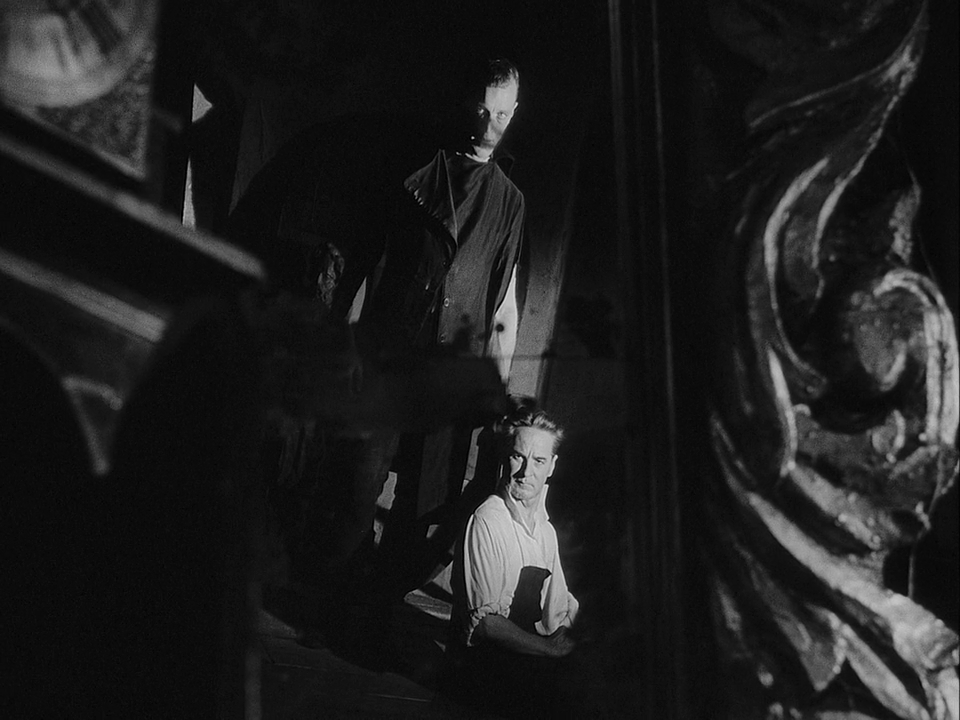
I’m sorry that I haven’t been able to illustrate the attic scene that I describe in The Magician, so I’ve substituted a still from Sawdust and Tinsel at the head of this piece that suggests some spatial disorientation. [2015 postscript: a generous reader, Dan Roy, has helped me out with the attic scene.] –- J.R.
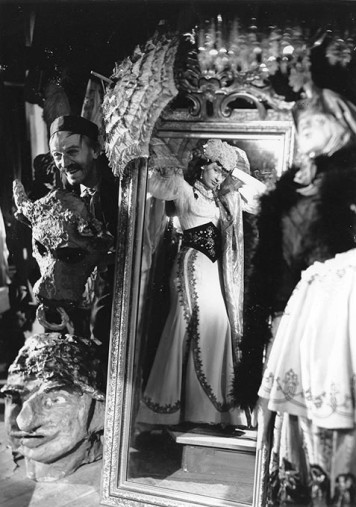
If memory serves, my first taste of Ingmar Bergman was The Magician, seen at the 5th Avenue Cinema in the spring of 1960, en route from a New England boarding school to my home in Alabama during spring break. Read more
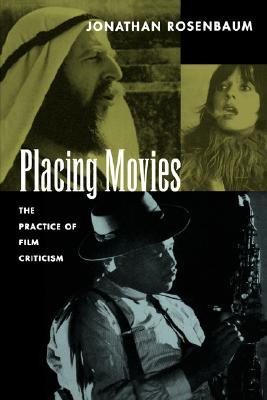
This is the Introduction to the second section of my first collection, Placing Movies: The Practice of Film Criticism (University of California Press, 1993). I’ve taken the liberty of adding a few links to some of the pieces of mine mentioned here which appear on this web site.
My original title for this section of the book was “Masterpieces,” but the editor, Ed Dimendberg, who had a much better sense of what was academically acceptable than I did, got me to change it to “Touchstones”. For the record, I still think that “Masterpieces” is better. — J.R.
It seems to me that one of the most underrated elements in criticism is quite simply information — relevant facts deriving from research — and how this is imparted to the reader in relation to other elements. Thanks to the prestige of theory in academia and the equally valued role played by rhetoric in journalistic criticism, facts often seem to be held in relatively low esteem in critical writing nowadays, but as long as criticism aspires to be a vehicle for discovery, it seems to me that research should play a much larger role than it normally does. I bring this matter up because the value of the information imparted in all the pieces in this section seems to me inextricably tied to what I have to say about these films, and my analyses would be appreciably different without it — a factor that is probably most obvious when it comes to GERTRUD and OTHELLO.* Read more