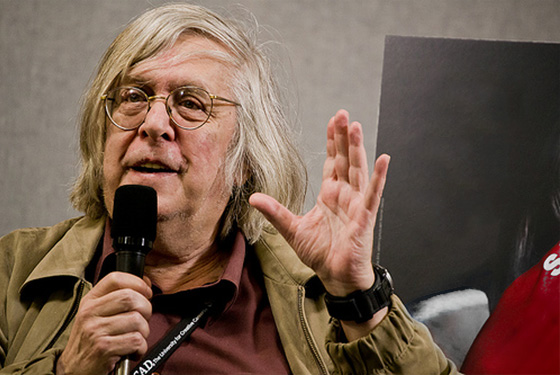
From The Movie No. 71, 1981. — J.R.


From Psycho and Spartacus (both 1960) to The Wild Bunch and Easy Rider (both 1969), the Sixties might be regarded as the period when screen violence gained a new aesthetic self-consciousness and something approaching academic respectability, at least in the public mind. To put it somewhat differently, the contemporary spectator of 1960, shocked by the brutal shower murder of Marion Crane (Janet Leigh) in Psycho as an event — without observing that it was a composite film effect created by several dozen rapidly cut shots –- would have been much likelier to notice, in 1969, the use of slow motion in the depiction of several dozen violent deaths in The Wild Bunch.
The key film document of the decade, endlessly scrutinized and discussed, was not an entertainment feature at all, but the record of an amateur film-maker named Abe Zapruder of the assassination of John F. Kennedy in Dallas on November 22, 1963; the close analysis to which this short length of film was subjected was characteristic of a changing attitude towards the medium as a whole.
In the Sixties many established cultural, social, and political values were radically thrown into question, at the same time that the media -– including television and pop music as well as cinema — were becoming closely examined in their own right. Read more
From Paris Journal, Film Comment, Summer 1972 (excerpt). –J.R.
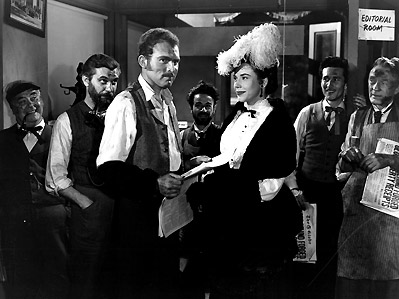
Nearly two decades have elapsed between the making of Samuel Fuller’s PARK ROW and its premiere at the Cinema Mac-Mahon. In the interim, Fuller has gone from being a cause célèbre in France to a critical industry in England, where no less than three books on his films have already appeared. A major limitation of this overkill, which is threatening to “assimilate” Douglas Sirk as its next victim, is its absolute humorlessness — a quality that was rarely present in Godard’s or Luc Moullet’s writing on either director in the 50s. Reviewing Sirk’s A TIME TO LOVE AND A TIME TO DIE, Godard affirmed that “ you have to talk about this kind of thing…deliriously, you can be quietly, or passionately delirious, but delirious you have to be, for the logic of delirium is the only logic that Sirk has ever bothered about.” In addition to being about as delirious as the London Times, most of the English writing about Sirk and Fuller suffers from myopia as well. Compare Moullet’s three half-pages on Sirk’s THE TARNISHED ANGELS (Cahiers du cinéma #87) to Fred Camper’s 25 pages in the recent Sirk issue of Screen: the former, for all its giddiness, develops a persuasive stylistic link between Faulkner’s rhetoric and Sirk’s mobile camera; the latter, for all its sobriety, fails to mention the words “Faulkner” or “Pylon” even once. Read more