I’m pretty sure that this was the first submitted draft of my commissioned Op Ed piecefor the New York Times, written in late July, 2007. It comes far closer to what I felt at the time than the version that emerged after three separate rewrites were requested by my editor, Mark Lotto, which was published on August 4, and which I hadn’t much desire to reprint until mid-October 2018, when I decided to attach the printed version as an afterthought. Typically, the title that was run with the piece, “Scenes from an Overrated Career,” wasn’t mine, yet paradoxically (if understandably) this was what many readers seemed to find most objectionable.
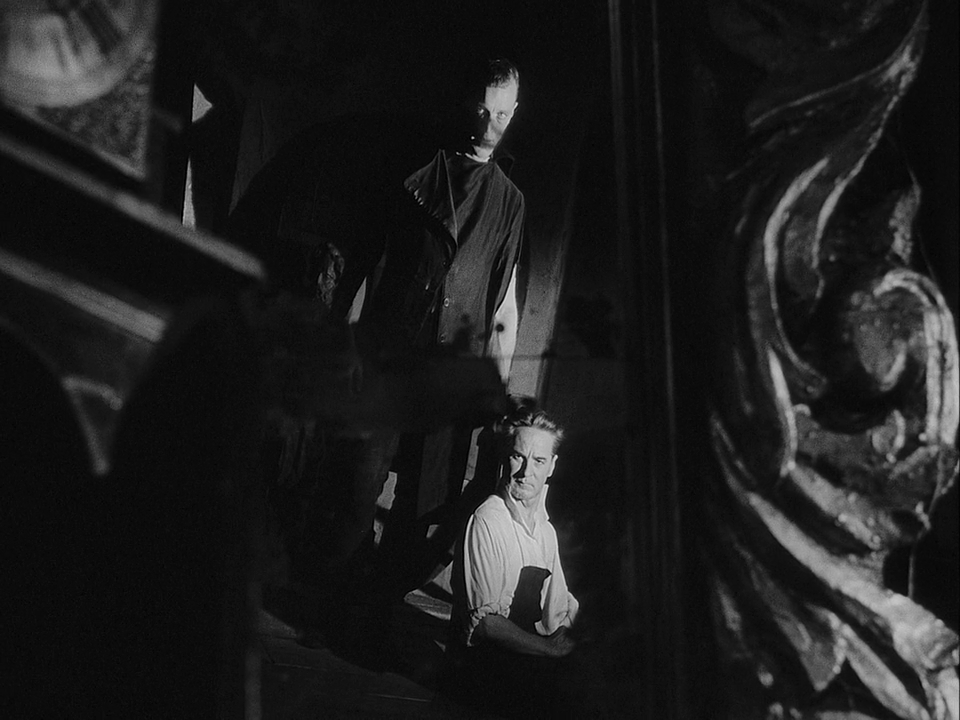
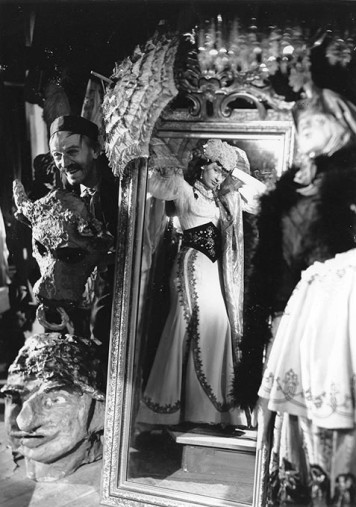
I’m sorry that I haven’t been able to illustrate the attic scene that I describe in The Magician, so I’ve substituted a still from Sawdust and Tinsel at the head of this piece that suggests some spatial disorientation. [2015 postscript: a generous reader, Dan Roy, has helped me out with the attic scene.] –- J.R.
If memory serves, my first taste of Ingmar Bergman was The Magician, seen at the 5th Avenue Cinema in the spring of 1960, en route from a New England boarding school to my home in Alabama during spring break. Read more
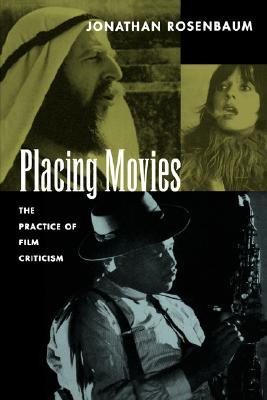
This is the Introduction to the second section of my first collection, Placing Movies: The Practice of Film Criticism (University of California Press, 1993). I’ve taken the liberty of adding a few links to some of the pieces of mine mentioned here which appear on this web site.
My original title for this section of the book was “Masterpieces,” but the editor, Ed Dimendberg, who had a much better sense of what was academically acceptable than I did, got me to change it to “Touchstones”. For the record, I still think that “Masterpieces” is better. — J.R.
It seems to me that one of the most underrated elements in criticism is quite simply information — relevant facts deriving from research — and how this is imparted to the reader in relation to other elements. Thanks to the prestige of theory in academia and the equally valued role played by rhetoric in journalistic criticism, facts often seem to be held in relatively low esteem in critical writing nowadays, but as long as criticism aspires to be a vehicle for discovery, it seems to me that research should play a much larger role than it normally does. I bring this matter up because the value of the information imparted in all the pieces in this section seems to me inextricably tied to what I have to say about these films, and my analyses would be appreciably different without it — a factor that is probably most obvious when it comes to GERTRUD and OTHELLO.* Read more
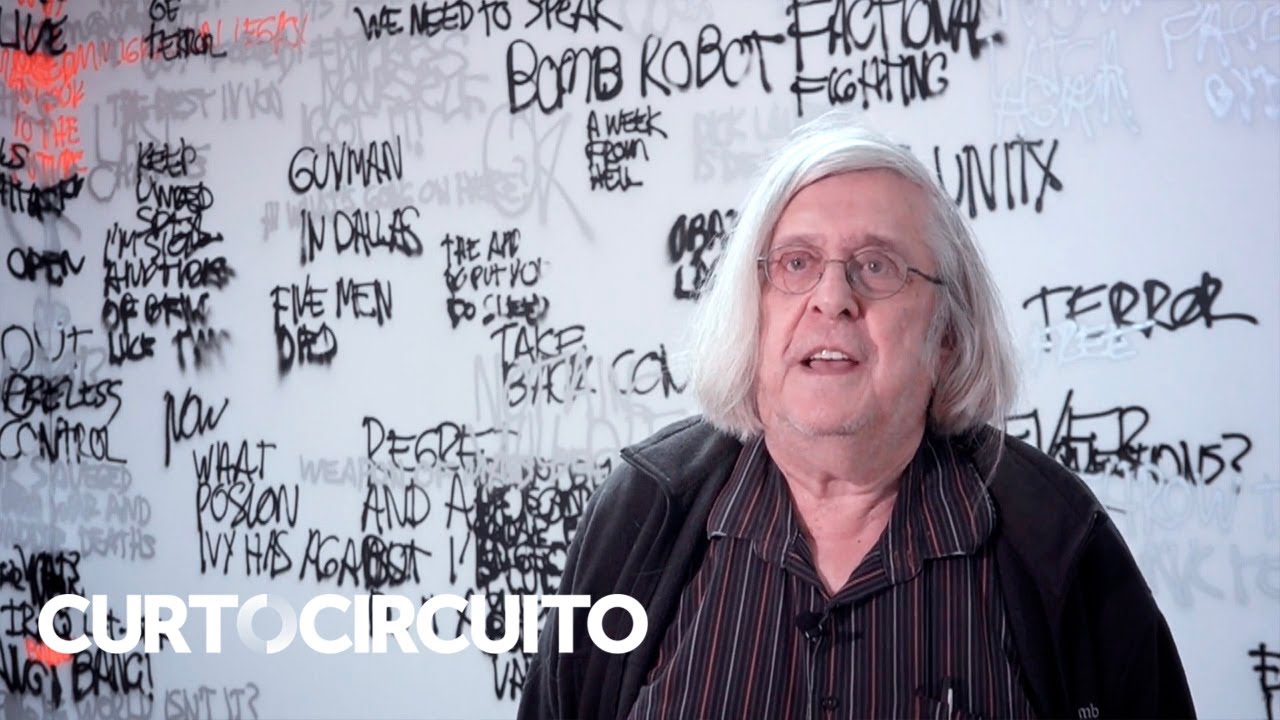
The following interview by Sara Donoso, printed in Spanish and English in Fotocinema no. 14 (2017), was conducted in Santiago de Compostela while I was serving on the jury of Curtocircuíto, the international festival of short films held there. I’ve taken the liberty of lightly revising Donoso’s English, and I’ve also retained her Spanish introduction.– J.R.
THE EXPANSION OF CRITICISM: AN INTERVIEW WITH JONATHAN ROSENBAUM
Sara Donoso
Universidad de Santiago de Compostela, España
saradonosocalvo@gmail.com
Crítico, ensayista y teórico de cine, la pluma de Jonathan Rosenbaum es de aquellas que practican el ejercicio de la resistencia; que se oponen a la clasificación, las etiquetas, al mundo del mainstream y a la cultura del espectáculo. Podríamos decir que es uno de esos críticos tal vez incómodos para algunos pero necesarios y reveladores para quienes aprecian el séptimo arte. Tras trabajar como principal crítico del Chicago Reader entre 1987 y 2008, actualmente sigue ejerciendo el ejercicio de la escritura cinematográfica a través de su página web, en la que no solo postea periódicamente reseñas de libros o películas sino que cuenta además con un archivo de publicaciones anteriores.
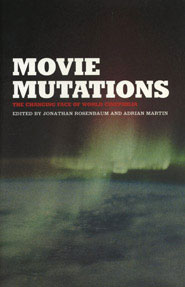
Como autor y editor, ha contribuido a través de diferentes proyectos a la difusión y dignificación del cine más allá de los circuitos comerciales, siendo responsable de títulos como Movie Mutations: The Changing Face of World Cinephilia (2003),Essential Cinema: On the Necessity of Film Canons (2004) o Goodbye Cinema, Hello Cinephilia: Film Culture in Transition (2010). Read more
From the Winter 2019 issue of Cinema Scope. — J.R.
Since I don’t have much investment in parsing Arnaud Desplechin’s arsenal of “personal” references, I had to look elsewhere for the intermittent pleasures of Ismaël’s Ghosts (2017), available on a two-disc Blu-ray from Arrow Films. I often find myself so hard put to navigate Desplechin’s multiple allusions to and borrowings from Philip Roth and Woody Allen (for me, the most overrated and least interesting members of his overstuffed pantheon), much less those from James Joyce, Alfred Hitchcock, Norman Mailer, and Alain Resnais, that I have to forsake any sustained effort to rationalize how these and countless other figures could all belong to the same curious tribe of role models. Maybe this is because Desplechin appears to regard these touchstones as sacred talismans more than as meaningful or helpful artistic influences. Apart from naming László Szabó and Louis Garrel’s characters “Bloom” and “Dedalus,” respectively, it’s difficult to determine how much he’s actually learned or adapted from Ulysses—and when he combines nods to both Ulysses and Vertigo (1958) in the name of Marion Cotillard’s character “Carlotta Bloom,” the whole thing begins to seem like the silliest kind of fool’s game. As for Ismaël himself (Mathieu Amalric), is his name supposed to start us thinking about Moby-Dick, the Bible, or maybe both? Read more
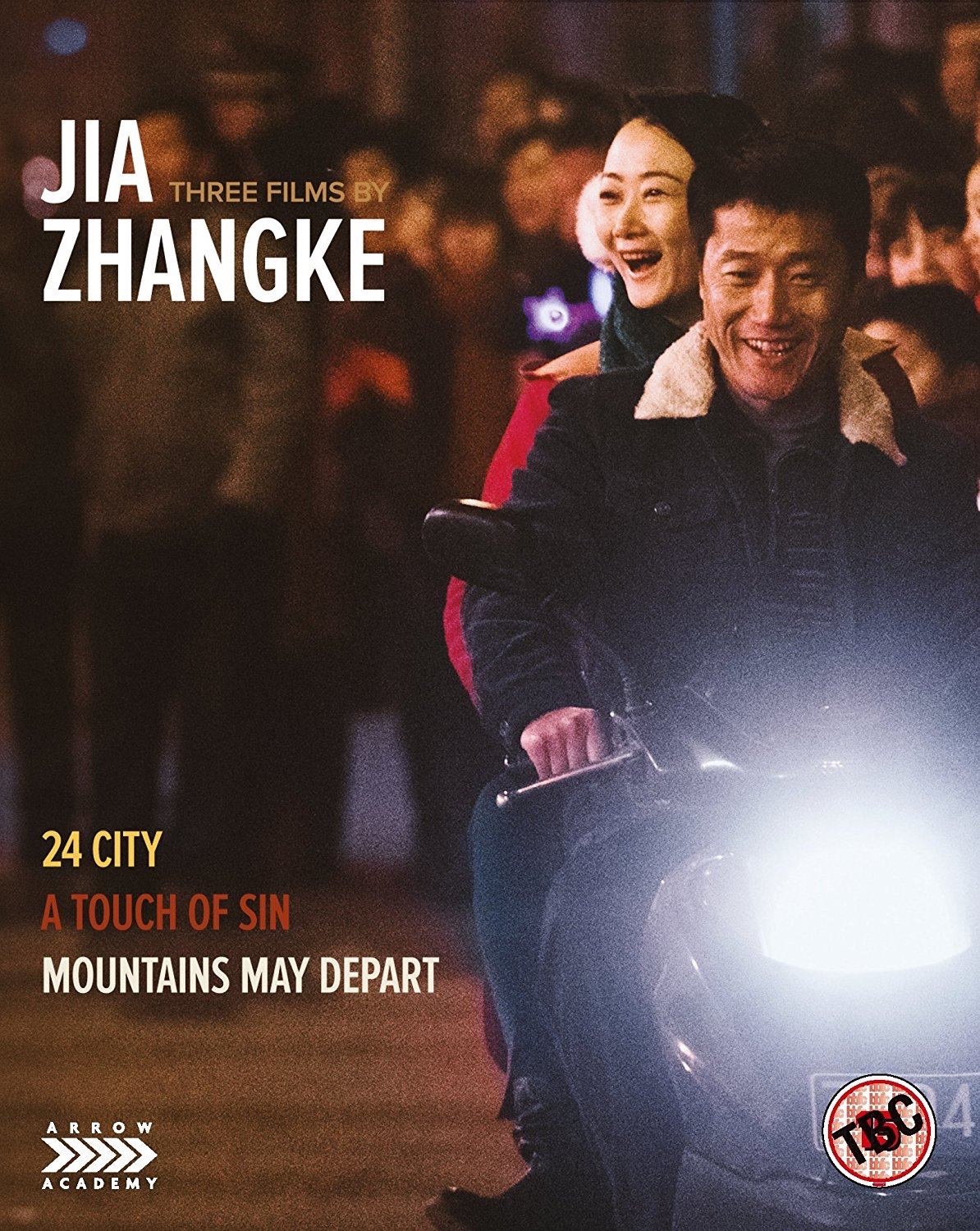
It’s important to acknowledge that part of what makes Jia Zhangke the most exciting and important mainland Chinese filmmaker currently active also makes him one of the most disconcerting and sometimes even bewildering. This has a lot to do with his propensity for viewing fiction and non-fiction, and, even more radically, fantasy and reality, as reverse sides of the same coin, and, in keeping with this complex duality, a talent for bold stylistic shifts not only between successive films but between and within separate sequences. His ambitions are such that even his ‘failures’ are worth more than the successes of many of his colleagues — and, for that matter, what we might describe as a Jia ‘failure’ often means simply a film that we should see again and reconsider.
Confounding us still further in A Touch of Sin (2013), his seventh feature, Jia reverses his previous position of avoiding on-screen violence by delivering it this time by the bucketful. In his earlier features, treatments of violence tended to be reticent or elliptical, so that government executions in Platform (2000) registered as distant gunshots and the tragic and fatal industrial accident of a construction worker in The World wasn’t shown at all. Read more
From the Chicago Reader (November 10, 2000). — J.R.
Films by Luis Buñuel
By Jonathan Rosenbaum
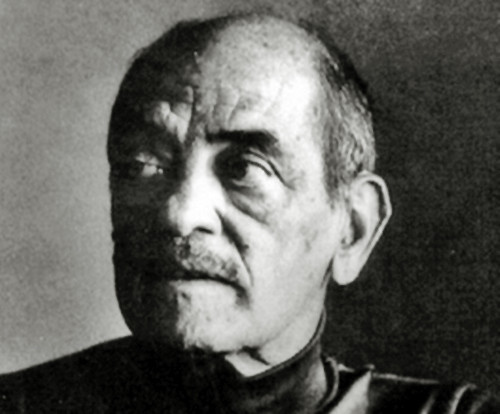
It seems to be universally agreed that Luis Buñuel (1900-1983) is the greatest Spanish-language filmmaker we’ve ever had, but getting a clear fix on his peripatetic career isn’t easy. The authorized biography, John Baxter’s 1994 Buñuel, isn’t available in the U.S., and the deplorable English translation of Buñuel’s autobiography, My Last Sigh (1983), is actually an unacknowledged condensation of the original French text. Better are an interview book translated from Spanish, Objects of Desire, and a recently published translation of selected writings by Buñuel in both Spanish and French, An Unspeakable Betrayal, which includes his priceless, poetic early film criticism.
A more general problem is that Buñuel is not only “simple” and direct but full of teasing, unresolvable ambiguities. A master of the put-on, he often impresses one with his earthy sincerity. A political progressive and unsentimental humanist, he was also, I’ve learned from Baxter, an active gay basher in his youth, and those who’ve read the untranslated but reputedly fascinating memoirs of his widow report that he was a very old-fashioned and prudish male chauvinist throughout his life. He was a onetime devout Catholic who lost his faith in his youth and was fond of exclaiming years later, “Thank God I’m still an atheist!” Read more
The following interview took place in a hotel lobby in early February 2020. My friend Kinga Keszthelyi, who arranged my visit to Budapest, is on the left, and Simon is on the right. — J.R.
From Movie Mutations to 1968:
An Interview with Jonathan Rosenbaum in Budapest
Simon Petri-Lukács
Jonathan Rosenbaum visited Budapest earlier this year to give a lecture about Abbas Kiarostami and Orson Welles. During this special seminar, he discussed the similarities in the two filmmakers’ relations to self-criticism and the dominating presences of investigations, interrogations and unsolved mysteries in both oeuvres.
I felt great liberation when I discovered Jonathan Rosenbaum’s criticism at the end of my teenage years. The stupidity of critics I was aware of at the beginning of my cinephilia actually led me to the nonsensical conclusion that I had to become a filmmaker to speak about other people’s films in an acceptable and intellectually satisfying way. On my first encounter with Jonathan’s work, I found what I didn’t know I was seeking and it changed my attitude forever. Having said that, it’s quite obvious that I was over the moon to be able to interview him.
I have been interviewing Alexander Horwath for the last two years about several topics and my main interest was to ask Jonathan about his book, Movie Mutations. Read more
My column for the abril 2018 issue of Caiman Cuadernos de Cine. — J.R.
“I personally can’t define the difference between a documentary and a narrative film,” Abbas Kiarostami once said to me, adding that he considered the difference between a good movie and a bad one more important. I would further note that films that blur distinctions between documentary and fiction, including Kiarostami’s, are sometimes better because they do so. This was recently brought home to me when I belatedly discovered that one of my favorite films of 2017, Heinz Emigholz’s Streetscapes [Dialogue], wasn’t a scripted restaging in Uruguay of the filmmaker’s psychoanalysis with its two original participants, as I had naïvely assumed, but a scripted restaging with an American actor and an Argentinian filmmaker — a discovery that made the film even more provocative and impressive.
When I start to reflect on the widely different ways in which documentaries and fictional narratives are shown and marketed, I begin to realize that obfuscating such issues are often marketing decisions, much as obfuscating distinctions between art and politics often turn out to be. As I suggested in my last column, while decrying the public indifference to Harvey Weinstein’s artistic crimes, this is business as usual in current transatlantic discourse — a recognition that Weinstein’s sexual crimes are “commercial” and his artistic crimes “non-commercial”. Read more
For a long time, I hesitated about reprinting this, but learning about Ray Carney’s unspeakable treatment of filmmaker Mark Rappaport (as detailed here) eliminated my compunctions.
For more about Rappaport’s work, here are three of the many links on this site:
Cassavetes on Cassavetes
Edited by Ray Carney. London and New York: Faber and Faber, 2001. 526 pp., illus. Paperback: $25.00.
The Films of John Cassavetes: Pragmatism, Modernism, and the Movies
by Ray Carney. Cambridge, New York and Melbourne: Cambridge University Press, 1994. 322 pp., illus. Paperback: $24.95.
John Cassavetes: The Adventure of Insecurity
by Ray Carney. Second Edition. Walpole, MA: Company C Publishing, 2000. 64 pp., illus. Paperback: $15.00.
Shadows
by Ray Carney. London: British Film Institute (BFI Film Classics), 2001. 87 pp., illus. Paperback: $12.95.
John Cassavetes: Lifeworks
by Tom Charity. London, New York and Victoria: Omnibus Press, 2001. 257 pp., illus. Paperback: $19.95.
As nearly as I can remember, I had two opportunities to meet John Cassavetes in the flesh, both times in New York, and I deliberately passed on both of them. Shortly after Faces came out in the mid-Sixties, a friend from my home town in Alabama who worshipped that film even more than I did — Shadows was still my own favorite then — came to town and found a way of contacting and then going to meet his idol, who was preparing Husbands at the time; he invited me to come along, and I declined. Read more
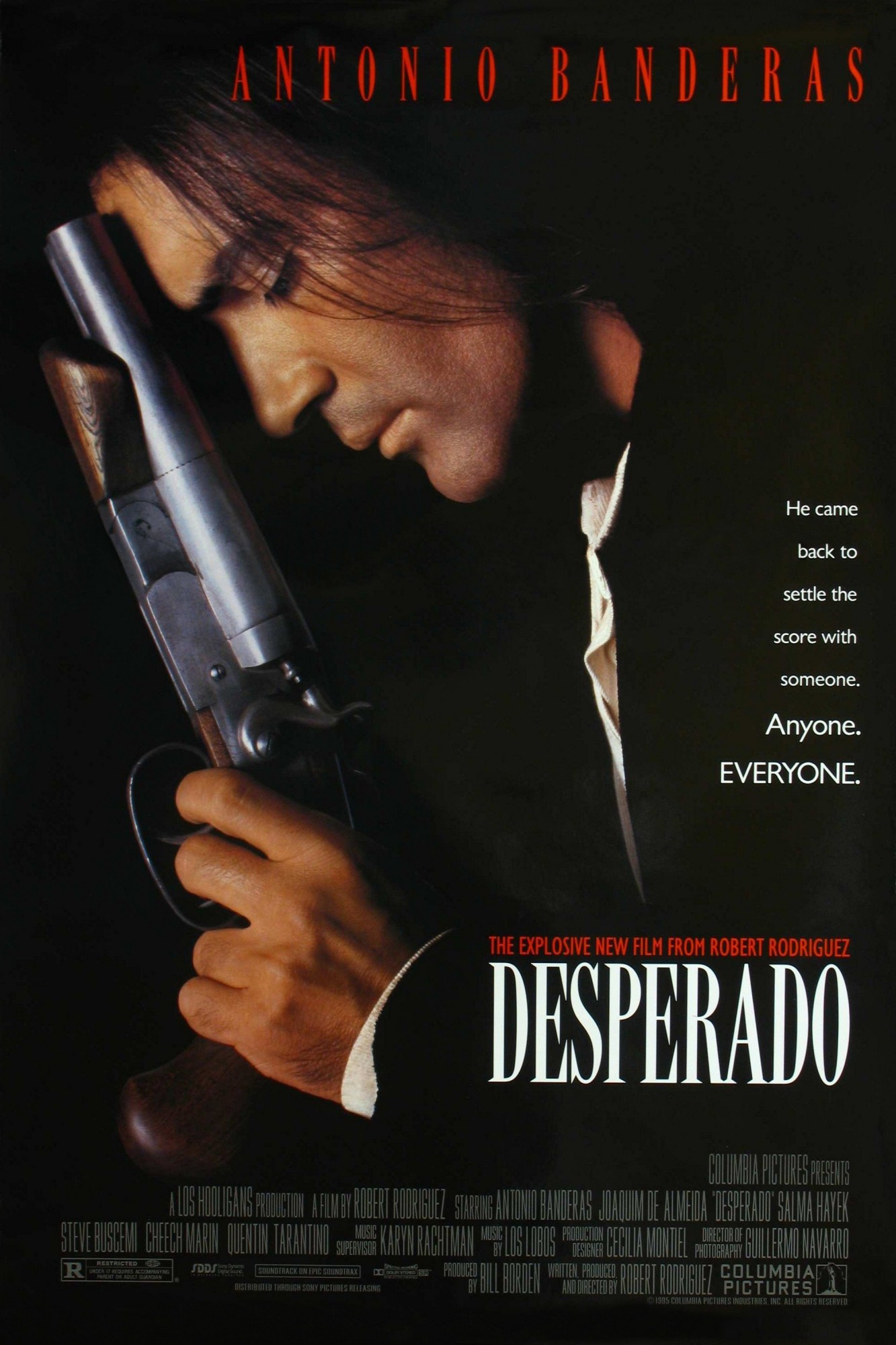
To no one’s surprise but the producer’s, Robert Rodriguez’s bigger-budget spin-off/remake of (and occasional sequel to) his impressive action quickie El mariachi doesn’t stand comparison with its predecessor. On the other hand, Rodriguez is clearly a talent to watch, and there’s plenty to be entertained or impressed by here — fancy, violent action sequences (which gradually develop from barroom shoot-outs to outright war battles); a feisty interaction between hero (Antonio Banderas) and heroine (Salma Hayek) that suggests the influence of Howard Hawks; some enjoyable actorly bits by Cheech Marin, Quentin Tarantino (who’s at least around long enough to tell a funny joke), and Steve Buscemi; an enjoyable villain (Joaquim de Almeida, not a gringo here as he was in El mariachi); a nice Mexican score by Los Lobos; and even a halfway tolerable twist in the plot. What’s mainly missing is the sort of conviction and passion that gave El mariachi its charge; one feels at almost every moment that Rodriguez is fulfilling a contract rather than saying something he has to say. There’s a lot of panache here, but not much inspiration. (JR)
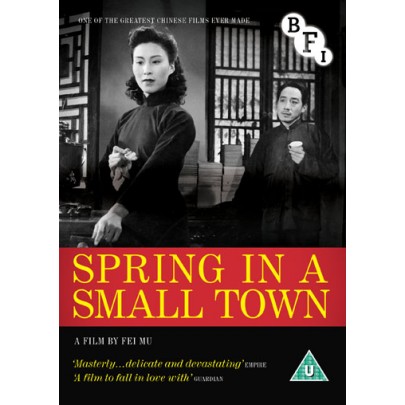
From The Guardian (June 6, 2003). Happily, Fei Mu’s 1948 masterpiece is now available on a decent DVD with English subtitles from the BFI, and I’ve recently written a lengthy essay about it for the final issue of the French quarterrly Trafic, to be published in French this fall and on this site in English around the sane time..– J.R.
If I had to pinpoint what makes so much of contemporary life intolerable, something I’d call remake mentality might head the top of the list. The mindset that dictates that anything new has to be a recycling of something familiar — that old markets be exhausted before any new ones are contemplated, and that viewers be regarded as mindless brats demanding only more of the same — is so common by now that it has become fully internalised, and not only within the film industry.
The fact that we’re supposed to be looking forward to two sequels to The Matrix in the same year implies that we are fixed marketing units, programmed to relish staying in our well-appointed ruts. But there are just as many spinoffs predicated on our ignorance of the originals, suggesting that the avoidance of fresh thinking may not simply be our own. Read more
Written for Sight and Sound‘s blog in July 2011. — J.R.
Not exactly a film festival or a conference in the usual sense, Il Cinema Ritrovato has many of the benefits of each without their professional drawbacks -– namely the frantic boom-or-bust atmosphere promulgated by the entertainment press at Cannes, and the relative dullness and institutional oppressiveness of a long succession of academic papers.
A relaxed yet intense eight-day bash devoted to film restorations, Il Cinema Ritrovato is held over some of the hottest days of the summer in the oldest university town in Europe, and sponsored by one of film restoration’s leading institutions, the Cineteca Bologna, which boasts the rejuvenation of Charlie Chaplin’s works among its achievements. Frequented chiefly by teachers, students, archivists, programmers, film historians and various others involved with restoration (such as people working for various DVD labels), the events are usually split between three auditoriums in the daytime –- although this year a fourth screen was added, making for many more choices as well as conflicts -– followed by huge, free outdoor screenings for everyone in the Piazza Maggiore every evening.
Whether the individual attractions are populist (among the Piazza restorations this year were Nosferatu (1922) and The Phantom of the Opera (1925) with full-scale orchestral -– and in the latter case vocal -– accompaniments, Les Enfants du Paradis (1945), the 1940 Thief of Bagdad and Taxi Driver (1976) or more specialized (some of this year’s retrospective subjects were Boris Barnet, Albert Capellani, early Howard Hawks, Elia Kazan and educational documentaries by Eric Rohmer, Maurice Tourneur and Conrad Veidt), the opportunities to reevaluate film history are plentiful. Read more
For those who share my suspicion that most of the language we encounter nowadays no longer comes from human beings, check out the first three items in “Harper’s Index” (in the November 2025 Harper’s), which reports that 2024 was the first year in which more internet traffic was generated by bots (51%) than by people (49%). But talk about cognitive dissonance: the cover story of the same issue of Harper’s is a roundtable discussion about why so many people mistrust journalism now. Surely the fact that most of the language we encounter every day, on the street or in our homes, everywhere we go, is blatantly insincere, inflated advertising–lies designed to pick our pockets and cheat our emotions—has something to do with the awfulness of our shared contemporary culture. It’s a disease that infects us all, yet it appears that we no longer trust language enough even to discuss it.
Excerpted from Movie Wars: How Hollywood and the Media Limit What Films We Can See (A Cappella Books, 2000).From the Chicago Reader (November 17, 2000). — J.R.
Nowadays the line between journalism and publicity is often blurred, and one common, systematic method of blurring it is the movie junket. Generally a studio flies journalists to a location where a movie’s being shot or to a large city where it’s being previewed, puts them up at fancy hotels, then arranges a series of closely monitored interviews with the “talent,” most often the stars and the director. The journalists are expected to go home and write puff pieces about the movies that run in newspapers and magazines as either reportage or as a form of film “criticism.” If the journalists don’t oblige — and sometimes obliging entails not only favorable coverage but articles that emphasize what publicists want emphasized and suppress what they want suppressed — then the studios won’t invite them on future junkets.
There are probably more of these articles about new or forthcoming movies in newspapers and magazines than any other kind, and many entertainment writers — including plenty who double as film reviewers — make a profession out of these junkets. Read more
A column for Caiman Cuadernos de Cine, submitted May 28, 2018. — J.R.
The commodification of film categories that publicists otherwise find difficult to market — especially “independent,” “restoration,” and “film noir”—often involves a certain amount of deception when it comes to existential identities.
“Independent” became a commercial category only after moguls maintained that the Sundance Festival was devoted to celebrating films without studio backing — even though “success” at Sundance meant a studio sale that typically entailed a loss of independence. “Restoration” is a label that absurdly gets slapped onto all sorts of real or alleged upgrades of older films, such as one with a newly mutilated and reconfigured soundtrack (the 1992 rerelease of Orson Welles’ Othello), a re-edit (the 1998 Touch of Evil), a belated first edit (the posthumous 2018 The Other Side of the Wind), and sometimes merely a new print. And “film noir” — a term whose meaning has already been slippery to begin with, applied retrospectively to a group of films said to share certain stylistic, formal, and thematic traits — now functions ahistorically and sometimes deceptively while increasing the market value of a given feature by obfuscating its politics.
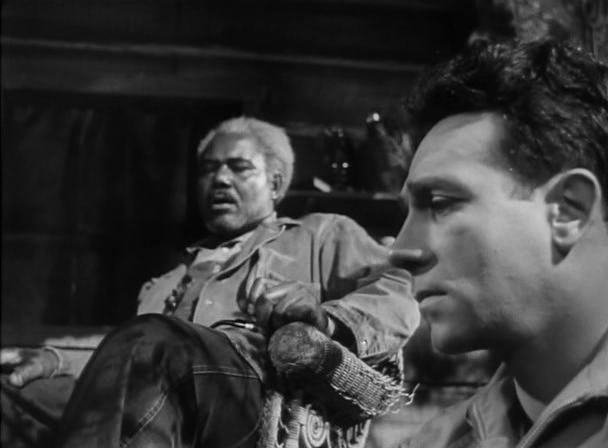
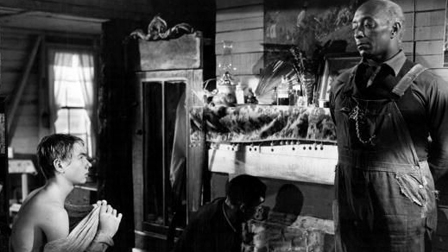
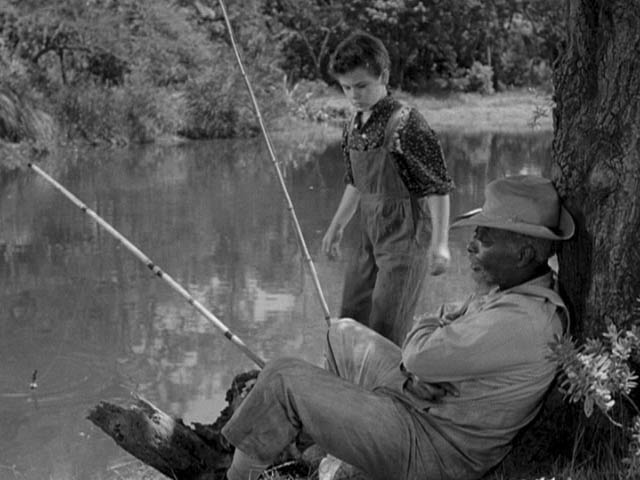
On Criterion’s new Blu-ray of Frank Borzage’s Moonrise (1948), Peter Cowie’s interview with Hervé Dumont — whose book on the director should be shelved alongside Chris Fujiwara’s book for the same publisher (McFarland) on Jacques Tourneur — primed me perfectly for my second look at this masterpiece. Read more