Written for a collection edited by Adam Cook, Making the Case: Contemporary Genre Cinema, whose publisher belatedly changed his mind about publishing. This is the article’s first appearance, although it’s also reprinted in my latest book, Cinematic Encounters 2: Portraits and Polemics. — J. R.
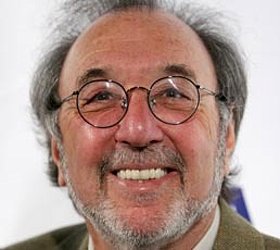
Out of his half-dozen comedy features to date as producer-writer-director — Terms of Endearment (1983), Broadcast News (1987), I’ll Do Anything (1994), As Good as It Gets (1997), Spanglish (2004), and How Do You Know (2010) — James L. Brooks has had three big commercial successes (the first two and the fourth) and three absolute flops (the third, fifth, and sixth). And because all six of these movies are concerned equally with personal failure and personal success, functionality (emotional and professional) as well as dysfunctionality (emotional and professional), it somehow seems fitting that each one has represented a highly ambitious as well as a highly risky undertaking.
The above paragraph has the disadvantage of making Brooks seem so unexceptional as a commercial filmmaker that one might wonder, on the basis of this description, whether he’s worth examining at all. Some might also question whether all six of his movies qualify as comedies, despite Brooks’ own insistence that they do. Read more
A recent essay. — J.R.

Reflections on Kiarostami’s Two-Way Mirrors
Mehrnaz Saeed-Vafa
“The power of cinema is to create believable illusions.” Abbas Kiarostami
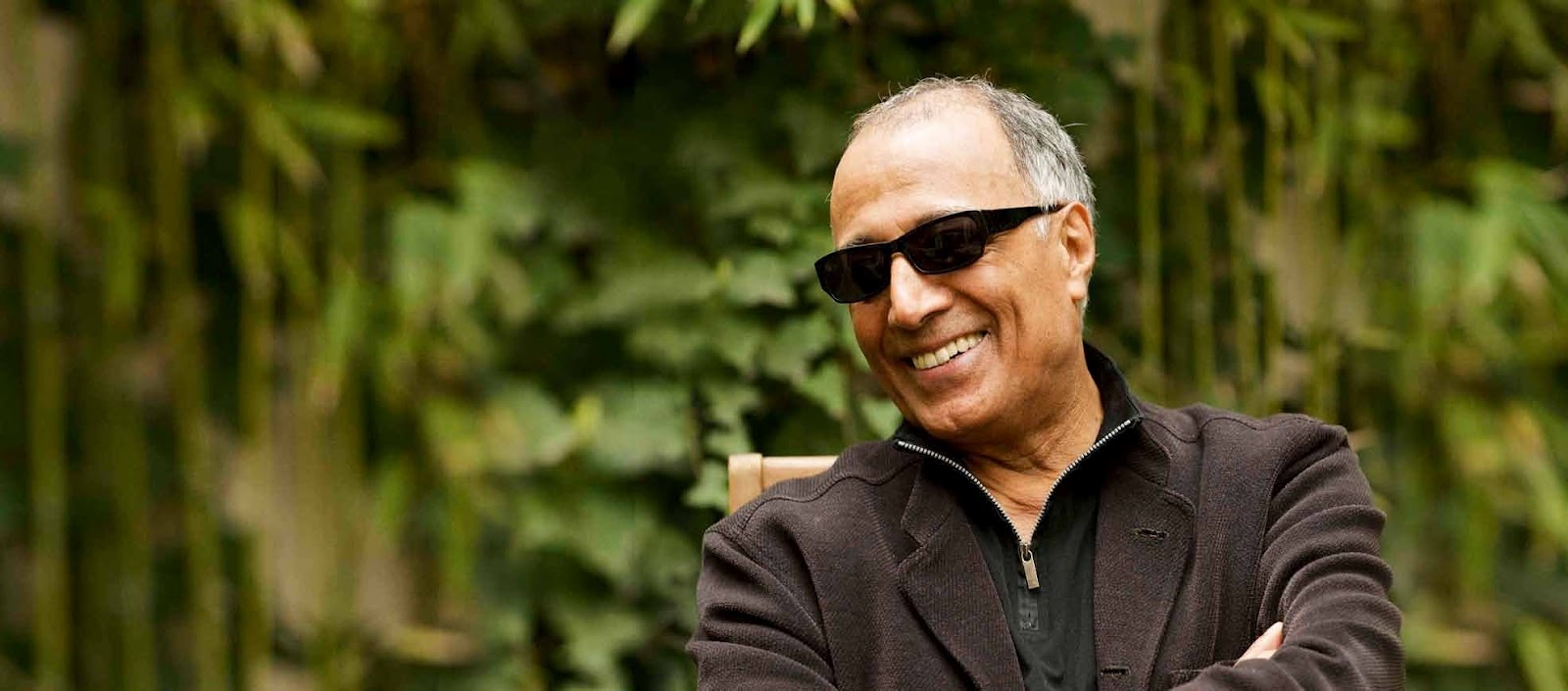
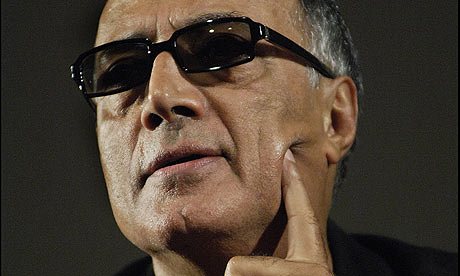
As I begin to write about Abbas Kiarostami’s cinema, my profound sadness about his loss emerges again. The vivid memories of several meetings and conversations with him in different countries (Iran, Europe, Canada, and the US) and at different times and on various occasions in the last four decades are now mixed with images from his films. How ironic that his death happened so abruptly, like the many unexpected and unresolved open-endings of his films.

The filmmaker I was fortunate to know was a graceful, thoughtful dignified man, observant and playful with a great sense of humor. Despite his fame, he was very humble. He was very supportive of other filmmakers, new directors, and especially his students in many of his workshops around the world.
I remember meeting him for the first time in Tehran after the screening of his second feature, The Report (Gozaresh, 1977). The dark bleak film had very little resemblance to its warm friendly-looking approachable serene director who always wore a sweet smile when greeting people.
During the year 1980 I’d run into him from time to time whenever I went to Kanun (The Institute for Intellectual Development of Children and Young Adults) to resolve the production issue of my unfinished film, The Transfigured Night. Read more
Originally posted on June 13, 2016. — J.R.
It’s embarrassing for me to confess that I let over six weeks pass from the time that Oda Kaori sent me an email from Osaka with a link to her 68-minute film Aragane until I finally found time to watch it — during a day of rest in Lisbon, in between professional engagements. This has been an exceptionally busy spring for me in terms of writing, travel, and other commitments, but I suspect that another reason why it’s taken me so long was the fearful prospect of watching a documentary of that length about work in a coal mine in Sarajevo. I don’t know why this prospect discouraged me so much, but the fault is mine.
Kaori was one of the original dozen or so students to enroll in Béla Tarr’s Film.Factory when it started three years ago, whom I met during my first of my four two-week sessions there; she was also one of the students most affected by the films of Peter Thompson, whose email I quoted from in my article about Film.Factory, and whom I once lent a DVD of Maya Deren’s films at her request. I believe that Aragane was her thesis film; she has shown it at a few Japanese venues, including the Yamagata film festival, and she is hoping to find a distributor for it. Read more