From New York Newsday (Sunday, August 28, 1991). -– J.R.
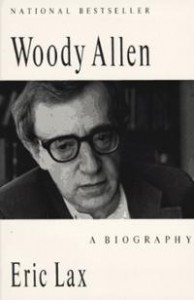
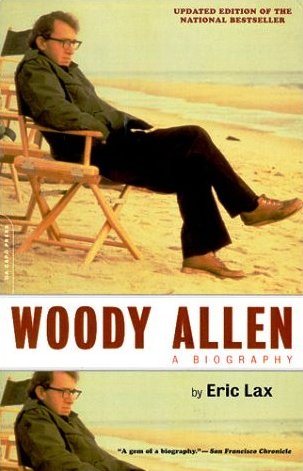
WOODY ALLEN: A Biography, by Eric Lax. Knopf, 384 pp., $24.
BY JONATHAN ROSENBAUM
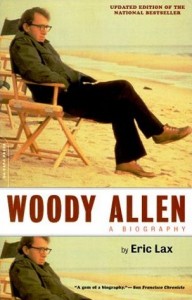
How does one write the biography of an untouchable? Without touching him –- or at least by handling him with kid gloves. When it comes to dealing with America’s favorite comic spokesman for the urban middle class, Eric Lax does a fair job of plotting out both the apprenticeship and the career moves of Woody AIlen as he gradually worked his way up from gag writer to stand-up comedian to increasingly ambitious filmmaker (from “Bananas” to”Hannah and Her Sisters” to “Another Woman”), with various side trips –- as jazz clarinetist, playwright and literary humorist — along the way. But when it comes to separating the Woody persona from the actual person, or the mystique from the life, Lax’s agenda goes soft. Devoted fans may discover a few unmined nuggets here, but for skeptics like myself the experience is as unreflective as any of Allen’s movies.
 After an introduction that briefly chronicles Allen’s tortured
23-hour trip to the Soviet Union in 1988, Lax begins with the
birth of Allan Stewart Konigsberg in 1935 and the creation of
his familiar stage name 16 years later. Read more
The second part (roughly the second half) of Chapter One of my most popular book, Movie Wars: How Hollywood and the Media Limit What Films We Can See (2000); for the first half, go here. The illustration below is from the now out-of -print English edition. — J.R.
Is the Cinema Really Dead?
Susan Sontag’s essay “A Century of Cinema” — a generational lament whose validity for me both rests on and is partially thrown into doubt by its generational stance — has by now appeared in many languages around the world as well as in many different English-language publications, including the The New York Times Magazine (February 25, 1996), the “movie issue” of Parnassus: Poetry in Review (volume 22, nos. 1 & 2, 1997), The Guardian, and at least two book-length collections of essays. I’ve noted many interesting variations in this piece as it’s appeared in various settings, and assume that some of these represent subsequent revisions or afterthoughts on Sontag’s part. But the most striking differences appear between the first version published in America — in The New York Times Magazine, with the strikingly different title “The Decay of Cinema” — and all the others, and I assume that these, including the title, stem from editorial interventions, or at the very least collaborations between Sontag and her editor or editors at the Times. Read more
The first part (roughly the first half) of Chapter One of my most popular book, Movie Wars: How Hollywood and the Media Limit What Films We Can See (2000). The second half will be posted tomorrow; the illustration below is from the now out-of-print English edition. — J.R.
Is the Cinema Really Dead?
[The] early nineties have not been as encouraging as the early seventies.. . . It is not as easy now to believe in the medium’s vitality or its readiness for great challenges. So many of the noble figures of film history aredead now, and who can be confident that they are being replaced? . . . .The author sees fewer films now. He would as soon go for a walk, look at paintings, or take in a ball game. [1994]
It has become harder, this past year, to go back in the dark with hope or purpose. The place where “magic” is supposed to occur has seemed a lifeless pit of torn velour, garish anonymity, and floors sticky from spilled sodas. Forlornness hangs in the air like damp; things are so desolate, you could set today’s version of Waiting for Godot in the stale, archaic sadness of a movie theater. Read more


 After an introduction that briefly chronicles Allen’s tortured