Waters in the Mainstream
This is a review of the John Waters original (1988) — not the Adam Shankman remake (2007) derived from the Broadway musical, which I haven’t seen. Thanks to the seeming omnipresence of the latter, I originally found it very difficult to find any stills from the former on the Internet. My review appeared in the March 4, 1988 issue of the Chicago Reader. Today I persist in thinking that America would be a better place if John Waters were hosting The Tonight Show. — J.R.
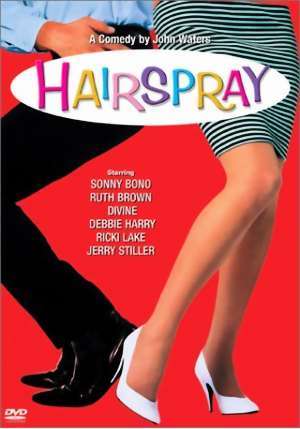
HAIRSPRAY
*** (A must-see)
Directed and written by John Waters
With Ricki Lake, Divine, Leslie Ann Powers, Colleen Fitzpatrick, Ruth Brown, Sonny Bono, Debbie Harry, and Shawn Thompson.
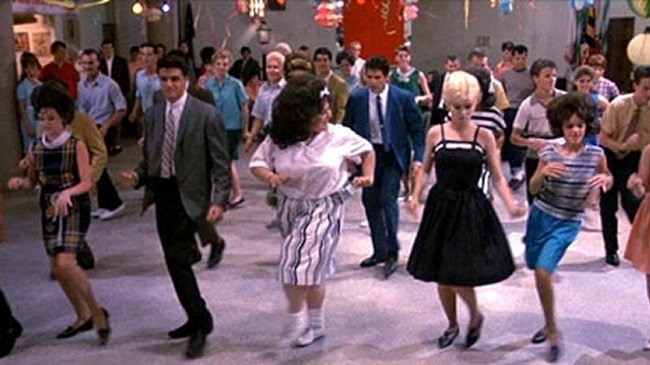
As John Waters is the first to point out, Hairspray is “a satire of the two most dreaded film genres today — the ‘teen flick’ and the ‘message movie.'” But one of the nicest things about this exhilarating, good-natured pop comedy is that it actually is both a teen flick and a message movie. Satirical or not, it redeems as well as revitalizes both genres while celebrating their excesses.
This downscale, urban Dirty Dancing is a cunning crossover maneuver that opens as many doors to the mainstream audience as Waters can reach for, urging black and white, fat and skinny, blue collar and white collar, and generations some 25 years apart to join in the festive euphoria. Read more