From the November 4, 1988 issue of the Chicago Reader. This piece is also reprinted in my first collection, Placing Movies.
The absence of Rob Tregenza’s three features — Talking to Strangers, The Arc, and Inside/Out— on DVD continues to be a major cultural gap, although he says that does have plans to release them all when he can. (Regarding Inside/Out, here are two more links.) And there’s a fourth feature that he shot more recently in Norway, called Gavagai, which was shown in Chicago at Facets.
Before Godard produced Tregenza’s third feature, Inside/Out, he selected Talking to Strangers as his “critic’s choice” for the Toronto International Film Festival and even wrote an extended review of it for their catalog, the same year that he showed For Ever Mozart; I interviewed him about Histoire(s) du cinema at the same festival after he showed me the three latest episodes in his hotel room. — J.R.

TALKING TO STRANGERS
**** (Masterpiece)
Directed and written by Rob Tregenza
With Ken Gruz, Marvin Hunter, Dennis Jordan, Caron Tate, Henry Strozier, Richard Foster, Linda Chambers, and Sarah Rush.
Let us consider this waiter in the cafe. Read more
Written for the Olive Films Blu-Ray in 2016. — J.R.
[Orson Welles’s] desire to transcend the barriers separating the classics, the avant-garde, and popular culture remains, I believe, his most enduring legacy.
— Michael Anderegg, Orson Welles, Shakespeare and Popular Culture (1999)
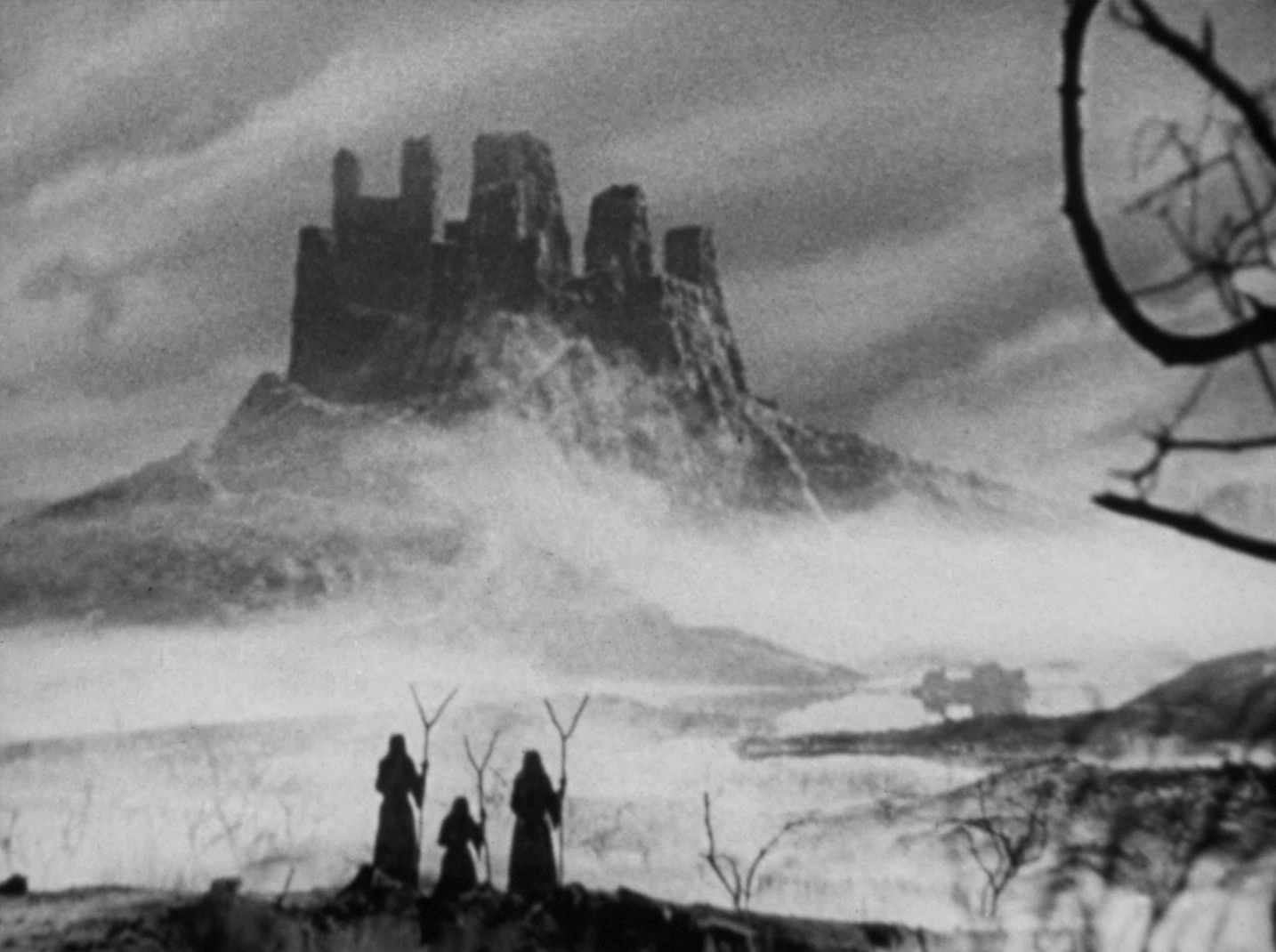
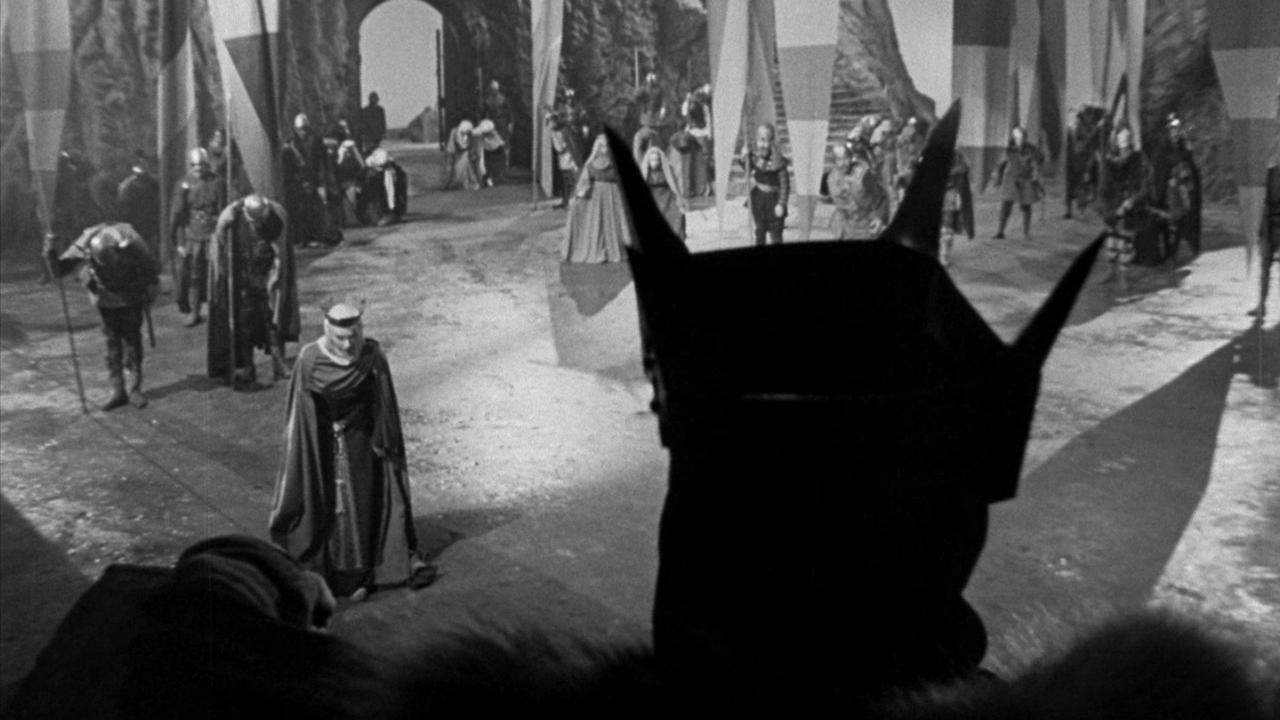
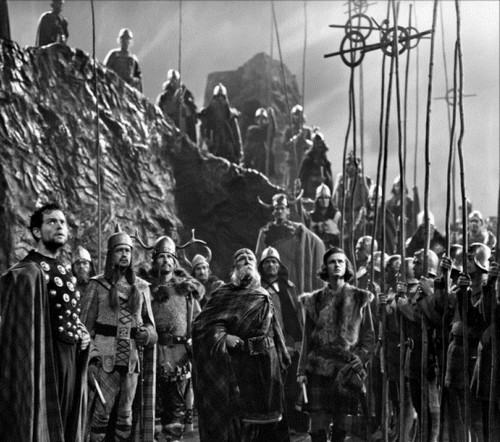
It seems probable that no American film director ever rattled the American mainstream more than Orson Welles, and none of his features rattled that mainstream more than his two versions of Macbeth, made successively out of the same material he shot in 1947, and released successively in the U.S. in 1948 and 1950. Welles’ fifth completed feature, it was the first of many that would come out in more than one version, and the first that decisively shifted his public status, against his own wishes, from that of commercial studio director to that of arthouse auteur — a profile that would be deviated from only by Touch of Evil a decade later, the only other studio feature he would ever make.
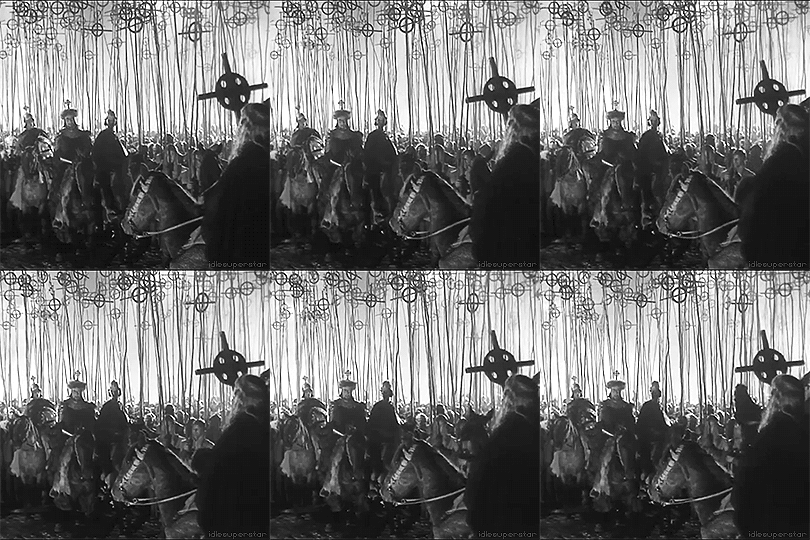
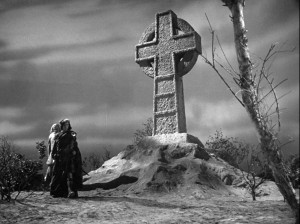
Welles’ approach to the material is wildly neo-primitive and so expressionistic that one can never be entirely sure whether the action is taking place in interiors or exteriors; the same ambiguity persists in the spoken text, where off-screen internal monologue and on-screen external speech often seem only a breath apart. Read more