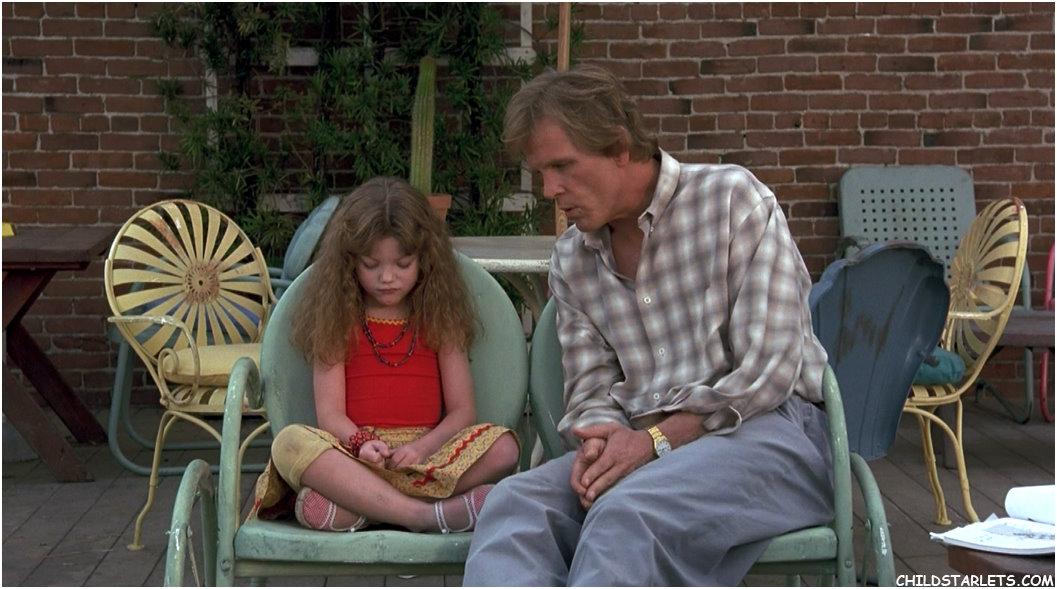
From the February 18, 1994 Chicago Reader. I wrote this before I had a chance to see the film’s original rough cut, when it was still a musical, which I continue to regard as far and away James L. Brooks’ best movie, more than twice as good as what he finally released.. By contrast, the release version reminds me of Erich von Stroheim’s comment about the release version of his Foolish Wives: “They are showing only the skeleton if my dead child.” [2021 afterthought: This now strikes me as more than a little hyperbolic. Some of the musical version of the film is great, but a fair amount of it is weak and/or doesn’t work very well. For more on the subject, go here.] — J.R.

** I’LL DO ANYTHING
(Worth seeing)
Directed and written by James L. Brooks
With Nick Nolte, Whittni Wright, Julie Kavner, Albert Brooks, Joely Richardson, Tracey Ullman, Jeb Brown, and Angela Alvarado.


First riddle: How can a movie about Hollywood professionals also be a movie about learning to be a parent? Answer: When all the Hollywood professionals in the movie act like kids or parents.

However disjointed it felt the first time I saw it, James L. Read more
From the May 1, 1998 issue of the Chicago Reader. This marks the very beginning, the first baby steps, of my fascination with and research into the films of Yasuzo Masumura — an extended project that eventually culminated in a lengthy essay and a dialogue with Japanese critic Shigehiko Hasumi that’s included in a book called Movie Mutations: The Changing Face of World Cinephilia (2003) that I coedited with Adrian Martin. Although several Masumura films have subsequently become available on DVD in the U.S., the U.K., and France, including many of the films I discuss or mention here (e.g., Red Angel, Giants and Toys, and Manji in the U.S., Kisses in the U.K., and Tattoo in the France, the latter called Tatouage), I regret that several favorites — most notably A Wife Confesses and A False Student — continue to be unavailable outside of Japan (where Masumura has subsequently become a popular cult director). The first three illustrations and the very last one used here, incidentally, come from Tattoo [Irezumi] (1966) and A Wife Confesses (1961), respectively. –J.R.
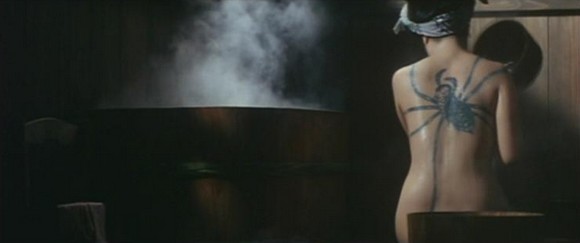


To appropriate one of the categories of Andrew Sarris’s The American Cinema, Yasuzo Masumura (1924-1986) is a “subject for further research.” Read more
This originally appeared in the twelfth issue of Camera Obscura (Summer 1984). I’m delighted that a DVD of Sally Potter’s overlooked, neglected, and scandalously undervalued masterpiece is finally available, from the British Film Institute. I wrote a short essay for the accompanying booklet. –J.R.
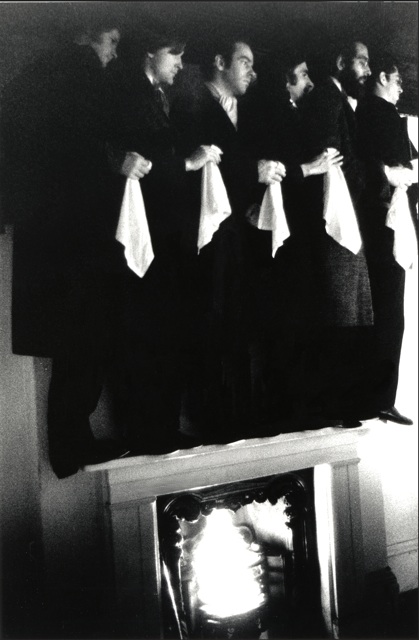
The Gold Diggers: A Preview
Sally Potter’s much heralded British Film Institute production has been encountering a lot of resistance since it premiered at the London Film Festival late last year. When I saw it at the Rotterdam Film Festival in early February, its presence even there was regrettably nominal: screened only once, and in the Market rather than as a festival selection, it was received rather coolly, and many of the critics present left well before the end. Finding the film visually stunning, witty, and pleasurably inventive throughout, I can only speculate about the reasons for the extreme antipathy of my colleagues.
Historically, The Gold Diggers demands to be regarded as something of a proud anomaly. While it contains many familiar echoes of avant-garde performance art (including music, dance, and theater), its only recognizable antecedent in the English avant-garde film tradition appears to be Potter’s own previous Thriller. (An English language film which is international in conception as well as execution, it is marginal in the best and most potent sense of that term.) Read more