Written for Rouge No. 4 (2004). The film can be accessed here. — J.R.
The Gaze of Antonioni
Jonathan Rosenbaum
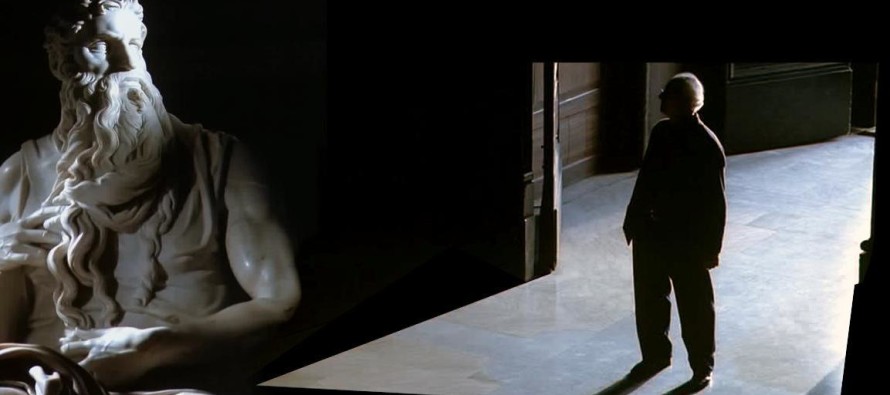
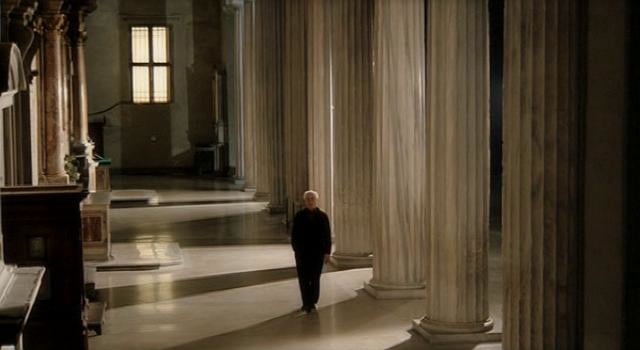
Surfacing without press screenings at a few theatres in the Landmark arthouse chain in the US for two weekend screenings in mid-August, Michelangelo Antonioni’s 17-minute Lo Sguardo di Michelangelo may conceivably be his most interesting film since Red Desert (1964). It’s hard to be sure of this after only one look at it – the film was abruptly withdrawn after qualifying for an Oscar nomination – but I thought afterwards that I might have just seen one of the first truly durable reflections to date on digital cinema.
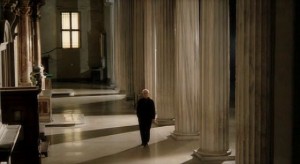
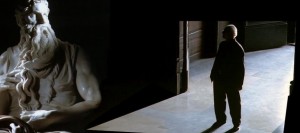
Mislabelled Michelangelo Eye to Eye in English when a more accurate English title might be The Gaze of Michelangelo, this beautifully filmed meditation is preceded by an intertitle – the only words in the film apart from the credits – explaining that Antonioni has been confined to a wheelchair since his stroke in 1985, but through the ‘magic of movies’ shows himself visiting the sculpture on foot. The action consists of Antonioni – walking without a cane, and looking like Antonioni prior to his stroke – entering the St. Pietro church in Rome to look at and then touch and caress portions of the restoration of Michelangelo’s Moses, then leaving again. Read more
From the July-August 1974 Film Comment. Portions of this column (one of my best, and crankiest) have appeared elsewhere, including on this site, but this is the full version. -– J.R.
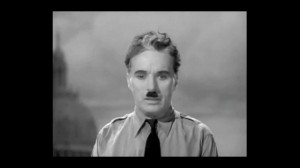
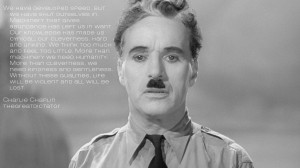
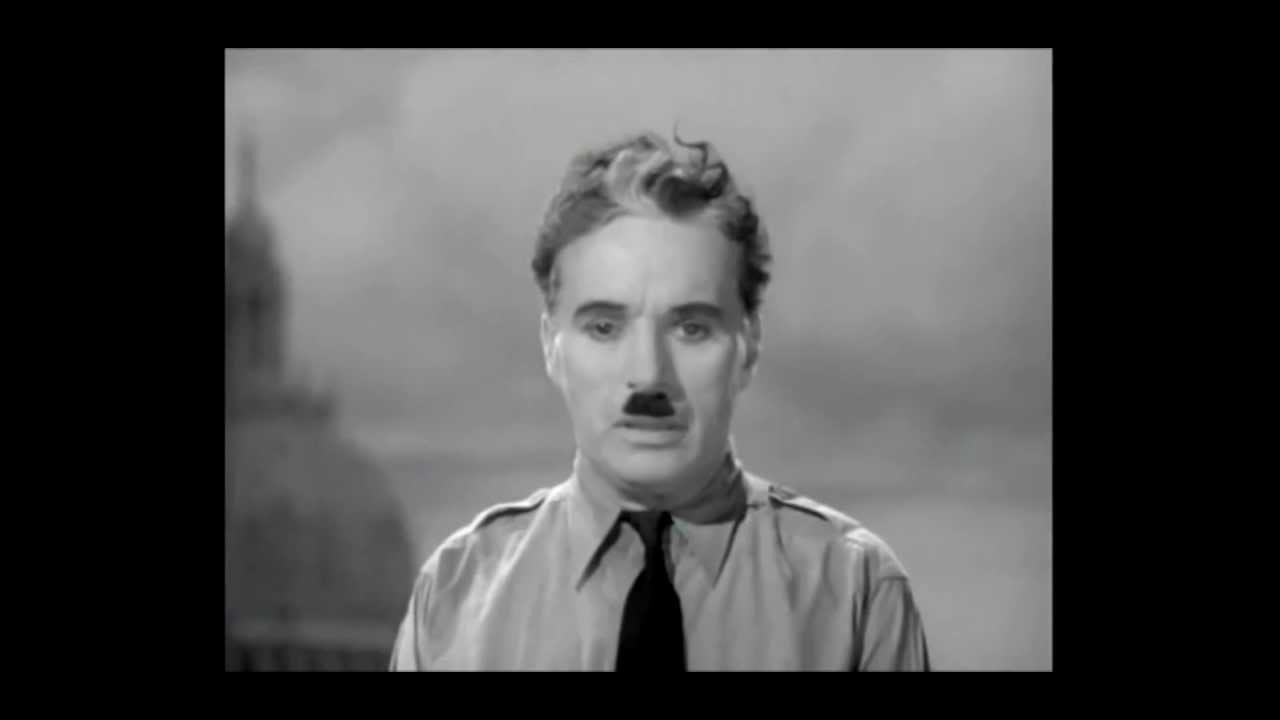
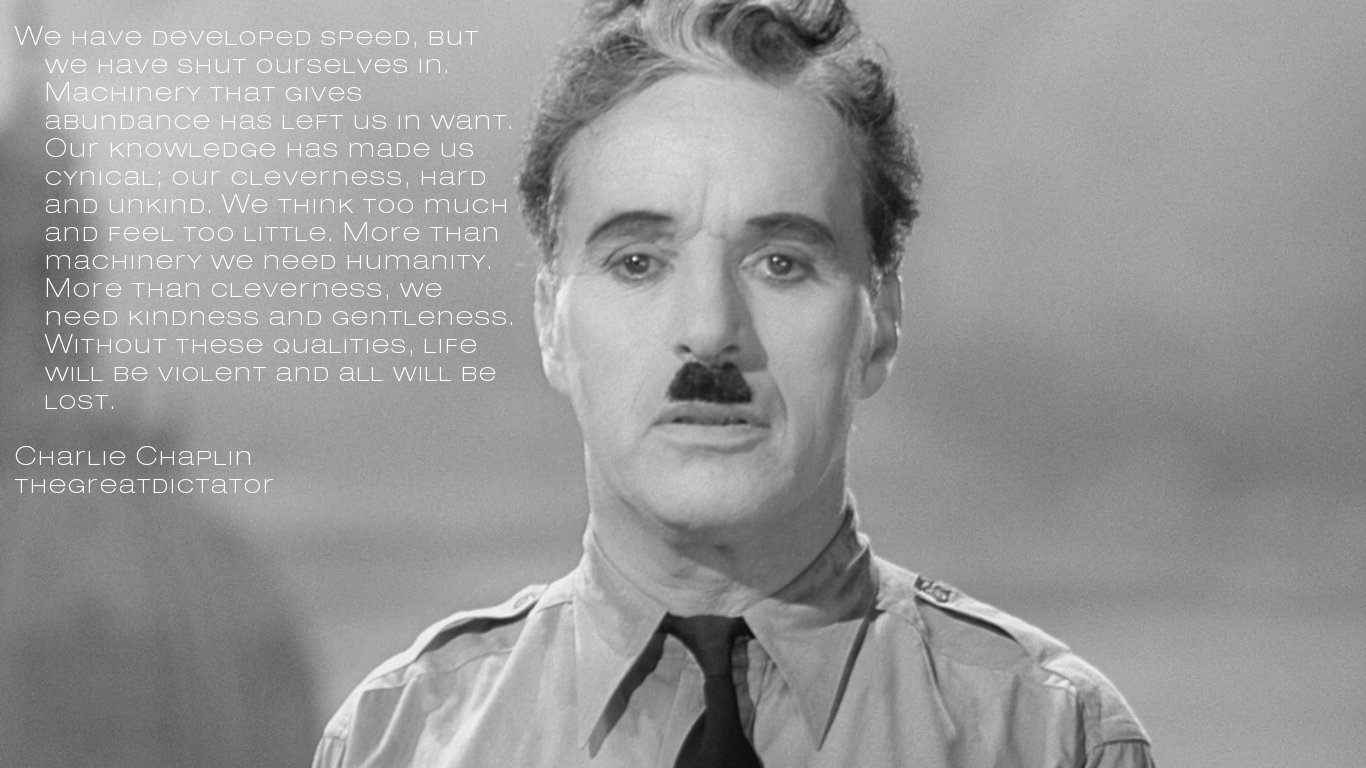
February 16: Chaplin’s THE GREAT DICTATOR. As a friend has pointed out, Chaplin doesn’t really belong to the history of cinema; he belongs to history. What for another artist might only come across as misjudgment, naïveté or bad taste often registers in a Chaplin film as personal/ historical testimony of the most candid and searing sort. Thus the total inadequacy of his impassioned speech at the end of THE GREAT DICTATOR — as art, as thought, as action, as anything — becomes the key experience that the film has to offer, revealing the limitations of human utterance in face of the unspeakable. For roughly two hours, ChapIin has been trying to defeat Hitler by using every trick that he knows; finally exhausting his capacities for comedy and ridicule, and realizing that neither is enough, he turns to us in his own person and tries even harder, making a direct plea for hope. But while he effectively annihilates the Tramp before our eyes, he simultaneously recreates him in a much more profound way, exposing the brutal fact of his own helplessness. Read more
From the Chicago Reader (March 7, 1997). Note: The film is now available with English subtitles. — J.R.
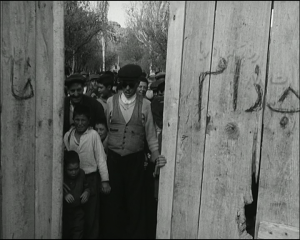
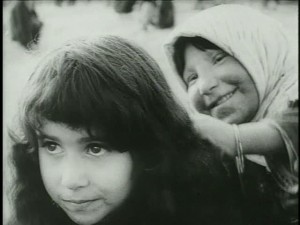
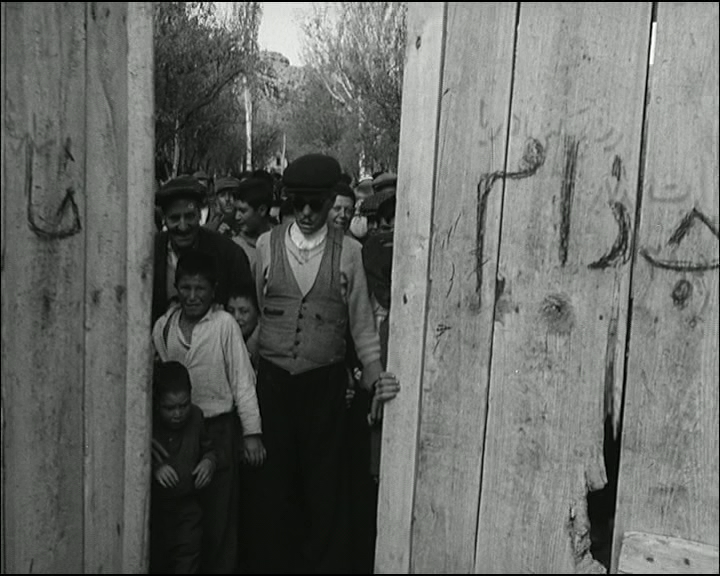
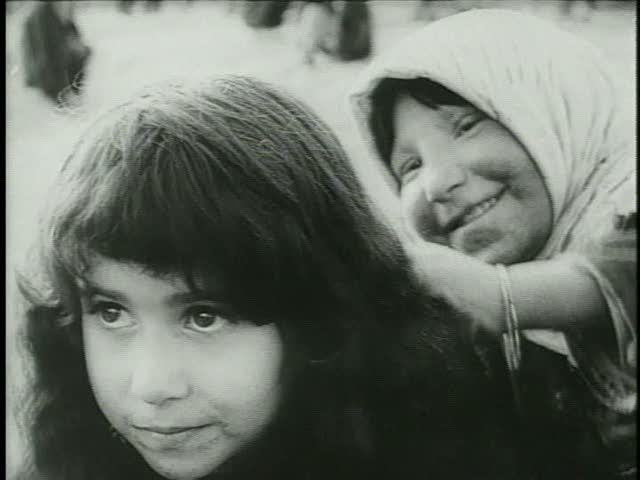
The most powerful Iranian film I’ve seen is this 22-minute black-and-white 1962 documentary made by Forugh Farrokhzad (1935-1967), commonly regarded as the greatest 20th-century Persian poet. It’s her only film and its subject is a leper colony in northern Iran. Part of what’s so special about it is its seamless adaptation of the techniques of poetry to the techniques of film, in which framing, editing, sound, and narration all play central roles. At once lyrical and extremely matter-of-fact — without a trace of sentimentality or voyeurism, yet profoundly humanist — Farrokhzad’s view of everyday life in the colony (children at school and at play, people eating, various medical treatments) is spiritual, unflinching, and beautiful in ways that have no apparent Western counterparts; to my eyes and ears, it registers like a prayer. This extremely rare film has never been subtitled, but at a symposium on Farrokhzad’s life and work, Chicago filmmaker Mehrnaz Saeed-Vafa will follow a video screening of The House Is Black with a discussion in English. Preceding this will be the premiere of a video documentary in English that I haven’t seen, Mansooreh Saboori’s I Shall Salute the Sun Once Again, and a discussion with Saboori. Read more