Written for Chantal Akerman: Four Films, a DVD box set released by Icarus Films on March 29, 2016. — J.R.

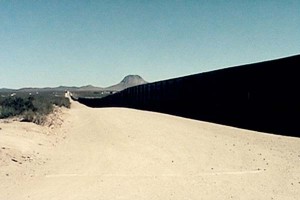
“When you try to show reality in cinema, most of the time it’s totally false. But when you show what’s going on in people’s minds that’s very cinematic.”
Chantal Akerman
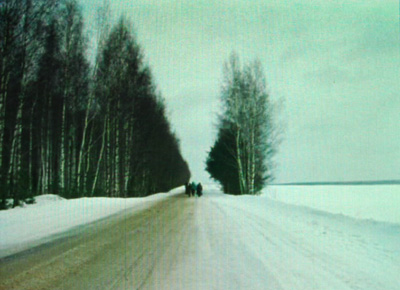
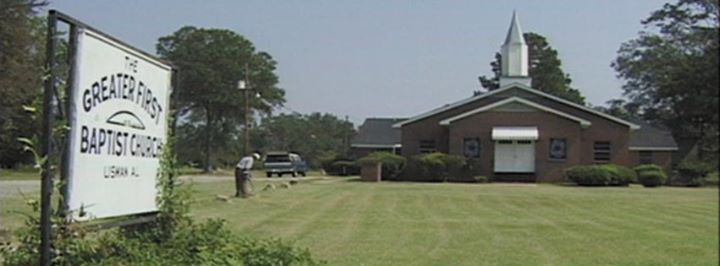
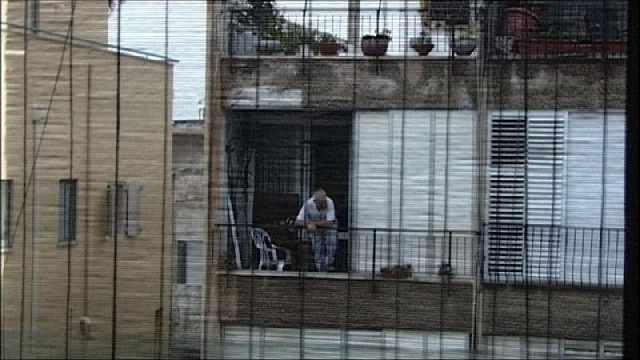
If I had to describe the art of Chantal Akerman (1950-2015) in a single word, I think I’d opt for “composition”. This is a term that needs to be understood in its plastic as well as its musical meanings: a visual object that has to be framed in space, a musical object that has to be composed in time. And if we factor in the implied definitions offered above by Akerman regarding what’s reality and what’s cinematic, what’s going on in people’s minds and what’s going on in front of a camera and microphone, then we have to acknowledge that what she chooses to compose represents a kind of uneasy truce between all four elements (or five elements, if we regard sound and image as separate). How much she and we privilege mind over matter and cinema over reality — or vice versa — has a lot of bearing on what’s derived from the encounter. Read more
From Omni (September 1983). — J.R.
For a conceptual artist who’s more often concerned with representation than with straight entertainment, Canadian filmmaker Michael Snow can be a pretty jokey fellow. In fact, of all the avant-garde artists I know, he may well be the one who laughs the most and the hardest. His longest and craziest movie — the 260-minute, encyclopedic “Rameau’s Nephew” by Diderot (Thanx to Dennis Young) by Wilma Schoen — contains a grab bag of assorted puns, puzzles, and adages, from lines like “eating is believing” and “hearing is deceiving” to a mad tea party where words and sentences recited backward are then reversed to sound vaguely intelligible. Even “Wilma Schoen” in the title is an anagram for Snow’s name. One of his shortest works, the eight-minute Two Sides to Every Story, is projected on two back-to-back screens, simultaneously showing the same events in the same room from opposite angles.
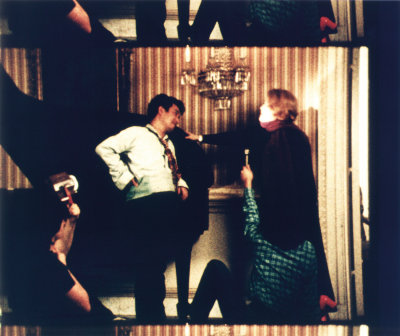
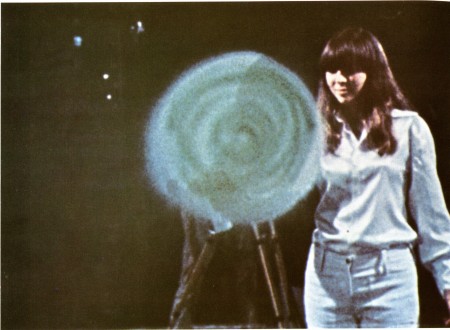
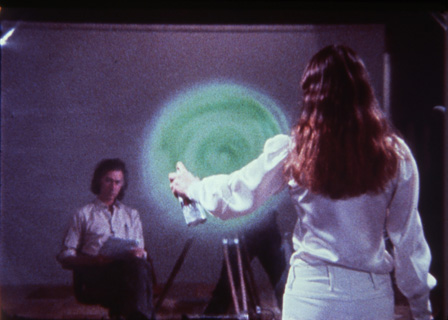
Just as typical, in the living room of Snow’s house in Toronto, where I recently interviewed him, is a front door that isn’t in use — or rather is in use, but not as a front door. Over the side facing inside the room is a life-size color photograph of a painting of the same door. Read more
From the Chicago Reader (March 9, 1990); revised in October 1995 for my collection Movies as Politics. — J.R.
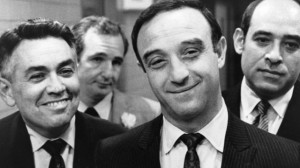
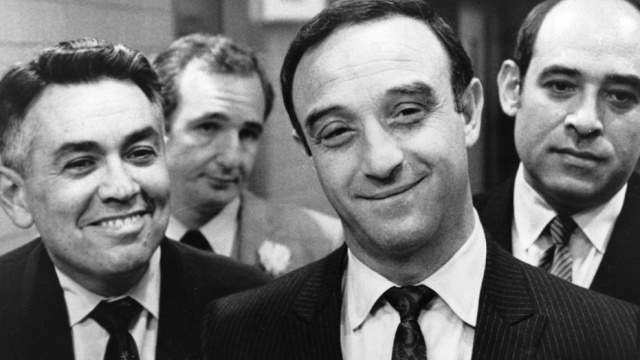
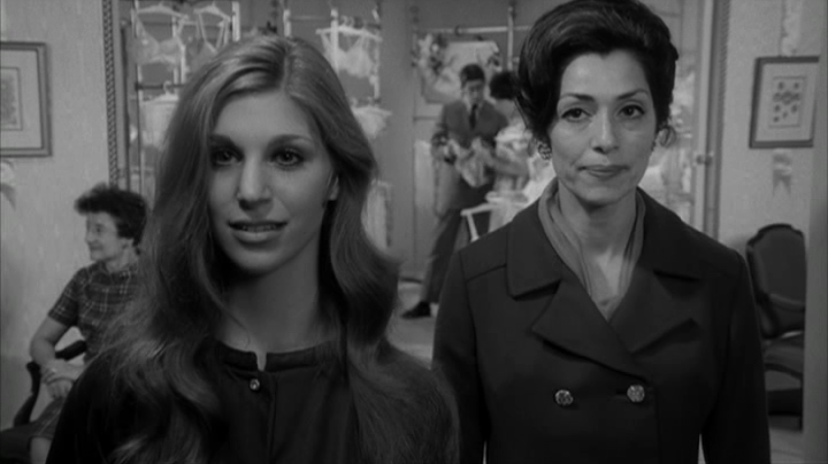
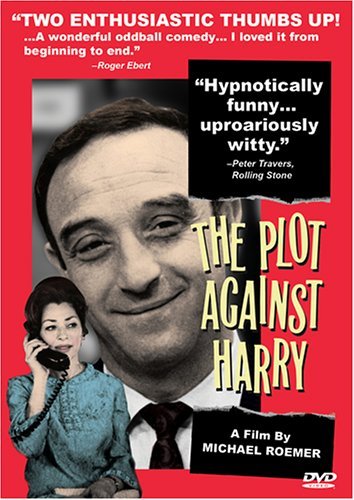
THE PLOT AGAINST HARRY *** (A must-see)
Directed and written by Michael Roemer
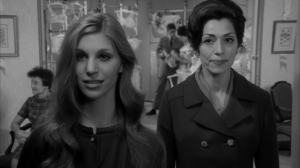
With Martin Priest, Ben Lang, Maxine Woods, Henry Nemo, Jacques Taylor, Jean Leslie, Ellen Herbert, and Sandra Kazan.
I hate stars. There’s a part of our culture that devotes itself ceaselessly to producing, promoting, and consuming them, and a lot of people would have you believe that they rule our consciousness — our politics, our fantasies, our ideas, our conversation, our art and entertainment. But one of our best-kept and most precious secrets is that a great deal goes on in our culture and in our lives that has nothing, absolutely nothing, to do with stars and everything to do with ordinary people.
Insofar as we can distinguish between illusion and reality — and the popularity of someone like Reagan suggests that we neither can nor want to very much — ordinary people, not stars, form the fabric of our daily existence; and most movies, simply by virtue of the fact that they have stars, ignore, deny, and impugn that fabric. An inordinate amount of energy in our society is devoted to proving that stars (Reagan or Bush, Cruise or Streep, Madonna or Jagger, Trump or Warhol, Spielberg or Sontag) are ordinary people just like you and me, when it might be more useful to prove that ordinary people — the people we live with — are the stars that actually belong in our constellations. Read more