Daily Archives: May 27, 2025

Bird

From the Chicago Reader (October 28, 1988). — J.R.

Clint Eastwood’s ambitious and long-awaited biopic about the great Charlie Parker (Forest Whitaker), running 161 minutes, is the most serious, conscientious, and accomplished jazz biopic ever made, and almost certainly Eastwood’s best picture as well. The script (which accounts for much of the movie’s distinction) is by Joel Oliansky, and the costars include Diane Venora as Chan Parker, Michael Zelniker as Red Rodney, and Samuel E. Wright as Dizzy Gillespie. Alto player Lennie Niehaus is in charge of the music score, which has electronically isolated Parker’s solos from his original recordings and substituted contemporary sidemen (including Monty Alexander, Ray Brown, Walter Davis Jr., Jon Faddis, John Guerin, and others), mainly with acceptable results. The film is less sensitive than it might have been to Parker’s status as an avant-garde innovator and his brushes with racism, and one is only occasionally allowed to listen to his electrifying solos in their entirety, without interruptions or interference (as one was able to do more often with the music in Round Midnight), but the film’s grasp of the jazz world and Parker’s life is exemplary inmost other respects. The extreme darkness of the film, visually as well as conceptually, leaves a very haunting aftertaste. Read more
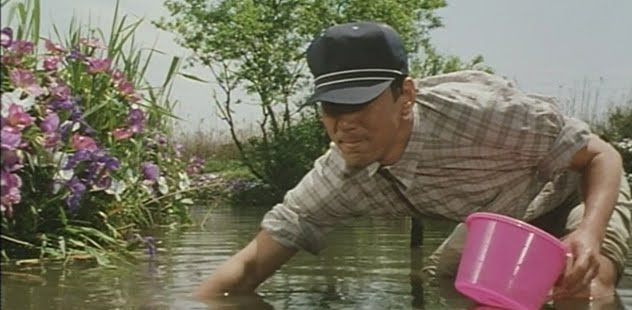
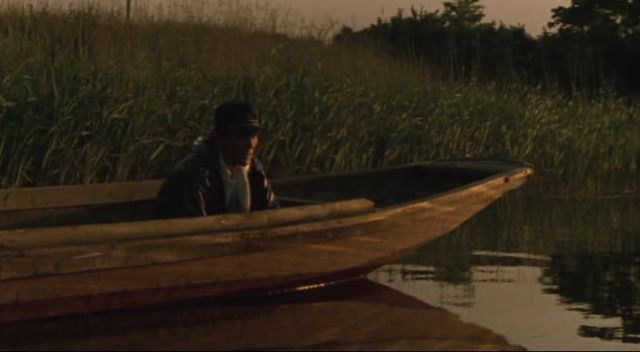
Wriggling Free of Perfection [THE EEL]

From the Chicago Reader (September 11, 1998). — J.R.

The Eel

Rating *** A must see

Directed by Shohei Imamura

Written by Motofumi Tomikawa, Daisuke Tengan, and Imamura

With Koji Yakusho, Misa Shimizu, Fujio Tsuneta, Mitsuko Baisho, Akira Emoto, and Sho Aikawa.

I’ve seen only five of Shohei Imamura’s 19 features, most of them so many years apart that it’s hard to see many stylistic or thematic connections. Yet there’s no doubt in my mind that his 18th, The Eel (1997) — which shared last year’s Palme d’Or with Taste of Cherry and opens this week at the Music Box — is the most interesting new movie around: funny, lyrical, provocative, imaginative, and consistently entertaining. That it happens to be Japanese is incidental to its interest, though I suppose a lot of people won’t go to see it because it isn’t in English. (I suspect the problem isn’t so much xenophobia as habit; most Americans have never seen a subtitled movie and probably regard the prospect of seeing one as work.)

It’s been a truism for quite some time that the Japanese cinema is in terrible shape, financially and aesthetically (particularly now that Akira Kurosawa has died) — though it’s not clear to what extent one should believe the overseas commentators who sift through the available evidence. Read more