From the Chicago Reader (January 18, 1991). — J.R.
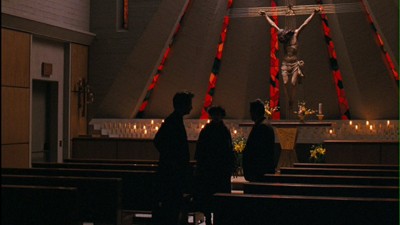
THE GODFATHER PART III
*** (A must-see)
Directed By Francis Ford Coppola
Written by Mario Puzo and Coppola
With Al Pacino, Andy Garcia, Sofia Coppola, Eli Wallach, Talia Shire, Diane Keaton, and Joe Mantegna.
Let’s agree from the outset that the conclusion of the Godfather trilogy is not giving audiences everything that they expected based on the two previous installments. Shorter at 160 minutes than either of the first two parts, it proceeds in fits and starts, without the sustained narrative sweep of the first or the comprehensive historical spread of the second. Overall, there is less of a continuous story line (and less lucidity, coherence, and conviction regarding what plot there is), less violence, and less dramatic conflict; the quality of the performances is more variable; the settings are less memorable. There are even moments of risible implausibility. (Suffering insulin shock while visiting Cardinal Lamberto in a garden, Michael Corleone requests something sweet, and a pitcher of orange juice appears within seconds; and the virtuoso climactic sequence at the opera ultimately strains credibility by drawing together too many events at once.)
But conceptually and morally, one can argue that The Godfather Part III is superior to the two films in the Corleone family saga that preceded it. Read more
From the Chicago Reader (August 11, 1995). — J.R.
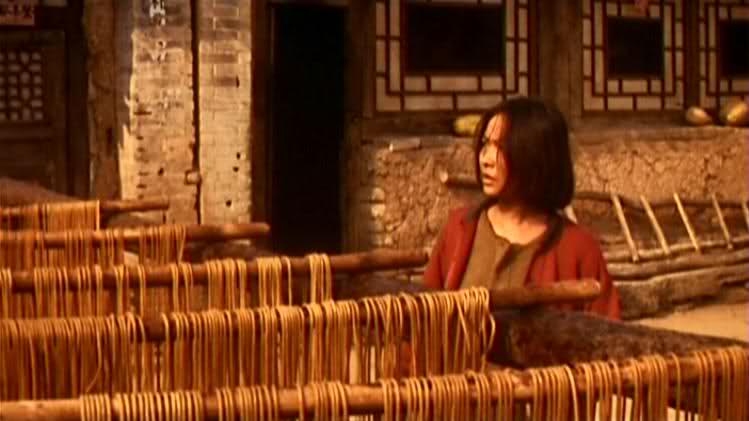
The Day the Sun Turned Cold
Rating *** A must see
Directed and written by Yim Ho
With Siqin Gowa, Tuo Zhong Hua, Ma Jing Wu, Wai Zhi, Shu Zhong, and Li Hu.
A striking moment in Mina Shum’s Double Happiness — a recent Canadian feature about an aspiring young actress in a North American city — reveals something about our attitudes toward Chinese culture. The Chinese-American heroine is auditioning for a small part as a waitress in a TV movie. After she runs through her lines, her prospective employers ask how good she is with accents. Pretty good, she replies; at this point we’ve already heard her southern drawl, and now she asks them in a French accent what kind of accent they want — French, perhaps, or something else? There’s a long, embarrassed silence, until she figures out that they want her to speak with a Chinese accent. She promptly does so, and with the same exaggeration she’d given her Southern Belle and Basic Frog. She immediately gets the part.
When Chinese movies audition for release in the North American market, I’m afraid the same sort of unspoken rules apply. Read more
From the Chicago Reader (September 19, 1997). — J.R.
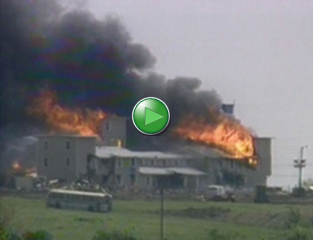
Waco: The Rules of Engagement
Rating ** Worth seeing
Directed by William Gazecki
Written by Gazecki and Dan Gifford
Narrated by Gifford.
At some point in the middle of Dog Day Afternoon (1975) Sonny Wortzik (Al Pacino at his best) — a small-time operator and bisexual who’s taken over a bank to finance his male lover’s sex-change operation — has to step outside to bargain with the police. When it becomes clear that the crowd of bystanders and media that has gathered is more sympathetic to him than to the armed police, he calls out “Attica!” as a gesture of solidarity with the crowd and against the forces of law and order, which wins him more acclamation.
It’s a moment I recalled while thinking about the veiled allusion to the conflagration at Waco made by Timothy McVeigh on the day he was sentenced. This wasn’t because McVeigh, who has none of Wortzik’s charisma, qualifies as any sort of populist hero. It was because the fact that there can be no equivalence between the Waco disaster and the Oklahoma City bombing was apparently lost on McVeigh, just as the fact that there could be no equivalence between the slaughter of Attica prisoners in 1971 and robbing a bank was apparently lost on Wortzik — not to mention the crowd he was addressing. Read more
