Jean Grémillon remains one of the major French filmmakers whose films are most egregiously unavailable on DVD, especially when it comes to versions with English subtitles — although I’m delighted to report that Criterion’s Eclipse brought out three of his greatest ones, all made during the Occupation, including the two that are discussed here and Remorques. This article appeared in the October 25, 2002 issue of the Chicago Reader. –— J.R.
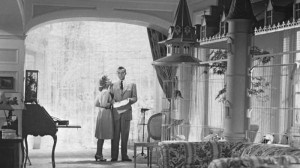

Lumière d’été **** (Masterpiece)
Directed by Jean Grémillon
Written by Jacques Prévert and Pierre Laroche
With Madeleine Renaud, Pierre Brasseur, Madeleine Robinson, Paul Bernard, Georges Marchal, and Marcel Lévesque.
Le ciel est à vous **** (Masterpiece)
Directed by Jean Grémillon
Written by Albert Valentin and Charles Spaak
With Madeleine Renaud, Charles Vanel, Jean Debucourt, Léonce Corne, Albert Rémy, and Robert le Fort.

A friend and colleague, critic and teacher Nicole Brenez, says that the best film criticism consists of films critiquing one another. This may sound a mite abstract, but two very different masterpieces by the great, neglected Jean Grémillon, Lumière d’été and Le ciel est à vous, seem to offer a concrete example of this, as a critique of Jean-Luc Godard’s In Praise of Love, which I wrote about last week. Read more
From Cinema Scope #46 (Spring 2011). — J.R.

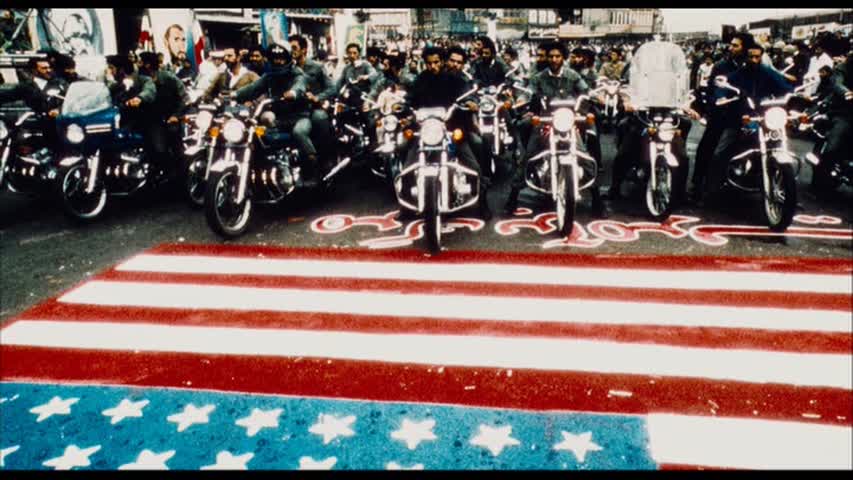
Underneath the Persian credits, over heavy metal music, the camera roams around inside a colour photograph, grazing over pointillist surfaces and male faces — finally pulling back to reveal the Islamic Revolution Guard Corps in 1983, getting ready to drive their motorcycles over a huge replica of the American flag on the pavement in front of them. Cut to black and the film’s title, The Hunter.

Cut to a highway tunnel, then to a rifle being loaded in the woods, then to the same title hero (played by the writer-director, Rafi Pitts) holding the rifle in front of a raging campfire at night. Cut to an overhead shot of a busy Tehran freeway — then to a sinister carwash that seems to be located in the general vicinity of Hell, smoky fumes rising from the spray. And finally to the hero being told by a potential employer that as a convict he doesn’t qualify for a day job, he has to take the night shift. But as we discover a little later, his wife Sara already has a day job, meaning that when he takes the night watchman job, he’ll have little time to spend with her and their six-year-old daughter. Read more
From the Chicago Reader (March 13, 1992). This film can now be accessed online. — J.R.
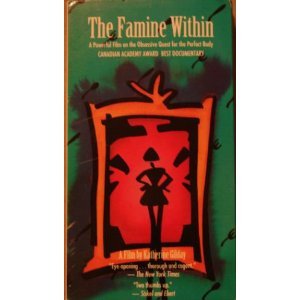
THE FAMINE WITHIN
*** (A must-see)
Directed and written by Katherine Gilday.
Some theorists believe it is the larger North American society that needs healing, that women’s bodies today are the symbolic area in which a larger drama of cultural values is played out. — narrator, The Famine Within
Siskel and Ebert, among others, have been arguing that the documentary nominating committee of the Academy Awards needs a major revamping. Their beef is that the most popular and widely discussed documentaries of the past few years — like The Thin Blue Line, Paris Is Burning, Roger & Me, and Hearts of Darkness: A Filmmaker’s Apocalypse — never get nominated. Implicit in this argument is the notion that the most popular movies are usually the best, a notion that the awarding of most of the remainder of the Oscars is predicated upon. To accept any serious challenge to this sacred premise would be to undermine our faith in distributors, exhibitors, critics, publicists — the film industry itself. Perish the thought: if we lost our faith in all of the above, we might actually have to start thinking for ourselves. Read more
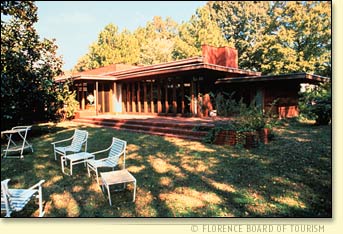
Cruising on the Internet, I just accessed on the PBS website a photograph that purports to be an exterior view of the Usonian house that I grew up in, designed by Frank Lloyd Wright, in Florence, Alabama. I got there by following a link on the Wikipedia entry for “Stanley Rosenbaum Residence”—an entry that incidentally includes an accurate view of the exterior, reproduced directly below:
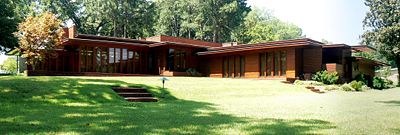
I know my memory isn’t playing tricks on me—not only because I know the house by heart, after living there for the first 16 years of my life, but also because I visited it quite recently, earlier this month. The first photograph is clearly the exterior of another, albeit quite similar, Wright house, and I’m sorry that I’m not enough of a Wright expert (as my brother Alvin is) to be able to identify it precisely. If you look closely at the row of glass doors on the left in the second photograph, you can barely see the thin line of a stone terrace just underneath them that is remarkably similar to the one seen much more clearly in the top photograph that juts to the right in a diagonal line and then ends, with three steps just below it. Read more