From the Chicago Reader (December 12, 1997). — J.R.
Four Corners
Rating *** A must see
Directed and written by James Benning.
I’ve been brooding a lot lately about the way in which many of the best movies around have been ravaged by “narrative correctness.” This is the notion fostered by producers, distributors, and critics — often collaborating as script doctors and always deeply invested in hackwork — that there are “correct” and “incorrect” ways of telling stories in movies. And woe to the filmmaker who steps out of line. Much as “political correctness” can point to a displaced political impotence — a desire to control language and representation that sets in after one despairs of changing the political conditions of power — “narrative correctness” has more to do with what supposedly makes a movie commercial than with what makes it interesting, artful, or innovative. Invariably narrative correctness means identifying with the people who pay for the pictures rather than with the people who make them.
Last year we had reviewers stomping on Jim Carrey in The Cable Guy and Tim Burton in Mars Attacks! for daring to move beyond their more lucrative formulas to try something different, though their crimes were crimes of subject and tone rather than of storytelling. Read more
From the Chicago Reader (April 13, 1990). — J.R.

THE COOK, THE THIEF, HIS WIFE & HER LOVER
* (Has redeeming facet)
Directed and written by Peter Greenaway
With Richard Bohringer, Michael Gambon, Helen Mirren, Alan Howard, and Tim Roth.
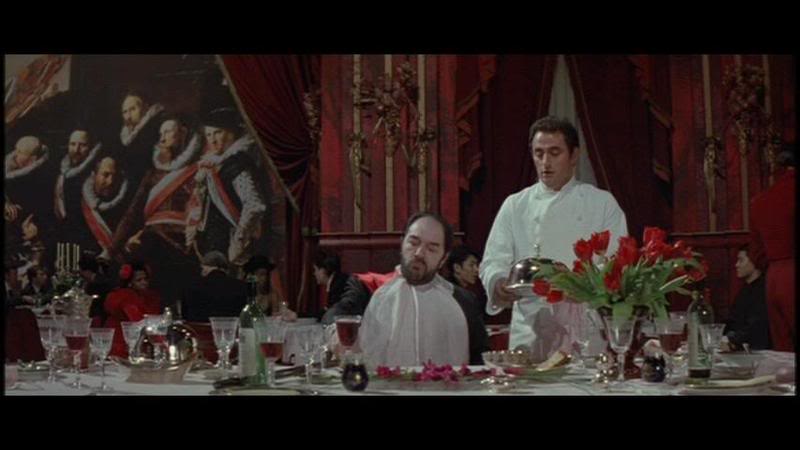
On the face of it, this movie seems to have a good many things going for it. Although he was born in 1942, Peter Greenaway is still probably the closest thing that the English art cinema currently has to an enfant terrible. A former painter and film editor who started making experimental films in the mid-60s, he achieved an international reputation with The Draughtsman’s Contract in 1982; he went on to become a star director and cult figure in Europe with several TV films and three more features that had considerable success in both England and France as well as on the international festival circuit — A Zed & Two Noughts (1986), The Belly of an Architect (1987), and Drowning by Numbers (1988) — although they have had only limited circulation in the U.S. A fair number of my film-buff friends swear by him, and he is commonly regarded as the most “advanced” art-house director currently working in England.
Greenaway’s latest feature makes sterling use of many of his longtime collaborators: Sacha Vierny, one of the best cinematographers alive (working here in ‘Scope), whose credits include Hiroshima, mon amour, Last Year at Marienbad, Muriel, Belle de jour, and Stavisky, as well as films by Raul Ruiz and Marguerite Duras; composer Michael Nyman, a sort of neoclassicist who has worked for everyone from the Royal Ballet to Steve Reich to Sting; and production designers Ben Van Os and Jan Roelfs, former interior designers who have worked in the Dutch film industry since 1983. Read more
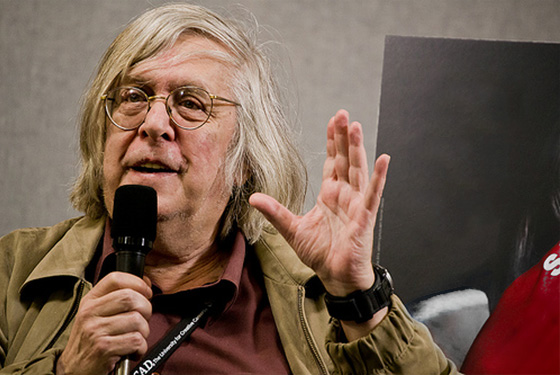
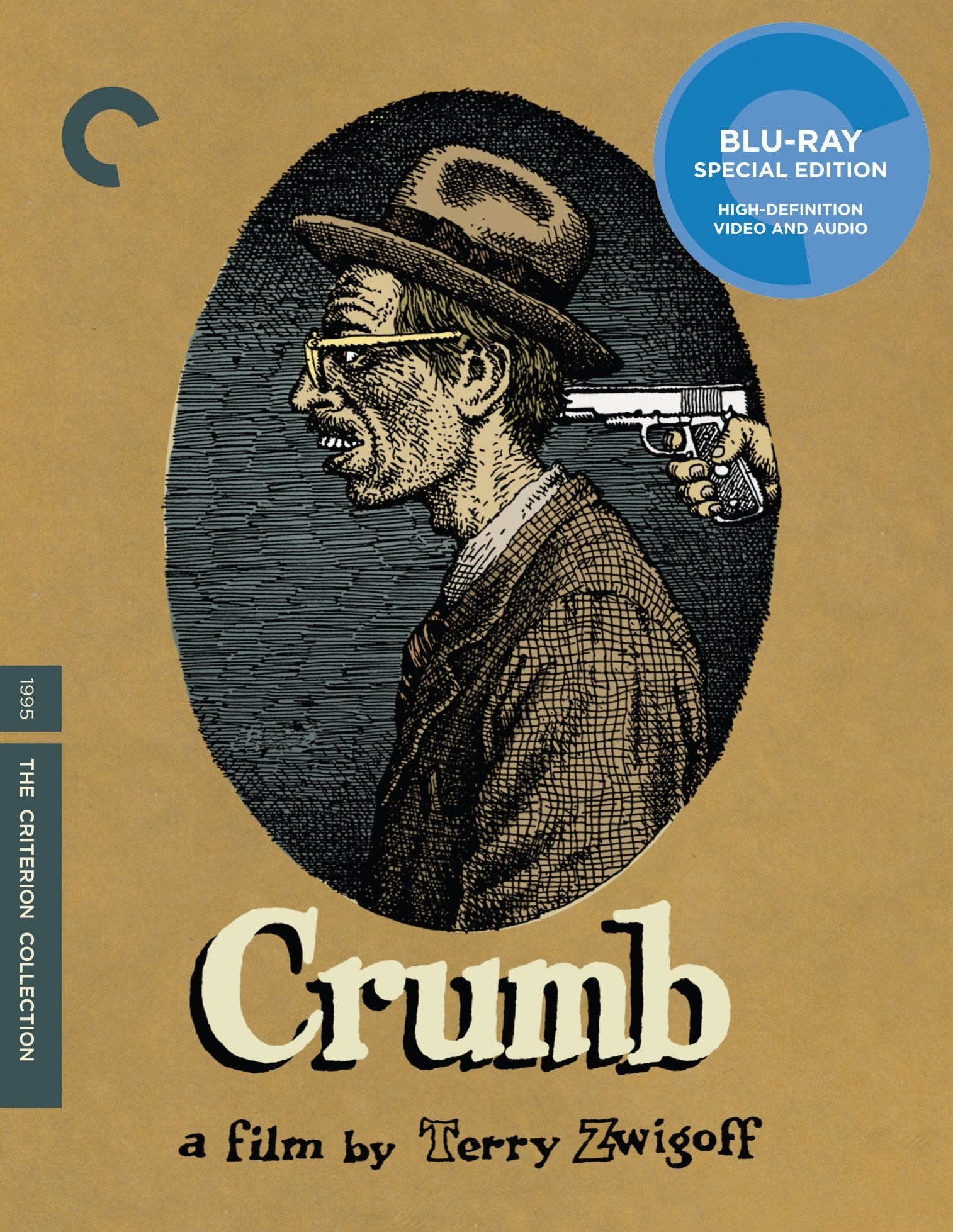
Written in 2010 for Criterion’s DVD and Blu-Ray. This is the second of my essays about Terry Zwigoff’s documentary; for the first one, written 15 years earlier, go here. — J.R.
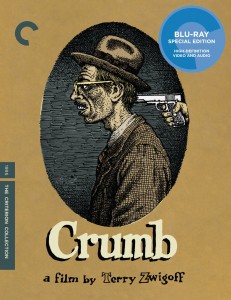
Now that Terry Zwigoff’s Crumb is about fifteen years old, it seems pretty safe to say that it has evolved from being a potential classic to actually becoming one. But what kind? A documentary portrait of a comic-book artist, musician, and nerdy outsider? A personal film essay? A cultural study? An account of family dysfunction and sexual obsession? Or maybe just a meditation on what it means to be an American male artist — specifically, one so traumatized by his adolescence that he has never found a way of fully growing past it.
In fact, Crumb is all these things, with a generous amount of thoughtful art criticism thrown in as well. An old friend of Robert Crumb’s, Terry Zwigoff shot the movie over six years and edited it over three, and the multifaceted density and sometimes disturbing nature of what he has to show and say over two hours seems partly a function of the amount of time he had to mull it over. It’s worth adding that he was in therapy for part of that time, which surely had an impact on the film’s searching thoughtfulness and on Zwigoff’s own investment in the material. Read more