From Film Comment (July-August 1976). In some respects, I think this may be the best of all my many Journals for Film Comment, but for my readers who feel that my work is sometimes (or often) marred or even ruined by my strident tone, it may also be legitimately regarded as my worst. Among other negative consequences, Truffaut read my comments about THE STORY OF ADELE H. and wrote me an angry letter about them (which can be accessed, along with my response to it, on this site), I suspect (without actually knowing) that my passing comment about Pauline Kael may have sabotaged any hopes I’d had about ever becoming friends with her, and my friend (at the time) Gilbert Adair, cited just before the end of this piece, was furious about the over-the-top way I expressed my displeasure with Charles Barr in Movie. For better and for worse, I think this shows my writing at its most intense. -– J.R.
March 25 (London): A KING IN NEW YORK.Even on a Steenbeck, Chaplin’s penultimate feature and last extended performance has such a naked power of embarrassment and assault that one can see right away why so many have recoiled from it. Read more
Written for The Unquiet American: Transgressive Comedies from the U.S., a catalogue/ collection put together to accompany a film series at the Austrian Filmmuseum and the Viennale in Autumn 2009. — J.R.
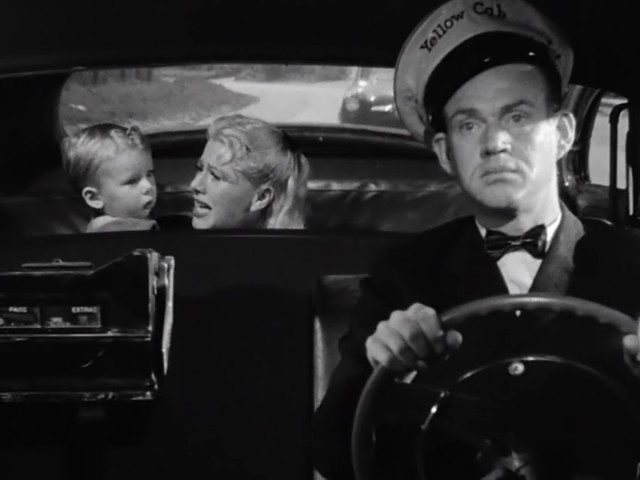
MONKEY BUSINESS (1952)
Although technically a fantasy, this characteristically
grim Howard Hawks comedy about the fear of aging
and the worship of youth is arguably one of his most
honest and realistic, therefore among the most frightening.
A chimpanzee in a chemistry lab manages to
create a youth potion accidentally ingested by the
middle-aged scientist-hero (Cary Grant), who regresses
first to his teens and then, after a second dose, to
his attitudes and behavior in grammar school, which
also happens eventually to his wife (Ginger Rogers)
and boss (Charles Coburn), thereby debunking a
good many myths about youth and happiness (such
as those involving carefree innocence) in the process.
Broadly speaking, this movie does for (and with)
ageism what Gentlemen Prefer Blondes, shot half a
year later (with some of the same cast members, including
Marilyn Monroe, Coburn, and George Winslow),
does for (and with) capitalism, albeit with less
celebratory cynicism and more visible despair. This
doesn’t mean, of course, that it isn’t funny; at least
four Hollywood pros (Ben Hecht, Charles Lederer,
I.A.L. Read more
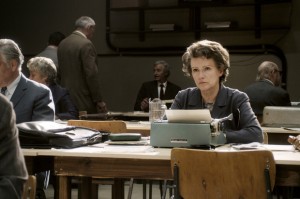
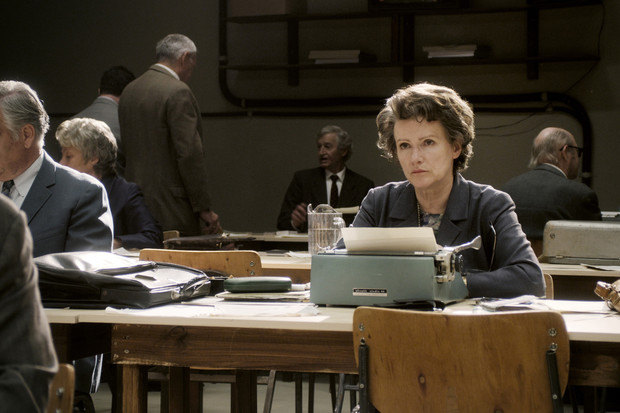
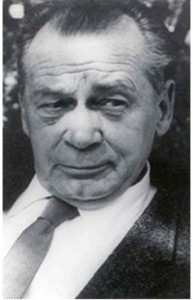
I never expected to see any Margarethe von Trotta movie more than once, but Hannah Arendt proved to be well worth a second look. Some of my reasons for going back are undoubtedly personal; Arendt’s husband, Heinrich Blücher, astutely played in the film by Axel Milberg, is by far the greatest teacher I’ve ever had, two of whose seminars at Bard College I was fortunate to take, and Arendt’s Eichmann in Jerusalem, the main focus of the film, appeared in The New Yorker during the same period. The controversy it sparked among New York intellectuals at the time made it the major topic of discussion among visiting speakers; I can recall lengthy conversations I had or overheard with Harold Rosenberg and Dwight Macdonald, among many others who came to campus during that period. (Lionel Abel, perhaps the most intemperate of Arendt’s foes, also came, but as I recall I went out of my way to avoid broaching the subject with him.) And there were plenty of snack-bar dialogues at Bard with Blücher on the same subject.

For me, part of the singularity of both Blücher and Arendt (whom I met only briefly, once in their Riverside Drive apartment) was the degree to which art, politics, philosophy, moral seriousness, and a remarkable passion for ethics interfaced in their discourse and lives with an unflagging intensity, and what I cherish most about von Trotta’s movie is the degree to which she — and, above all, Barbara Sukowa as Arendt — capture this. Read more