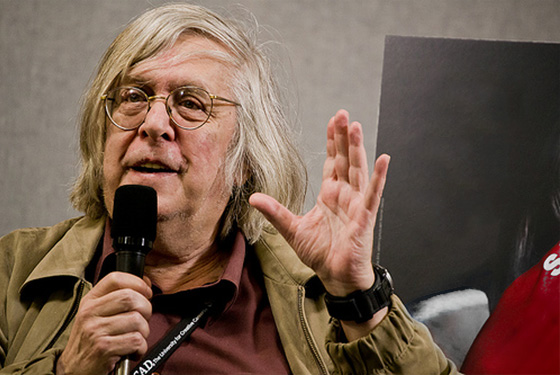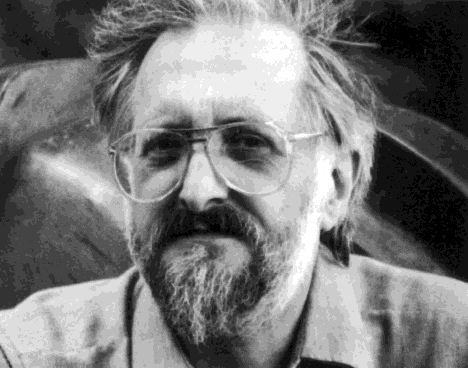
While eagerly awaiting the publication of the aptly named Images of the Mind: The Essential Raymond Durgnat, a definitive collection edited by Henry K. Miller that the British Film Institute will apparently publish later this year, I’ve just found time to experience the pleasure of a remarkable 1992 documentary with half of the same title, Jarmo Valkola’s 45-minute Images of the Mind: Cinematic Visions by Raymond Durgnat — a film now available at newly revamped Durgnat web site that manages to be both a wonderful portrait of the greatest of all English film critics (1932-2002), speaking as both a fan and as a friend over the last three decades of his life (as well as one-time house mate, circa 1977-78), and a brilliant lecture by Ray about the nature of film, the history of the English character in the 20th century, and the art of Michael Powell. Indeed, the only thing that can be said to be dated about this remarkable film is the fact that it cites Durgnat’s still-unpublished book about Powell as one of his publications. Otherwise, it impressively predates the recent film criticism on film that can be found in the work of Kevin Lee and Volker Pantenburg, among many others. Read more
From Scenario, Vol. 4, No. 1, Spring 1998. –- J.R.
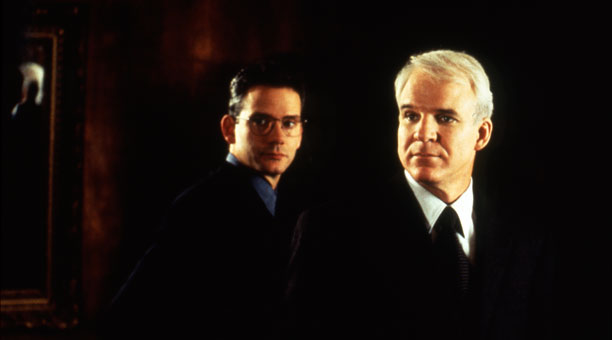
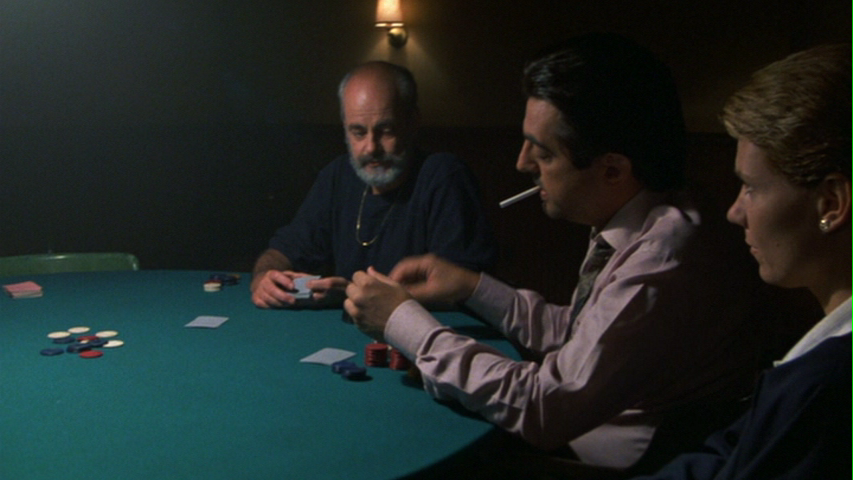
“Hitchcock lives!” I was inspired to write at the head of my review of House of Games, David Mamet’s first feature, in 1987. Ten years later, Mamet’s fifth feature, The Spanish Prisoner, boasts plenty of Hitchcockian elements of its own. But this time I’m not as prone to employ the same assertion.
The difference has less to do with Hitchcockian influence than with the use of that influence — the issue of whether Mamet is borrowing something substantive from the Master of Suspense, or drawing upon Hitchcock only when it suits his strategies. But one of the salient differences I find between reading the script of The Spanish Prisoner and seeing it realized is the difference between finding a Hitchcockian thriller on the page and not quite seeing one on the screen. Both are clearly Mamet creations, but the first comes closer to showing Hitchcock’s special qualities in tandem with Mamet’s, whereas the second shows them shooting off in separate directions.
Put somewhat differently, the distinction has a lot to do with issues that seem central to any evaluation of Hitchcock as well as Mamet -– namely, the ethics and aesthetics of deception, which are intimately tied to the ethics and aesthetics of representing a real world where deception becomes possible. Read more
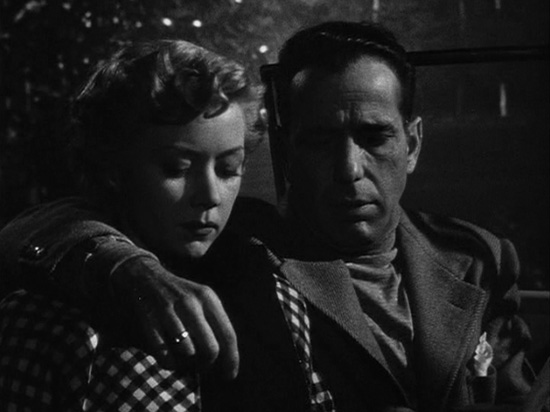
Recommended Reading: An excellent piece about In a Lonely Place, and Nicholas Ray more generally, by J. Hoberman in this week’s Village Voice. My only (minor) quarrel is with the following phrase: “An ex-Communist who was never persecuted, and must have wondered why…” From Bernard Eisenschitz’s definitive biography, one can pretty clearly surmise that Ray was protected from the Blacklist by Howard Hughes, for whom he was a sort of patch-up man, semipermanently on tap — something he must have been perfectly aware of. [7/17/09] Read more