Never Too Late [on a Carl Dreyer retrospective]
Posted on Artforum‘s web site (March 12, 2009). — J.R.
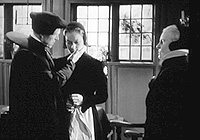
One reason why it never seems like an inappropriate time to have a Carl Theodor Dreyer retrospective is that most of his films haven’t dated, even though reactions to his works have fluctuated quite a bit over the years. Based on my own experiences in recently showing his 1943 Day of Wrath to students, I would venture that fewer spectators nowadays are likely to regard the film’s slow tempo as intolerable the way that the New York Times’s Bosley Crowther did over sixty years ago. (“Dreyer has kept his idea so obscure and the action so slow and monotonous that the general audience will find it a bore,” he claimed.)

One might go further and argue that unlike most other film masters who started out in the silent era, Dreyer’s major works were not only cinematically ahead of their own times; without ever becoming quite contemporary, they’ve even remained slightly ahead of ours. There are multiple reasons for this, including his penchant for making highly personal adaptations of preexisting works, most of them period films; his dialectical camera movements, in which he simultaneously pans and tracks in opposite directions; and, during the sound era (when he was generally able to make only one feature per decade), his unorthodox preference for using direct sound inside studio settings. Read more