My column for Caiman Cuadernos de Cine, adapted from a longer piece written for The Chiseler and submitted in August 2020. — J.R.
En movimiento: Herzog’s Tweet Factor
Jonathan Rosenbaum
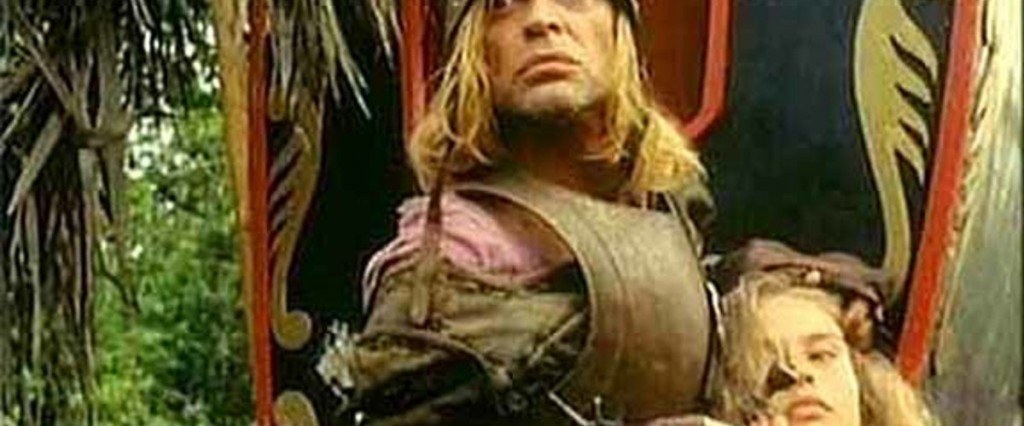
When I first saw Aguirre, the Wrath of God, setin 16th century Peru, what impressed me the most was what Werner Herzog cheerfully but cynically revealed about his opening intertitle: “A large expedition of Spanish adventurers led by Pizarro sets off from the Peruvian sierras in late 1560. The only document to survive from this lost expedition is the diary of the monk Gaspar de Carvajal.” At his Cannes premiere in 1973, Herzog admitted that this was a total lie, invented because he reasoned that people wouldn’t accept the film’s premises otherwise.
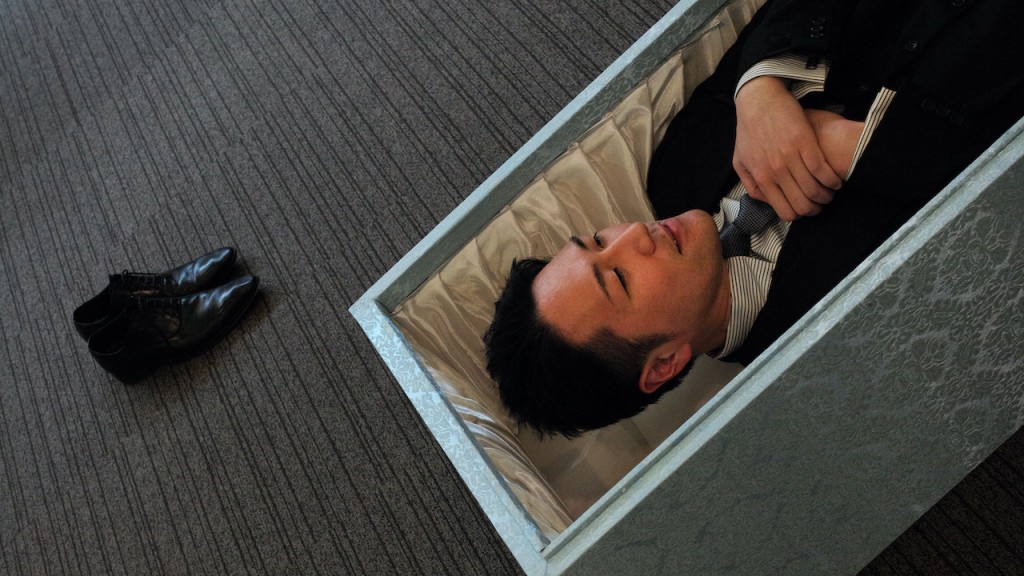
His Family Romance, LLC (2019) employs the same ruse. The real Tokyo company that this film is about rents out actors to play the roles of family members, friends, or functionaries for lonely individuals — e.g., a divorced father whom a 12-year-old girl hasn’t seen since her infancy, or a bullet-train worker who needs to be shamed by his boss for bungling a precise train schedule. The resulting feature has been described as a mixture of documentary and fiction, but apart from the company’s founder, playing himself, the entire film is fictional—scripted by Herzog and shot by him with a tiny camera, with actors playing all the characters. Read more
With Kenneth Branagh, Emma Thompson, Derek Jacobi, Andy Garcia, Hanna Schygulla, Robin Williams, Campbell Scott, and Wayne Knight.
The most instructive evening I’ve spent in the English theater was the first time I went, in the mid-60s, to a series of three one-act plays written by and starring Noel Coward called Suite in Three Keys, which may well have been Coward’s last stage appearance. In retrospect, what seemed so peculiarly English about the whole experience was the communion that existed between Coward and his audience. The plots of all three plays were negligible and the repartee more standard-issue than brilliant. All that really mattered, it seemed, was the mysterious intimacy, the almost conspiratorial rapport between Coward and his public, which had more to do with personality than with narrative, character, or even performance in the usual sense. The overall effect seemed to have a lot more to do with entertainment than with art; the feeling was much closer to that of patrons crowded around a piano in a pub than to theatergoers pondering lofty questions like the meaning of life. Read more
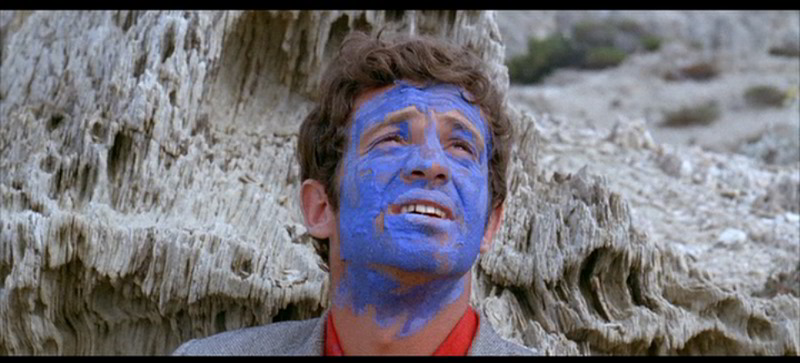
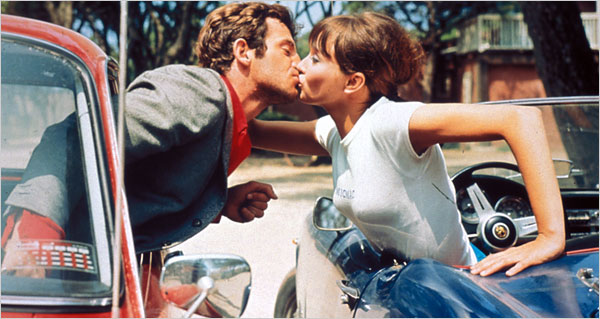
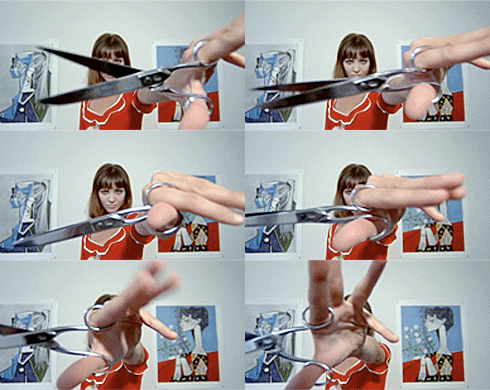
With Jean-Paul Belmondo, Anna Karina, Dirk Sanders, Raymond Devos, Graziella Galvani, Roger Dutoit, Hans Meyer, Jimmy Karoubi, and Samuel Fuller.
All the good movies have been made. — Peter Bogdanovich to Boris Karloff in Bogdanovich’s Targets (1968)
Two or three years ago I felt that everything had been done, that there was nothing left to do today. . . . Ivan the Terrible had been made, and Our Daily Bread. Make films about the people, they said; but The Crowd had already been made, so why remake it? I was, in a word, pessimistic. After Pierrot, I no longer feel this. Yes. One must film everything — talk about everything. Everything remains to be done. — Jean-Luc Godard in an interview about Pierrot le fou (1965)
After many years out of circulation, Jean-Luc Godard’s ninth feature is finally back, in a sparkling new 35-millimeter ‘Scope print, and the Film Center is celebrating with a week-long run. Looking at it again almost a quarter of a century after it was made, 20 years after its initial U.S. release, is a bit like visiting another planet; it’s an explosion of color, sound, music, passion, violence, and wit that illustrates what used to be regarded as cinema. Read more