Daily Archives: February 28, 2025

Hell on Wheels

From the March 1, 1996 issue of the Chicago Reader. —J.R.
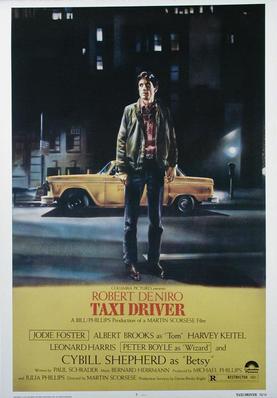
Taxi Driver

Directed by Martin Scorsese

Written by Paul Schrader

With Robert De Niro, Jodie Foster, Harvey Keitel, Cybill Shepherd, Albert Brooks, Peter Boyle, Leonard Harris, Steven Prince, and Martin Scorsese.
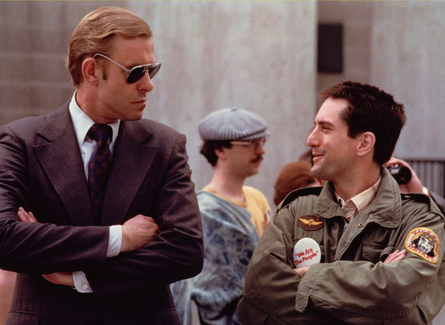
Perhaps the most formally ravishing — as well as the most morally and ideologically problematic — film ever directed by Martin Scorsese, the 1976 Taxi Driver remains a disturbing landmark for the kind of voluptuous doublethink it helped ratify and extend in American movies. Of all Scorsese’s movies, Taxi Driver — being screened this week at the Music Box in a 20th-anniversary “restoration” that’s in stereo for the first time — is for me the most seductive, though I wouldn’t call it either his best film (I’d choose the underrated The King of Comedy) or his most gut-wrenching (I’d pick the overrated Raging Bull). Most of the glamorous depictions of hell on earth and odes to stoical despair about a postapocalyptic civilization found in monuments to capitalist-urban squalor, including Blade Runner and Seven, can be traced back to Taxi Driver, and if it continues to exert an enormous claim on our imagination, this is surely because we continue to live in its vengeful, puritanical fantasies — as well as with the dire consequences of those fantasies. Read more
The Horse Thief

From the April 1, 1988 Chicago Reader. — J.R.

TheHorseThief

horsethief2

horsethief

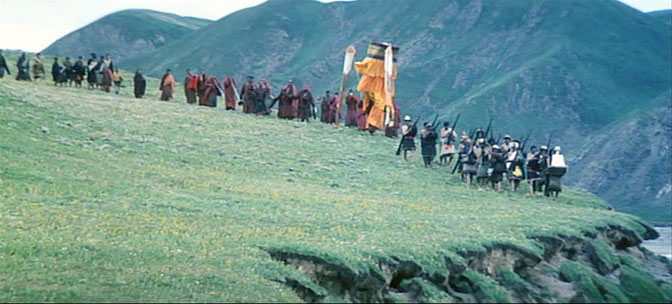
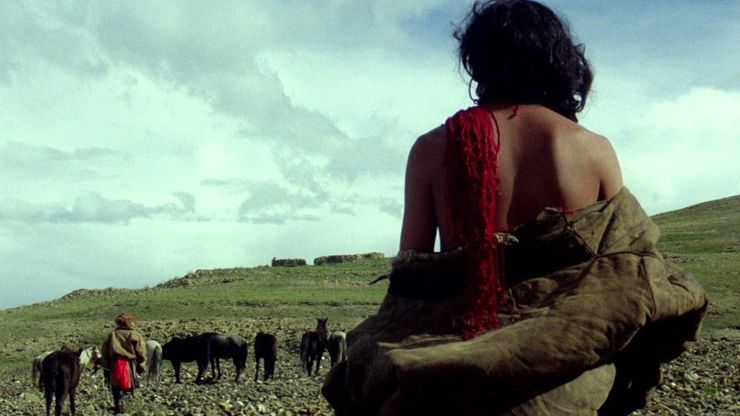
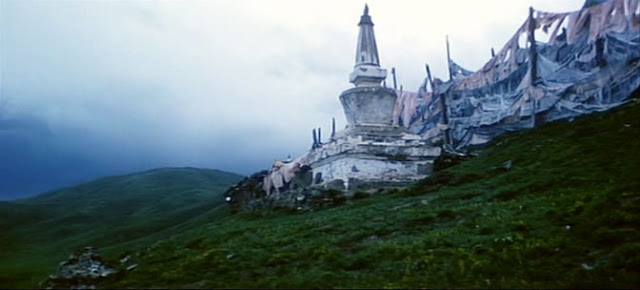
Tian Zhuangzhuang’s 1985 feature, set in the remote wilds of Tibet with a cast of local nonprofessionals, is a breathtaking spectacle in ‘Scope and color, perhaps the most personal of all the Fifth Generation Beijing films to have emerged from the People’s Republic of China (at least until Tian’s subsequent The Blue Kite). Tian’s originality and mastery of sound and image communicate directly, beyond the immediate trappings of the film’s slender plot (a horse thief expelled from his clan) and regional culture (Buddhist death rituals), expressing an environmental and ecological mysticism that suggests a new relationship between man and nature. Tian had said that he made this for the 21st century, yet even today it’s a film of the future. In Mandarin with subtitles. 88 min. (JR)

the_horse_thief_1986 Read more

Culture in the Year of 2020

Written in response to the following invitation from Diego Moldes Gonzalez (whom I’ve never met) in Madrid: “What is the definition of ‘culture’ for you? How is the culture of the 21st century similar and different from the culture of the 20th century?” — J.R.

As a beneficiary of both Internet culture and the imperial culture of the United States (which becomes imperial whenever it vainly calls itself American culture, which is often, thus implicitly appearing to enfold much of North America and all of South and Central America as secondary satellites), I continue to be subject to the market-driven capitalist culture that strives to pick the pocket of my unconscious and thereby invisibly steer my purchases (or, more precisely, the events that constitute my being purchased), defined as my existential identity. Thus, because I’m defined as an anti-Trumpian, the media fills me with anti-Trump rather than the desired absence or disappearance of Trump. In other words, Trumpians and anti-Trumpians get served two alternate versions of the same exclusive diet of Trump and daily coronavirus casualty figures, popularly known as the daily news, and choosing between these two unvarying diets is being deceptively labeled a form of democratic choice and a representative form of “American culture”. Read more