Tama Janowitz adapts her own collection of stories in James Ivory’s mainly studio-shot movie (1989) about the downtown art scene in Manhattan, a world of self- absorbed male artists, their girlfriends, and others struggling to promote themselves. Bernadette Peters plays the central character, and good as she’s been elsewhere as a foil to Steve Martin, she’s pretty much defeated by the studied flakiness of both her character (who often recalls the heroine of I’ve Heard the Mermaids Singing in her helplessness, naivete, and Woody Allen-like nebbishness) and the movie as a whole, which etches out a view of Manhattan bohemia that’s every bit as caricatured as in Funny Face (without the benefit of Fred Astaire or Audrey Hepburn). Offering a view of predators and victims that mainly winds up being too cute for words (or images, for that matter), the film tries so hard to be with it that it winds up on another planetand not a very interesting one at that. With Chris Sarandon, Mary Beth Hurt, Madeleine Potter, Adam Coleman Howard, Nick Corri, Charles McCaughan, and Mercedes Ruehl. (JR) Read more
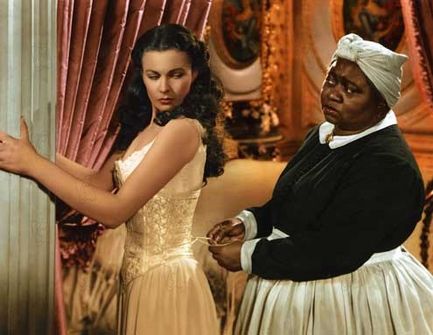
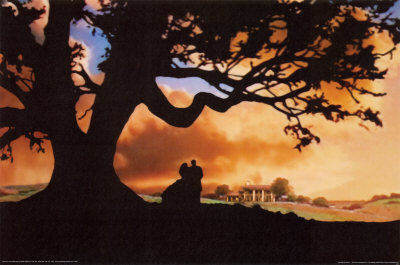
FRANKLY, MY DEAR: GONE WITH THE WIND REVISITED by Molly Haskell (New Haven/London: Yale University Press), 2009, 244 pp.
I’m glad that Armond White gave this book a favorable review in the New York Times, which it clearly deserves. But I wish he hadn’t muddied his kindness with lazy misinformation and lazier prose.
Misinformation: “Haskell gave up regular reviewing in the early ’90s, leaving criticism that seriously examined the big-screen image of women and the popular representation of female social roles to go underground — into academic studies where abstruse, tenure-seeking jargon is used to rebuff popular taste.” I’m not aware that Haskell ever left the kind of criticism White describes; unless one decides to make a very big deal out of her brief stint of teaching, she certainly didn’t go into “academic studies”, abstruse, jargony, or otherwise; and if White knows something that the rest us don’t about her rebuffing of popular taste, I wish he’d enlighten us further on this subject.
Prose: “Haskell intertwines her own history with Mitchell’s Georgia background, Leigh’s British origins and Selznick’s Jewish American determination.” (Whenever White gets around to identifying Haskell’s abstruse, jargony rebuffing of popular taste, he might also explain what Jewish American determination consists of — unless Haskell explains this herself, which I doubt. Read more
This very agreeable and funny low-budget documentary by Tony Buba, set in a steel-mill town just outside Pittsburgh, documents the decline of the area as the mills shut down and his own 15-year activity as a local independent filmmaker. Concerned with union organizing, his temperamental and eccentric star Sweet Sal Carullo, his dwindling finances, and his own soul, Buba has a lot of interesting things to say and show, and this witty and intelligent portrait of him and his community has charm to spare (1989). (JR) Read more
At last, a teenage love story with real characters instead of cliches, poses, and attitudes (1989). The directorial debut of Cameron Crowe (Jerry Maguire), it follows two very different high school graduates in Seattleaspiring kickboxer Lloyd (John Cusack) and brilliant student Diane (Ione Skye), who’s just won a fellowship to study in Englandas, to everyone’s surprise, they gradually get involved. John Mahoney plays Diane’s devoted but demanding father. Produced by Polly Platt, with James L. Brooks serving as executive producer, the movie stands out mainly because its attention to detail is so precise; Cusack and Skye are especially fine, but the overall treatment of contemporary teenagers is so refreshing that it almost makes up for dozens of phony and superficial predecessors (and for once the adults aren’t viewed exclusively from the wrong end of the telescope). As in Brooks’s Broadcast News, it’s the characters and their interrelationships that make the story. 100 min. (JR) Read more