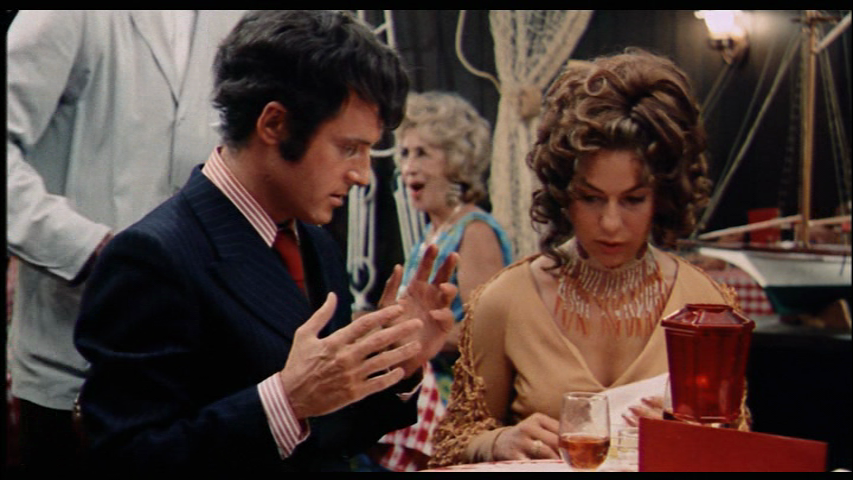
I’d like to think Elaine May had it written into her contract that the Farrelly brothers could remake her most brilliant comedy (1972) only if they left her name out of the press materials. She’s lucky to go uncredited (Neil Simon, who wrote the original script, is less fortunate), because you can’t do character-driven comedy without characters, and this one has only grotesques who change traits from moment to moment. Given the joyless vulgarity and absence of laughs, the frenzied changes in locales and character types hardly matter. A guy who sells sporting goods (Ben Stiller) gets married, drives south with his bride (Malin Akerman) on their honeymoon, and promptly falls in love with another woman (Michelle Monaghan) while discovering he hates his wife, but the ethnic humor that gave May’s movie its charge is replaced by crass mean-spiritedness. If I were in movie hell, I’d rather see Good Luck Chuck again than return to this atrocity. R, 115 min. (JR)
Gabriel Range’s English pseudodocumentary (2006), written with Simon Finch, shows the imagined aftereffects of the assassination of George W. Bush in Chicago in 2007. Some infotainment reports to the contrary, this film in no way celebrates such an event but shows it leading to further legislation curtailing civil liberties in the name of security once Cheney becomes president. And the larger theme, at least by intention, is the consequences of anti-Muslim bias. But the film proceeds more like a mystery thriller than an invitation to reflect, and that theme gets muddled. R, 93 min. (JR) Read more
Juliette Binoche won an Oscar for her role in Anthony Minghella’s adaptation of The English Patient (1996), but in many ways I prefer her soulful performance here: portraying a Bosnian Muslim working as a tailor in London, she’s reason enough to see Minghella’s contrived though absorbing 2006 feature based on his original script. Jude Law (earnest but a bit overtaxed) plays a dissatisfied landscape architect living with a Swedish woman (Robin Wright Penn) and her troubled teenage daughter; his office in the King’s Cross area is twice burglarized by Binoche’s teenage son, and the complicated interactions involving class and culture that ensue between all these characters remain fascinating even when they seem overly schematic. (It’s too bad Minghella’s usual editor, Walter Murch, wasn’t around this time; some of the overly obvious crosscutting suggests the meddling of producer Harvey Weinstein.) R, 120 min. (JR) Read more
Relaxing at a friend’s empty country house, a reclusive New York novelist (David Thewlis) is inspired to write a new story and the next morning wakes up alongside a mysterious and seductive graduate student (Irene Jacob) who quickly becomes his muse and lover. Paul Auster, who made his directing debut with Lulu on the Bridge, provides the voice-over narration for this 2007 second feature, which was drawn and expanded from an interpolated story in his own novel, the engrossing Book of Illusions. The sad irony is that his storytelling gifts, Thewlis’s resourcefulness, and Jacob’s beauty only postpone one’s awareness that the material is too literary to work as cinema. The plot becomes increasingly arch (with the arrival of characters played by Michael Imperioli and by Auster’s teenage daughter, Sophie) and self-consciously metaphysical, and mannerism gradually overtakes visual and narrative invention. 94 min. (JR) Read more
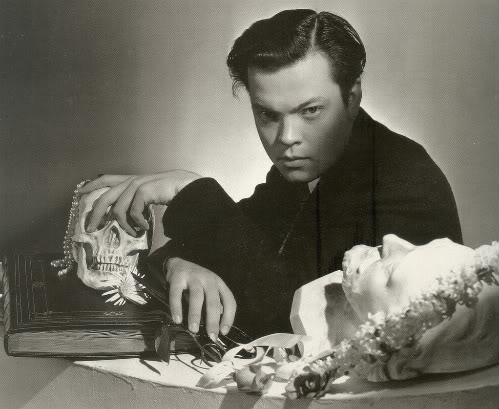
Originally written as the tenth chapter of my book Movie Wars: How Hollywood and the Media Limit What Films We Can See (2000), this is also reprinted in my 2007 collection Discovering Orson Welles. Because of the length of this essay, I’m posting it in two installments – J.R.
3. The taboo against financing one’s own work. I assume it’s deemed
acceptable for a low-budget experimental filmmaker to bankroll his or
her own work, but for a “commercial” director to do so is anathema
within the film industry, and Welles was never fully trusted or respected
by that industry for doing so from the mid-forties on. This pattern
started even before Othello, when he purchased the material he had
shot for It’s All True from RKO with the hopes of finishing the film
independently, a project he never succeeded in realizing. As an
overall principle, he did something similar in the thirties when he
acted in commercial radio in order to surreptitiously siphon money
into some of his otherwise government-financed theater productions
during the WPA period, a practice he discusses in This Is Orson
Welles. John Cassavetes, who also acted in commercial films in order
to pay for his own independent features, suffered similarly in terms of
overall commercial “credibility,” which helps to explain why he and
Originally written as the tenth chapter of my book Movie Wars: How Hollywood and the Media Limit What Films We Can See (2000), this is also reprinted in my 2007 collection Discovering Orson Welles. Because of the length of this essay, I’ll be posting it in two installments – J.R.
Nothing irritates one more with middlebrow morality than the perpetual needling of great artists for not having been greater.
— Cyril Connolly
During my almost thirty years as a professional film critic,
I’ve developed something of a sideline — not so much by
design as through a combination of passionate interest and
particular opportunities — devoted to researching the work
and career of Orson Welles. Though I wouldn’t necessarily
call him my favorite filmmaker, he remains the most
fascinating for me, both due to the sheer size of his talent, and
the ideological force of his work and his working methods.
These continue to pose an awesome challenge to what I’ve been
calling throughout this book the media-industrial complex.
In more than one respect, these two traits are reverse sides of
the same coin. A major part of Welles’s talent as a filmmaker
consisted of his refusal to repeat himself — a compulsion to
keep moving creatively that consistently worked against his
credentials as a “bankable” director, if only because banks rely
on known quantities rather than on experiments. Read more
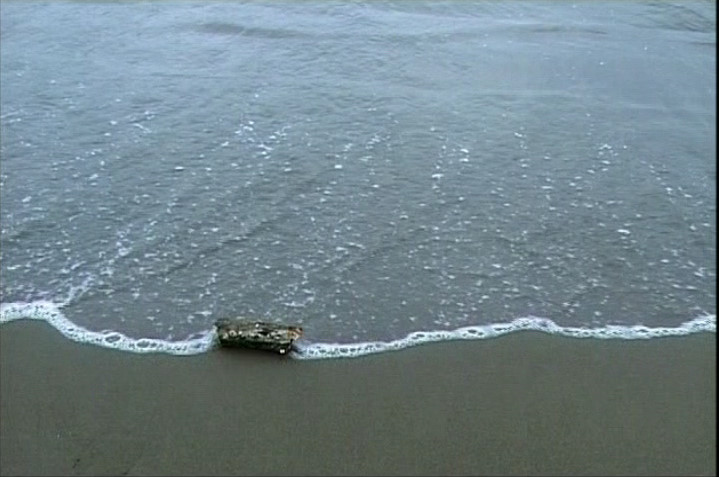
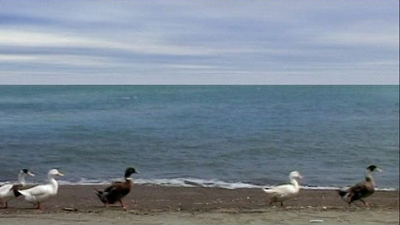
Fans of Abbas Kiarostami who have been wondering when they’ll be able to see Five (2003) — his 74-minute, five- part experimental film without dialogue, all shot on the seashore while he was scripting Jafar Panahi’s Crimson Gold — should know that it’s recently come out in France on a well-produced DVD released by MK2 and readily available from French Amazon for just under 28 Euros. [2014 note: It’s now available on U.K. Amazon.] (Like other overseas DVDs, it’s playable on any multiregional DVD player, which includes a surprising number of stateside computers.) Apparently part of the reason for the long delay was Kiarostami’s slowness in producing a “making of” documentary, though what he’s finally come up with — his hour-long About Five, completed in late 2005, available with English subtitles on the same DVD — is quite fascinating. Responding to pertinent questions put to him by English critic and programmer Geoff Andrew, he views his own work with a lot of refreshing as well as helpful candor.
Much as the French DVD of The Wind Will Carry Us, also released by MK2 (and somewhat cheaper, even though it’s a two-disc set), includes a couple of mind-boggling Japanese documentaries (also with English subtitles) that have done much to enhance my appreciation of one of Kiarostami’s greatest films, his own account of his more modest Five is no less full of surprising revelations about the elaborate artifice that lurks behind most of his seeming causalness and off-handed methods as a filmmaker.
Recommendation: On David Bordwell’s web site, one of my models in setting up this one, there’s a very useful and eye-opening (as well as brain-enhancing) post about frame counts, and how these differ on DVDs (both PAL and NTSC), laserdiscs, VHS copies (considered more cursorily), and 35mm and 16mm prints. I discovered this January 28, 2007 entry belatedly, in a footnote, while checking out David’s latest blog entry, which provides a useful link. [5/26/08] Read more
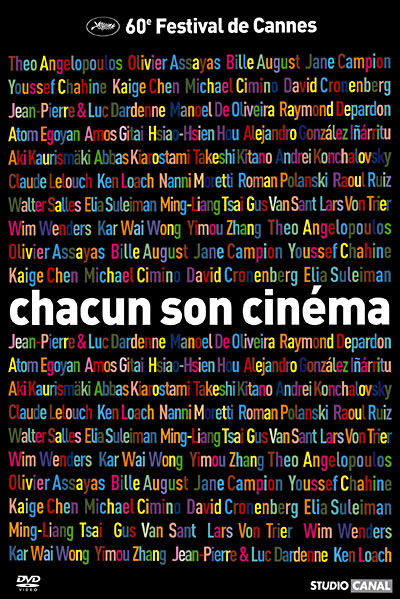
Go to French Amazon or FNAC, both of which charge 19.99 Euros plus postage [2016 note: Alas, that price has nearly tripled by now] for a delightful DVD containing all 32 of the three-minute movies commissioned by Gilles Jacob, former director of the Cannes film festival, to precede many of the features at Cannes this year. The loose thematic hook is the darkness inside a movie theater, and the lineup of filmmakers is impressive: in alphabetical order (and please forgive me not including any links here — life is too short), Theo Angelopoulos, Olivier Assayas, Bille August, Jane Campion (the only woman, alas), Youssef Chahine, Chen Kaige, Michael Cimino, David Cronenberg, Jean-Pierre and Luc Dardenne, Manoel de Oliveira, Raymond Depardon, Atom Egoyan, Amos Gitai, Hou Hsiao-hsien, Alejandro Gonzalez Inarritu, Aki Kaurismaki, Abbas Kiarostami, Takeshi Kitano, Andrei Konchalovsky, Claude Lelouch, Ken Loach, Nanni Moretti, Roman Polanski, Raul Ruiz, Walter Salles, Elia Suleiman, Tsai Ming-liang, Gus van Sant, Lars von Trier, Wim Wenders, Wong Kar-wai, and Zhang Yimou. (Incidentally, if you click on and enlarge the illustration here, all of these names become magically visible.)
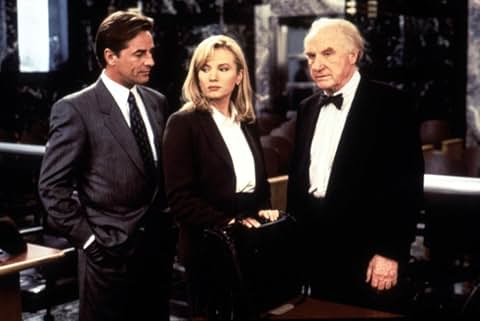
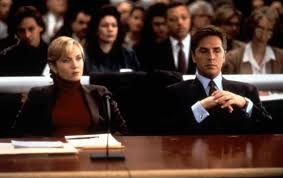
I’ve never been a Don Johnson fan, but thanks to inspired casting, an effectively gripping and oppressive screenplay by Larry Cohen, and able direction by Sidney Lumet, he dominates this 1993. courtroom thriller as one of the most effective feline villains to be seen since Robert Walker in Strangers on a Train — a glib ladies’ man who induces a successful criminal lawyer (Rebecca De Mornay) to defend him against charges of murdering his wealthy wife. There are plenty of old-fashioned virtues to be found here –not only graceful storytelling, nerve-racking suspense, and a fine secondary role by Jack Warden, but also a feeling of assurance that these filmmakers are going to play by the rules and not sacrifice sense or plausibility for the sake of cheap thrills. With Stephen Lang and Dana Ivey. (JR)
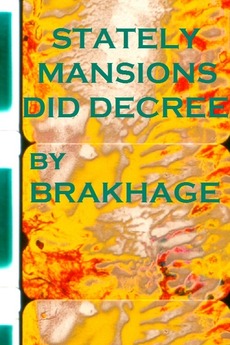
I was slow to appreciate the multifaceted greatness of the late Stan Brakhage, this country’s major experimental filmmaker, in part because he and some of his supporters originally presented his work in terms so grand they seemed to split his audience into believers and atheists. This memorial screening of ten Brakhage films, the prints of which were all loaned by local enthusiasts, extends from Desistfilm (1954) to Stately Mansions Did Decree (1999), and though it omits two of my favorites from his middle period — The Act of Seeing With One’s Own Eyes (1971) and Scenes From Under Childhood (1970) — it offers a useful 75-minute survey for people unacquainted with his work. For me the real revelations are the 90s films: the breathtaking The Chartres Series (1994), the self-avowed “last testament” Commingled Containers (1996), which marked Brakhage’s return to photography after years of painting directly on celluloid, and the literally dazzling Stately Mansions Did Decree. All three exhibit the same painterly brilliance found in his Ellipses Reels 1-4 (1998), and taken as a whole they suggest an overall development from chamber pieces to grand orchestral works. Completing the survey are Mothlight (1963), Door (1971), The Riddle of Lumen (1972), The Roman Numeral Series III (1980), Egyptian Series (1983), and I…Dreaming (1988), the latter one of his rare sound/image experiments. Read more
From the Chicago Reader (January 3, 2008). This was the last of my annual “ten best” pieces for the Reader. — J.R.
If I were playing by the usual rules, the contenders for my best of 2007 list would be drawn from the titles only millionaires could afford to promote. In that case, I would say 2007 was the worst year for new movies I could remember. But I’d be fudging, because I didn’t come close to seeing all the contenders.
Who did? Film Commentrecently put together a list of eligible titles for its own annual poll. It’s 105 pages long, with roughly 23 films per page — more than 2,400 titles. “Major studios” released 119 films, or about one-twentieth of the total (I saw 33 of them), and 49 more came from “specialty divisions” (I saw 22 of those). “Independent distributors” were behind nearly 500 (90 of which I saw). The remaining 1,600-plus titles came out of festivals (where I saw about 50 not included in the other lists).
At least 30 of the movies I saw were so forgettable that I had to look them up in the Reader’s movie database to remind myself what they were about. Read more
Written for the Library of America’s web site The Moviegoer. The version published there on May 3, 2017 differs somewhat from the original version posted here, especially the ending. — J.R.
No less than seven features to date have been based on works by Philip Roth, and three of these have been directed by first-timers, all of whom previously made their cinematic mark in other professional capacities. Ernest Lehman (1915-2005) had a long and distinguished screenwriting career before directing his own adaptation of Portnoy’s Complaint in 1972, and Ewan McGregor acted in over four dozen features before directing American Pastoral 44 years later. James Schamus, a film professor at Columbia University, had over fifty producing credits — plus writing and producing credits on all but three of Ang Lee’s features — before he added direction to his producing and writing on Indignation. This hasyielded what Stephen Holden in the New York Times has called “easily the best film made of a Roth novel, which is saying a lot.”
Schamus’s dexterity in navigating both commercial film production and academia has served him well on this project, enabling him to honor his source while rendering it both accessible and personal. Read more
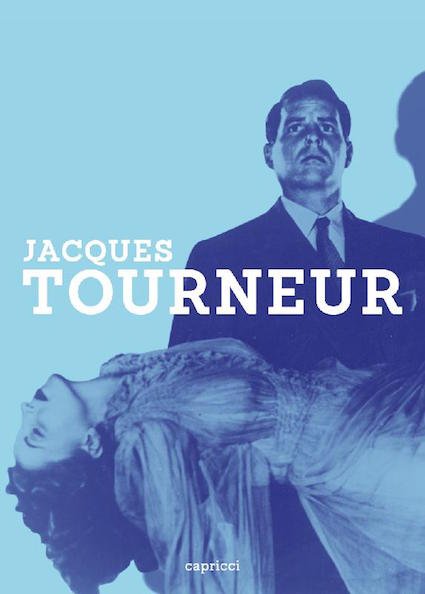
JACQUES TOURNEUR, edited by Fernando Ganzo, Locarno Festival/Cinémathèque Suisse/Capricci,224 pages, 23 Euros.
Published to accompany the Jacques Tourneur retrospective at the Locarno Festival last August, this collection has been issued in separate English and French editions; Capricci has kindly sent me a review copy of the former, and although I’ve only just started to dig into its contents, I’m looking forward to many pleasurable and profitable times with the rest. Apart from translating a few important texts from the past — extended interviews with Tourneur in Cahiers du Cinéma and Présence du Cinéma (both in 1966), an essay by Petr Král from Caméra/Stylo in 1986 — this book mainly consists of new essays, most of them translated from over a dozen French writers (including Pierre Rissient, Patrice Rollet, and Jean-François Rauger) and two Americans (Chris Fujiwara and Haden Guest). There are also many illustrations in this slightly oversized volume, My only complaint is with the layout that prints about two dozen pages of the text on a shade of dark grey that makes them extremely (and needlessly) difficult to read. If Marc Lafon, the book’s design person, was trying to approximate some notion of Tourneur as the poet of shadows, I’m afraid this effort was misguided, because all that comes out of this exercise is murkiness, not poetry. Read more