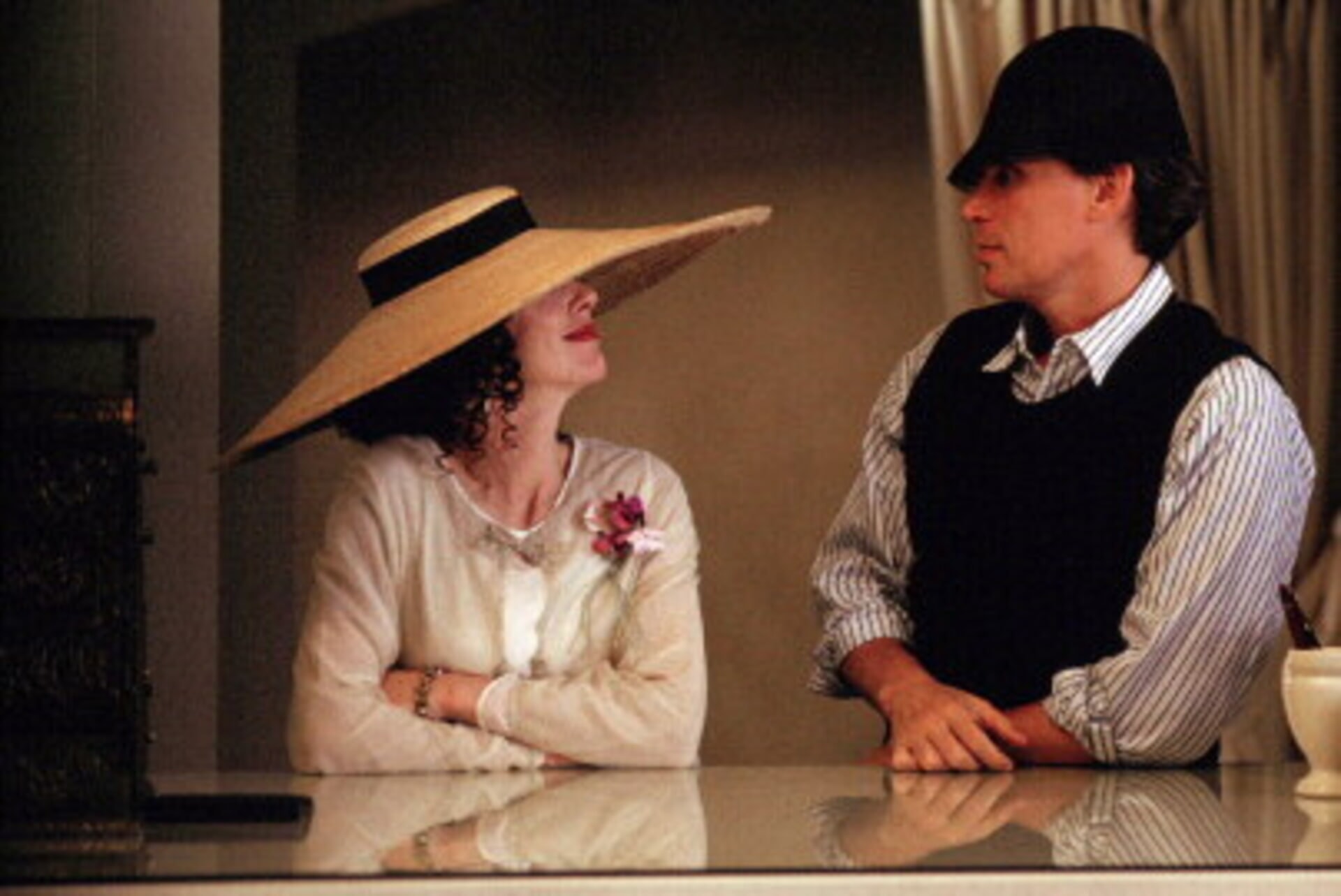
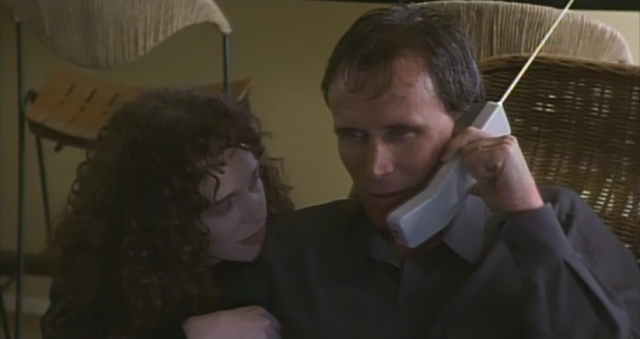
This new comedy by writer-director Michael Tolkin (The Rapture), which reunites the leads of Naked Lunch, Peter Weller and Judy Davis, as fashion-plate yuppies in Los Angeles who have spiritually lost their way, keeps promising to be a great satire. But the promise is only half kept; each time one expects some follow-through on a fruitful conceit (e.g., the couple opening a new boutique called Hipocracy, Patrick Bauchau as a mysterious guru), the movie stops dead in its tracks, just like the woeful couple. This is still great fun as far as it goes;, and serious as well; just don’t expect any structure. With Adam West as Weller’s father, John Diehl, Paula Marshall, and Samuel L. Jackson. (JR)
Thanks to Mark Rappaport for recommending Sergei Loznitsa’s extraordinary 2018 Donbass, available for $5 (a one-day pass) at https://easterneuropeanmovies.com/drama/donbass, which offers the most gripping and elucidating portrait of what’s happening now in Ukraine that I’ve encountered anywhere. Many of us have already encountered Loznitsa’s expertise as a documentary storyteller, but this film is a veritable eye and ear-opener. [5/6/22]
With this 1997 drama, producer-director Clint Eastwood continued his welcome practice of trying something different on every picture, turning this time to a best-seller very different from The Bridges of Madison County, the source material for his previous film. The liberties taken by John Lee Hancock in adapting John Berendt’s atmospheric nonfiction novel move the original story even closer to fiction: four murder trials are collapsed into one, the author-narrator is replaced with a made-up hero (John Cusack), and a lot of languid local color is distilled into a meandering story line. But Eastwood finds good ways of honoring the book: shooting on location in Savannah, using a very tasteful selection of tunes by Johnny Mercer (a Savannah native) on the sound track, and even getting local drag queen Lady Chablis to play an expanded version of her own part in the original story. (She’s not exactly a film actor, but there’s something in the way that Eastwood turns her loose that makes the movie come alive.) The results are more leisurely and character driven than most contemporary movies are encouraged to be, and positively drip with juicy southern ambience. Kevin Spacey is at his best playing the millionaire antiques specialist who shoots his rough-trade lover and employee (Jude Law). Read more
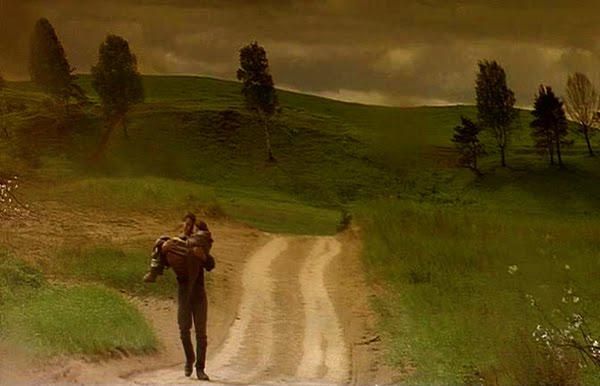
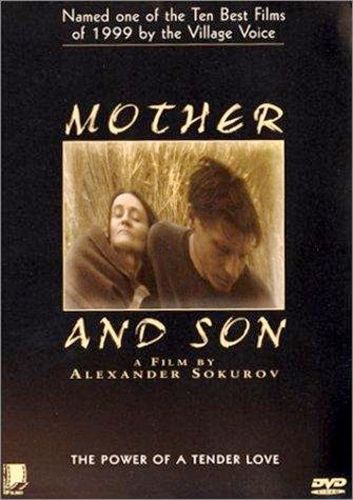
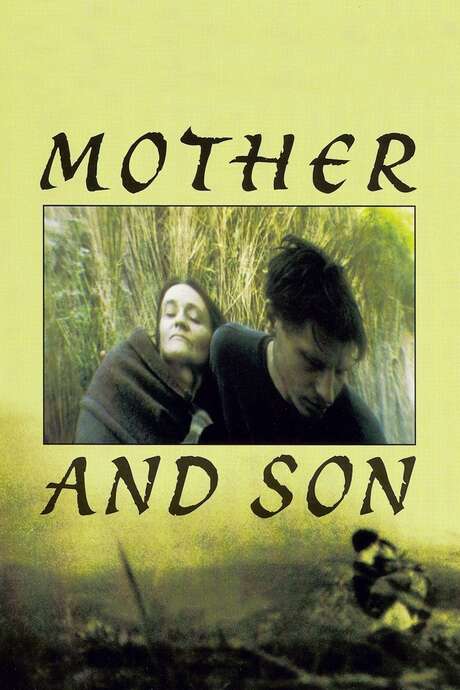
Apart from the eye-filling black-and-white video Oriental Elegy, Russian filmmaker Alexander Sokurov’s painterly, visionary side has seldom been more evident than in this gorgeous 1997 contemplation of a son caring for his dying mother. The story is minimal, but the color images are so breathtaking that there’s never a lax moment; even when the already slow action is reduced to a virtual standstill, Sokurov’s intensity insures that something is always happening, both on the screen and inside us. (This is only 73 minutes long, but if you’re hungry for plot, it will seem like an eternity.) In his taste and his patience, Sokurov may be our only truly 19th-century avant-gardist — which means in effect that his works are timeless. Music Box, Friday through Thursday, February 20 through 26.
In 1952 beat painter and filmmaker Alfred Leslie wrote a play based on an argument he witnessed between art critic Clement Greenberg and abstract expressionist painters at a celebrated hangout in Greenwich Village. The text was lost in a 1966 fire that also consumed most of Leslie’s paintings and films, but 20 years later he reconstructed it from memory and added songs, and in 1997 a staged reading was videotaped with three cameras. Leslie found the results visually boring, so he decided to insert an enormous quantity of found footage from newsreels, porn films, and Hollywood movies, either to illustrate or to play against the ongoing discussion. The opening clip, a clown singing in squawks and squeaks that are subtitled with some invective from critic Hilton Kramer, sets the tone perfectly; like many fine filmmakers who’ve worked with found footage in recent years (such as Jean-Luc Godard and Mark Rappaport), Leslie is an expert indexer, and his taste for the silliest, sexiest, and most surreal manifestations of American culture is so infectious that the debate about artists and critics in this 2001 video improbably becomes infused with joy. 84 min. (JR) Leslie, the festival’s guest of honor, will attend the screening to introduce and discuss his work. Read more
Has anyone ever commented on the symmetries between A Letter to Three Wives and The Honey Pot? Having just reseen the former on “the first Saturday of May” (a key phrase in the film) a short time after reseeing the latter, I’m thinking not only of the similar letters sent to three former girlfriends in The Honey Pot, but also of the numerous guessing games and various false-herring clues liberally scattered through the clever dramaturgy of both films, not to mention the respective roles played by Shakespeare (Twelfth Night) in the earlier comedy and Ben Jonson (Volpone) in the latter movie. Of course the differences are just as important as the similarities: the three wives are all friends and the letter sent to them is from an unseen narrator who propels the action; the three girlfriends are rivals and summoned to Venice by a very present Rex Harrison. But the attraction for Mankiewicz of returning to the principle of three women (with an absent temptress and Maggie Smith playing the respective roles as jokers) must have been irresistible. [5/7/22]
Written for the January/February 2012 Film Comment. — J.R.
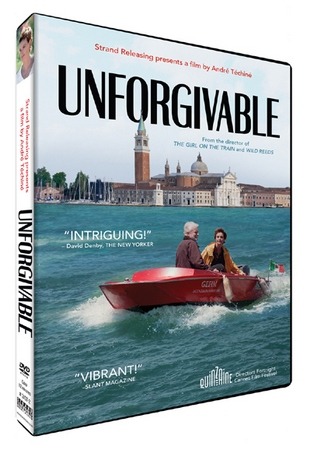
Unforgivable (André Téchiné, France) Téchiné’s best films (Wild Reeds, My Favorite Season, Thieves, Unforgivable) have two major signifying traits: all the characters are major fuck-ups, and the co-writer-director loves them all equally. Some of those in his latest film, set in and around Venice, include a macho novelist (André Dussollier), his flighty daughter (Mélanie Thierry), his real-estate agent and subsequent wife (Carole Bouquet), and one of her former lovers, a detective (an especially memorable Adriana Asti), whom he hires to go looking for his daughter. The multiple crisscrossed emotions and lives are every bit as intricately and beautifully plotted and tracked as those in Thieves.—Jonathan Rosenbaum
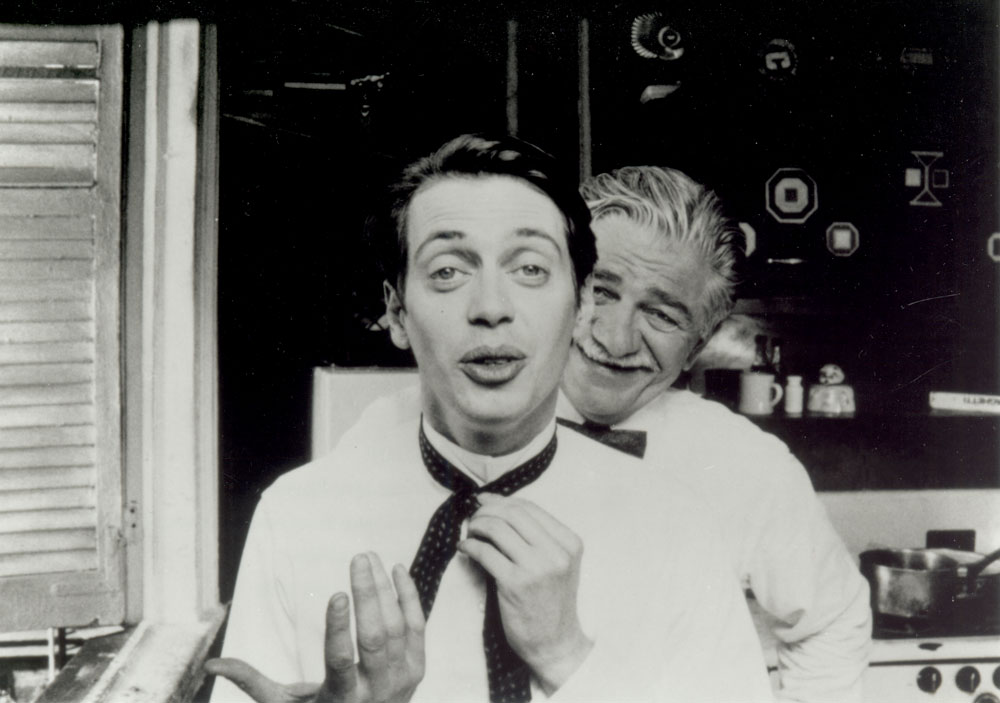
The main reason to see Alexandre Rockwell’s flaky, independent black-and-white comedy about an aspiring filmmaker (Steve Buscemi) on New York’s Lower East Side — a movie one feels was made every few months during the late 60s — is John Cassavetes veteran Seymour Cassel, playing a petty crook with a heart of gold who suddenly appears to the hero like a fairy godfather (no pun intended, despite his compulsive displays of physical affection) to serve as his producer. The movie seems conceived according to the joint emblems of Jim Jarmusch (who appears in a cameo, along with Carol Kane) and Cassavetes — rather like the first episode in Jarmusch’s Night on Earth, which used Gena Rowlands as a conduit into Cassavetes’s world. Here Cassel seems to be a variation on the noble/foolish hero played by Ben Gazzara in Cassavetes’s The Killing of a Chinese Bookie, but you certainly don’t have to know this source to respond to Cassel’s enormous funds of charm and charisma. (There’s also a wonderful performance by Sully Boyer as one of the crook’s incidental victims.) With Jennifer Beals, Pat Moya, and Will Patton (1992). (Music Box, Friday through Thursday, January 29 through February 4)
From the Chicago Reader (November 22, 1996)..– J.R.
Typically British
•
Directed by Mike Dibb and Stephen Frears
Written by Charles Barr and Frears.
2 X 50 Years of French Cinema
Rating **** Masterpiece
Directed and written by Anne-
Marie Mieville and Jean-Luc Godard
With Godard and Michel Piccoli.
I Am Curious, Film
Rating ** Worth seeing
Directed and written by Stig Bjorkman
With Lena Nyman and Bjorn Granath.
100 Years of Japanese Cinema
Rating * Has redeeming facet
Directed and written by
Nagisa Oshima.
Yang + Yin: Gender in Chinese Cinema
***
Directed and written by Stanley Kwan.
To celebrate the “100th anniversary of cinema,” the British Film Institute has commissioned a series of documentaries about national cinemas. Some of them are still being made, but the first 13 are showing at the Film Center as part of a series that started early this month with the three-part A Personal Journey With Martin Scorsese Through American Movies (excellent) and has continued with documentaries by Sam Neill on New Zealand cinema (witty), by Nelson Pereira dos Santos on Latin American cinema (ambitious but unsuccessful), by Edgar Reitz on German cinema (embarrassing), and by Pawel Lozinski on Polish cinema, realizing an outline by the late Krzysztof Kieslowski (I haven’t seen it). Read more
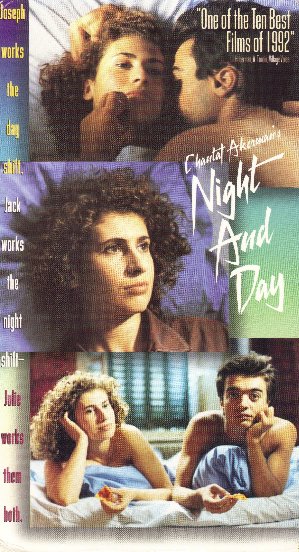
One of the constants of Chantal Akerman’s remarkable work is a powerful if heavy painterly style that practically precludes narrative flow even when she’s telling stories. Even at her best, as in Jeanne Dielman and The Man With a Suitcase, the only kind of character development she seems able to articulate with conviction is a gradual descent into madness. But the relatively unneurotic Night and Day (1991) strikes me as her most successful work in years. Julie (Guilaine Londez), the heroine, makes love to Jack (Thomas Langmann) in their small flat by day and wanders through Paris at night while he drives a cab — until she meets Joseph (Francois Negret) and guiltlessly launches a secret nighttime affair with him. Akerman brings a lyricism to the material that makes it sing like a musical. Whether the camera is gracefully traversing Jack and Julie’s flat or slowly retreating from Julie and Joseph across bustling traffic while he recounts the things he loves about Paris, Akerman seems to have discovered both a musical rhythm for her mise en scene and a deftness in integrating her score that eluded her in her literal musical Window Shopping. Read more
From DVD Beaver (posted June 2008). Some of these listings may be out of date — and in the case of Godard’s Histoire(s), superseded by subsequent American and/or Blu-Ray editions. — J.R.
Coming up with my favorite box sets from abroad is a far cry from compiling a list of my favorite films on DVD, foreign or otherwise, even if some of my favorite films are represented here. The problem is, as Mick Jagger puts it, you can’t always get what you want. To start with an extreme example, my favorite Hou Hsiao-hsien film is most likely The Puppetmaster (1993), but my least favorite of all the DVDs of Hou films in my collection happens to be the Winstar edition of that film. It’s so substandard —- not even letterboxed, and packaged so clumsily — that I’m embarrassed to find myself quoted on the back of the box, especially with the quotation mangled into tortured grammar.
I’ve aimed for a certain geographical spread as well as some generic balance: popular comedies, art films, experimental films, and one serial; DVDs from Belgium, France, Hong Kong, Italy, Japan, and the United Kingdom. Admittedly, roughly half of my selections come from France, and a quarter of them, to my surprise, comes from a single label, Gaumont —- maybe because this blockbuster company seems to specialize in blockbuster box sets. Read more
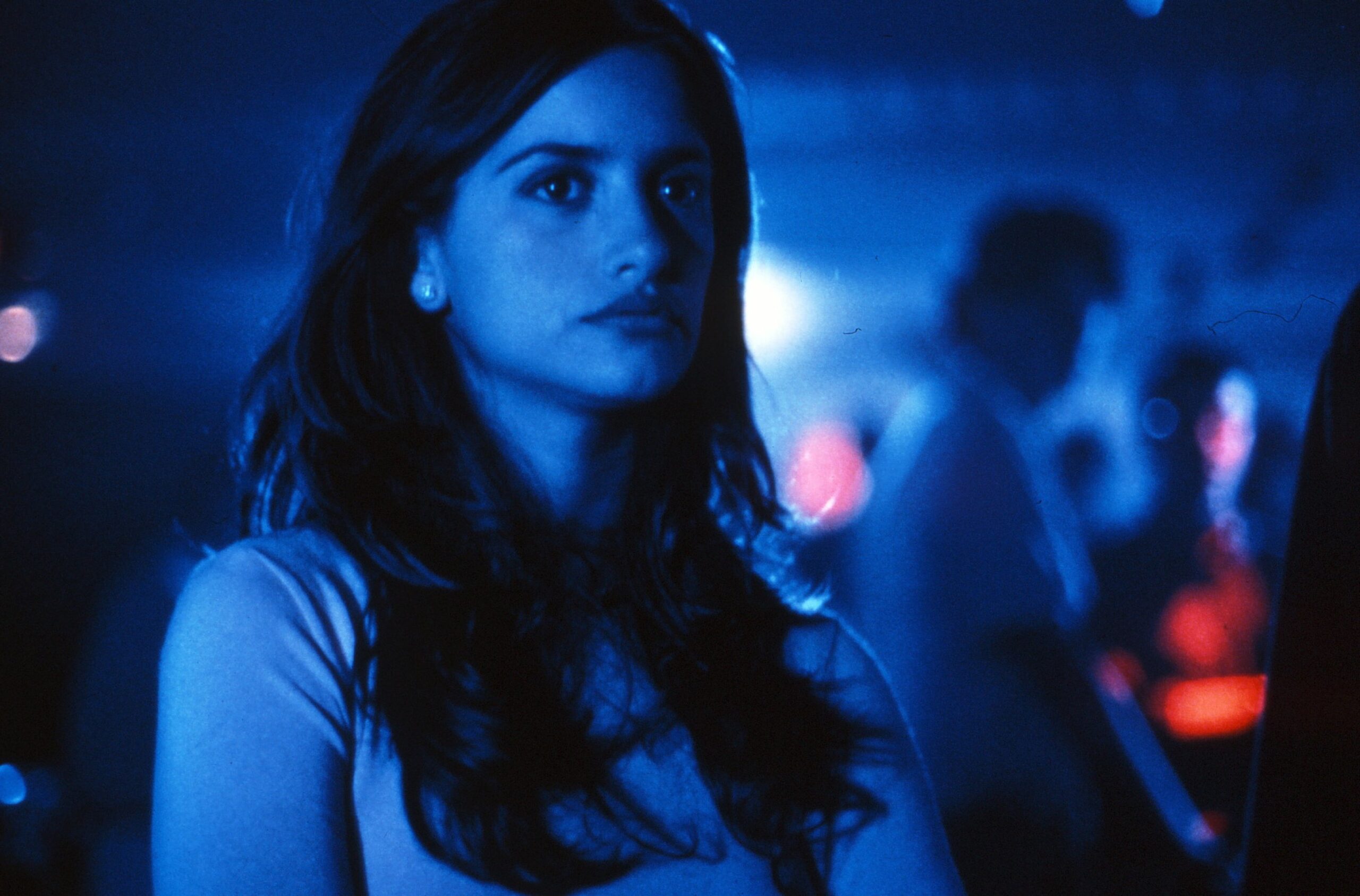
Tesis (1995), the first feature of Spanish filmmaker Alejandro Amenabar, is an adroit and imaginative slasher movie set at a film school. This more ambitious if less satisfying second feature, one of the top grossers in Spain in 1999, shows he still has an uncanny flair for producing dread. A wealthy young man (Eduardo Noriega) finds himself in a psychiatric prison for committing a murder he can’t clearly remember, and flashbacks take us into his dark recent past, in which he snubs an old girlfriend (Najwa Nimri) in order to pursue another (Penelope Cruz), is disfigured in a suicidal car accident staged by the old girlfriend, and discovers that the new girlfriend has changed into the old one. The experience of going mad, conveyed so vividly by pulp writer Cornell Woolrich, is the main bill of fare, and as with Woolrich, it works better than the denouement explaining what brought it about. Even if the script (written by the director and Mateo Gil) and direction are patchy, the obsessive theme is gripping — much more so than in Vanilla Sky (2001), the Tom Cruise remake. In Spanish with subtitles. 117 min. Read more
The following is Mark Rappaport’s Introduction to his new collection, The Secret Life of Moving Shadows, available now from Amazon as an e-book (in two parts, available here and here — a necessary division made in order to keep the book’s illustrations the proper size), reprinted here at my suggestion and with Mark’s permission.
I was delighted to learn, shortly after posting this for the first time, that the Criterion Blu-Ray of All That Heaven Allows includes Mark’s 1992 feature Rock Hudson’s Home Movies as one of the extras. More recently (in 2021), I learned to my delight that Fox Lorber has picked up a sizable portion of Mark’s oeuvre, for live screenings as well as digital releases. — J.R.
This is a collection of essays I wrote over the last several years. If there is no unifying theme to them or a through-line, let me just say that they were all written because I wanted to write them and I felt I had something to say about each of the films or subjects or ideas that I hadn’t seen adequately dealt with elsewhere. In almost every case, the idea came to me in a flash—either inspired by something I read or while watching a movie. Read more
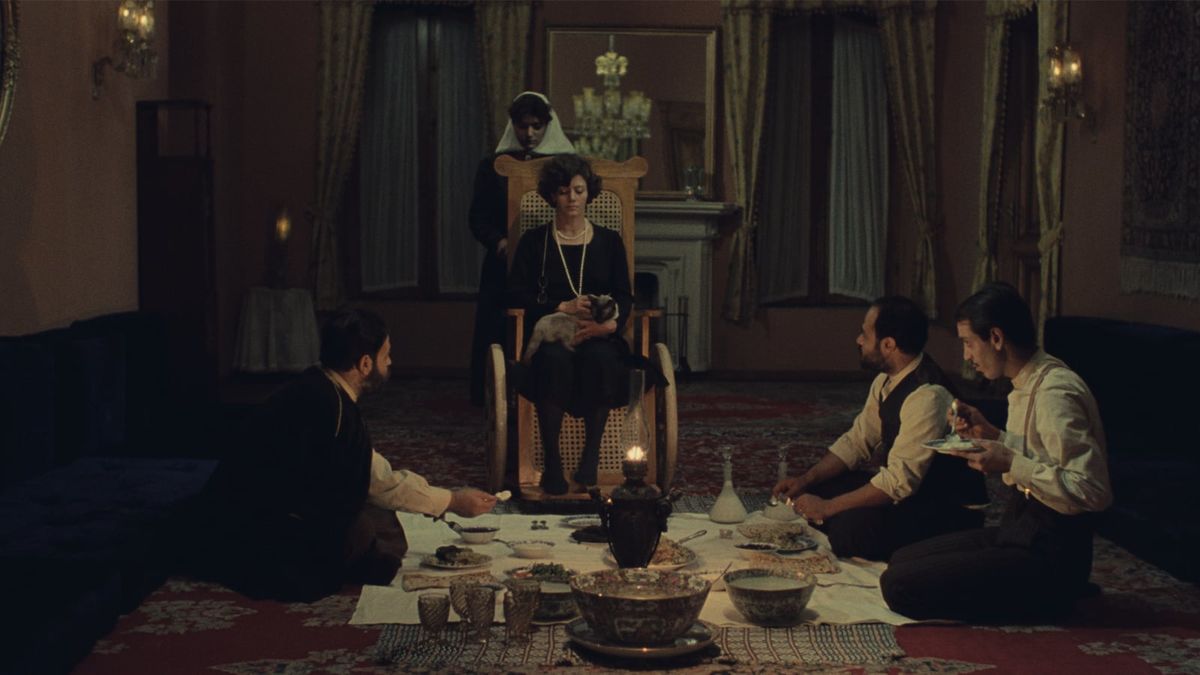
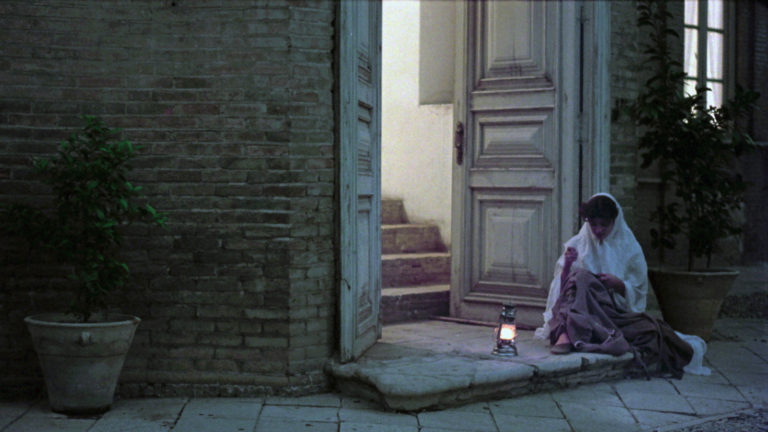
Thanks to an excellent and informative review by Godfrey Cheshire (https://www.rogerebert.com/reviews/chess-of-the-wind-movie-review-2021) and a subsequent chance to see the film, I now have one more item, apart from Kersti Jan Werdal’s Lake Forest Park, that I’ve seen too late to include on my already–published ten-best list. (And how many more revelations are still to come?) For its luminous cinematography (by Houshang Baharlou) and its remarkable score (by Sheyda Gharachedaghi) alone,Mohammad Reza Aslani’s rediscovered and restored 1976 The Chess Game of the Wind (which I insist on calling it over its meaningless release title,The Chess of the Wind) is a truly impressive movie that really packs a wallop.
And because I lack Godfrey’s knowledge about 20th century Iranian history, I tended to experience it as a sort of Gothic melodrama that seemed closer in some ways to Béla Tarr’s Almanac of Fall than to any other Iranian New Wave feature that I’ve previously seen. And even if I disagree with Cheshire on a couple of minor points (I find the camera movements more evocative of Murnau than of Ophüls, and the wonderful exterior sequences with the washerwomen closer to gossip than to Greek-chorus commentaries), his review provides all the right guideposts into the film’s wonders and dark pleasures.Read more