From the Chicago Reader (January 7, 1994). — J.R.
One of the funnier remarks in Variety late last year came from a Universal Pictures executive who noted that because of the special nature of Schindler’s List his company wasn’t really promoting the picture, but simply informing people it was out. I’d wager that if the other movies on my ten-best list had been given the same amount of “nonpromotion” — one of those modest multimillion-dollar campaigns — you would have heard nearly as much about them. As it happens, only about half the items on my list have had — or are having — a normal commercial run in Chicago. Still, Bitter Moon, which has so far had only one fleeting engagement here (in the fall, at the Polish film festival), is expected to have a belated U.S. release early this year, and Silverlake Life: The View From Here was aired nationally on PBS.
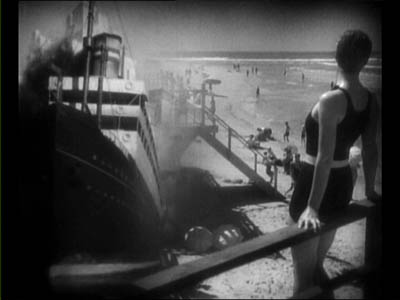
The limited number of Hollywood films on my list and the prominence of Chinese language ones demands some comment. It used to be a truism that American cinema excelled in unpretentious entertainment but faltered when it came to art movies, while the standard line about foreign films — meaning the foreign films Americans saw — tended toward the reverse. Read more
From the January 19, 1990 Chicago Reader. –J.R.
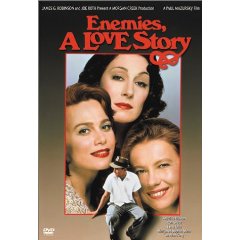
ENEMIES, A LOVE STORY
*** (A must-see)
Directed by Paul Mazursky
Written by Roger L. Simon and Mazursky
With Ron Silver, Anjelica Huston, Lena Olin, Margaret Sophie Stein, Alan King, Judith Malina, and Mazursky.
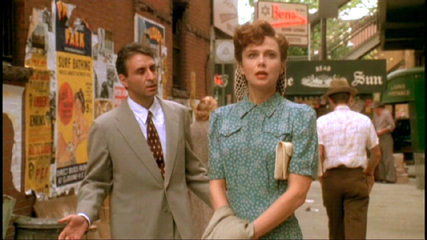
It’s a truism of film criticism that the best movie adaptations of novels usually aren’t taken from the best novels. A good novel, like a good movie, has its own raison d’être, and attempting to translate one person’s novel into another person’s movie usually entails removing the novel’s raison d’etre or at least transmogrifying it beyond recognition. A classic example of misplaced piety, in the sense of a movie trying to follow a novel too closely, is Joseph Strick’s Ulysses (1967): despite the fact that characters, settings, and entire textual passages from Joyce are all dutifully delivered and rendered, Joyce himself is absent from the movie. The personal, historical, and formal determinations of the book have nothing to do with those of the director of the film, working almost half a century later. The gap between Joyce’s reasons for writing Ulysses and Strick’s reasons for adapting it is so cosmically wide that the two sets of motivations aren’t even on speaking terms. Read more
This piece comes from the November 19, 1993 issue of the Chicago Reader. —J.R.

A STREETCAR NAMED DESIRE
*** (A must-see)
Directed by Elia Kazan
Written by Tennessee Williams and Oscar Saul
With Vivien Leigh, Marlon Brando, Kim Hunter, and Karl Malden.
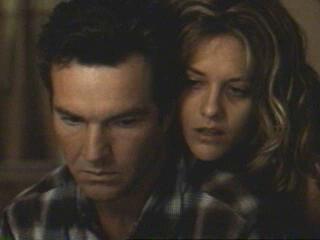
FLESH AND BONE
** (Worth seeing)
Directed and written by Steve Kloves
With Dennis Quaid, Meg Ryan, James Caan, and Gwyneth Paltrow.
Depending on whose figures you believe, the recently released “director’s cut” of A Streetcar Named Desire is either 4 percent or 8 percent longer than the version released in 1951. All the originally censored elements — lines of “racy” dialogue and shots of lustful expressions — have been restored, and the fact that this once-scandalous 126-minute movie is now accorded a PG rating indicates the progress we’ve made in some areas.
But if you think people are getting more of the movie now than they could 42 years ago, you’re mistaken. The running time is longer, but thanks to current movie-projection habits, close to 25 percent of every frame is missing at most screenings. The aspect ratio of the original movie — the relationship between the height and width of the frame — is 1:1.38, the standard ratio of all Hollywood movies in 1951. Read more
From the September 3, 1999 Chicago Reader. It seems worth reposting because, I’m happy to report, both these films are now available on DVD. — J.R.
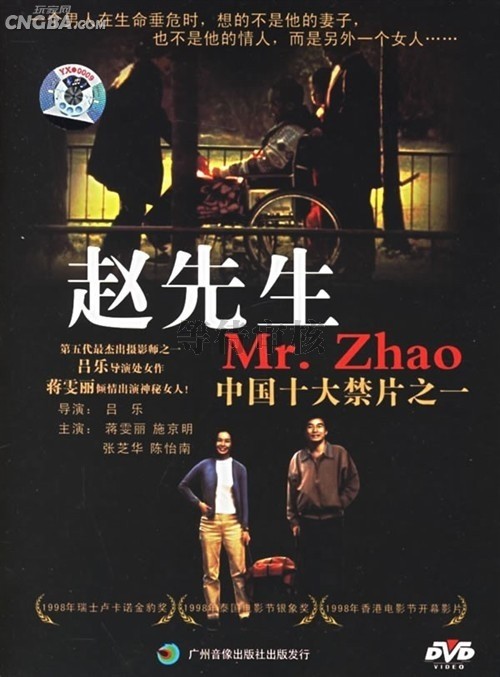
Mr. Zhao
Rating *** A must see
Directed by Lu Yue
Written by Shu Ping
With Shi Jingming, Zhang Zhihua, Chen Yinan, and Jiang Wenli.
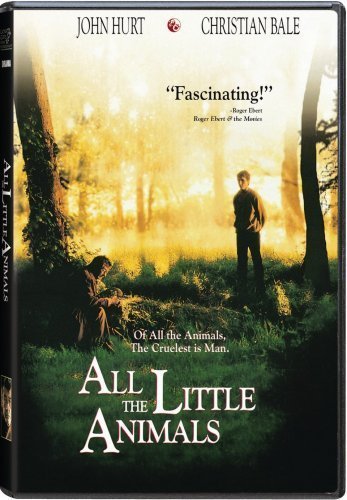
All The Little Animals
Rating *** A must see
Directed by Jeremy Thomas
Written by Eski Thomas
With John Hurt, Christian Bale, Daniel Benzali, James Faulkner, and John O’Toole.
Two of the best movies of 1998 are opening in Chicago this week — which makes them two of the best movies of 1999 — but the odds of either making much of a splash are just about nil. For one thing, they don’t appear to have opened previously anywhere else in the U.S., ruling out any advance buzz. For another, the budget for publicity in both cases appears to be about 15 cents; by contrast, the advertising budget for Austin Powers: The Spy Who Shagged Me was between $35 million and $40 million, not counting the Time Warner tie-ins (the entire production budget was $33 million). As a consequence, information about both films is hard to come by — I can’t even determine whether the screenwriter of Mr. Read more
From the April 17, 1998 Chicago Reader. — J.R.
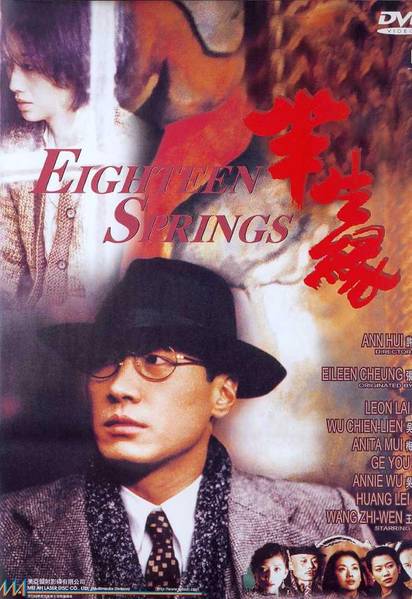
Eighteen Springs
Rating ** Worth seeing
Directed by Ann Hui
Written by John Chan
With Leon Lai, Wu Chien-lien, Anita Mui, Ge You, Annie Wu, and Huang Lei.

I don’t know exactly what I think about Ann Hui’s 12th feature, playing twice this weekend at the Film Center. At this point I don’t think it’s a masterpiece — though that doesn’t necessarily mean you shouldn’t see it. Arriving at these two conclusions is something of a professional necessity for me, because whenever I write a long review for this paper I have to assign the film a certain number of stars; if you look at the box headed “film ratings” the meaning of those ratings is spelled out, from “masterpiece” (four stars) to “worthless” (none). But sometimes this necessity presents me with a dilemma, because my better instincts tell me that it’s often impossible to know immediately after seeing a film whether it’s a masterpiece or not. And while I’m at it, let me confess to another doubt, one that relates to the general inflation of rankings that infects my profession, whether critics are reviewing a Hollywood blockbuster or a Hong Kong art movie: I fear that if I tell people that Ann Hui’s Eighteen Springs (or the Coen brothers’ The Big Lebowski) is only “worth seeing,” a lot of them won’t bother to go — even if maybe some of them should, for their benefit, not mine. Read more

From the Chicago Reader (March 30, 1990). I must confess that I was disappointed for a long time that none of Campion’s subsequent films lived up to the promise of Sweetie, in spite of the virtues of some of them, at least until her wonderful 2014 miniseries Top of the Lake, which I’ve just belatedly caught up with. (I’ll never forget a bitter comment Jean-Luc Godard made to me in Toronto in 1996, citing Campion as a perfect example of a talented filmmaker “completely destroyed by money”.) But then again, to cite someone cross-referenced in this review (and also significantly cross-referenced in Top of the Lake, a kind of feminist response to Blue Velvet and Twin Peaks), it’s also hard to think of many David Lynch films that have lived up to the promise of Eraserhead, at least prior to Inland Empire….I suspect that the collaboration of writer Gerard Lee on Passionless Moments, Sweetie, and Top of the Lake has something to do with what makes all three of them stand out so vividly in Campion’s oeuvre.– J.R.

SWEETIE
**** (Masterpiece)
Directed by Jane Campion
Written by Gerard Lee and Campion
With Genevieve Lemon, Karen Colston, Tom Lycos, Dorothy Barry, Jon Darling, Michael Lake, and Andre Pataczek. Read more
From the Chicago Reader (March 4, 1994). — J.R.
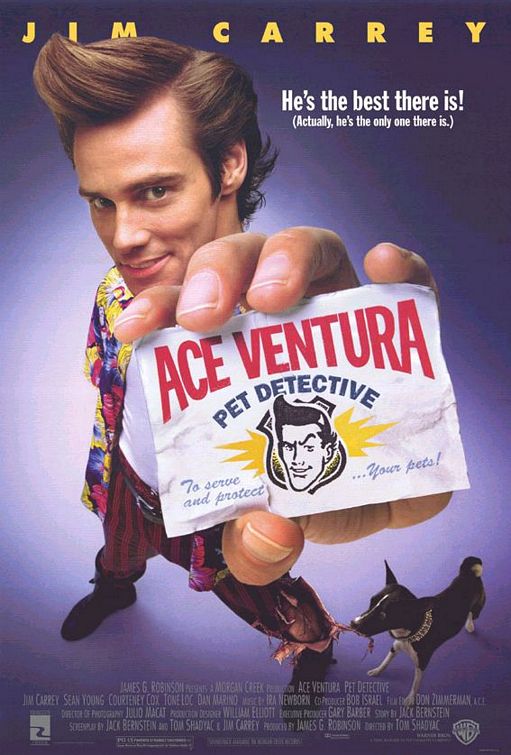
* ACE VENTURA: PET DETECTIVE
(Has redeeming facet)
Directed by Tom Shadyac
Written by Jack Bernstein, Jim Carrey, and Shadyac
With Carrey, Sean Young, Courteney Cox, Tone Loc, and Dan Marino.

Why go back to a movie that affected me the first time like a piece of chalk squeaking across a blackboard? Well, for one thing, neither I nor any other reviewer I know of came anywhere close to predicting that Ace Ventura: Pet Detective would not only find an audience but sail to the top of the box-office charts. How did we all miss the boat? “An appallingly bad movie, a certain candidate for worst of the year,” begins Gene Siskel’s capsule review in the Tribune; it concludes, “Don’t ask how this was financed.” These were my sentiments exactly at the press screening — a sort of stupefied horror at the manic leers and terminally stupid gags of star and cowriter Jim Carrey, coupled with disbelief that anyone could possibly go for them. But when the movie opened it soon became clear that at least some financiers knew exactly what they were doing. What did they understand that the rest of us grown-ups missed out on? Read more
From the Chicago Reader, June 20, 2003. The posthumous Schuller-conducted premiere of Epitaph, incidentally, alluded to below, is now available on DVD, and is warmly recommended. — J.R.
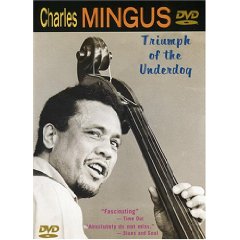
Charles Mingus: Triumph of the Underdog
*** (A must-see)
Directed by Don McGlynn.
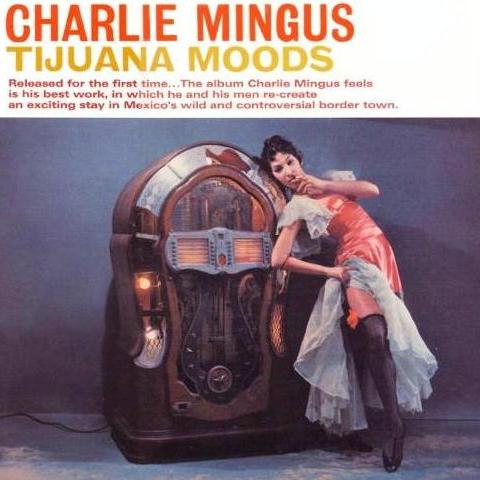
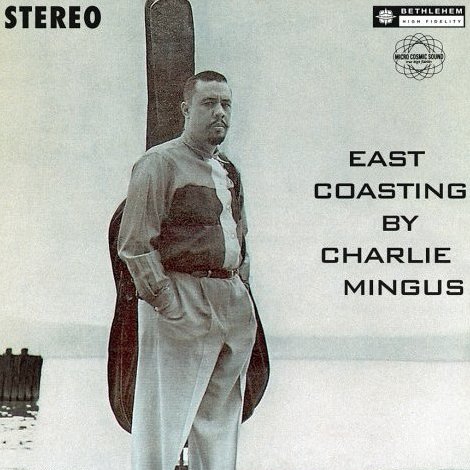
The sheer impossibility of encompassing jazz bassist, composer, and bandleader Charles Mingus (1922-’79) in a single film limits Don McGlynn’s ambitious 1997 documentary, Charles Mingus: Triumph of the Underdog, from the outset. Which doesn’t mean you shouldn’t see it — it’s playing at the Gene Siskel Film Center, and Mingus’s second wife, Celia Mingus Zaentz, will lead a discussion after the June 27 screening — but if you don’t already know something about the man’s music this may not be the ideal place to start. I’d recommend instead one of his best early albums — The Clown, Tijuana Moods, East Coasting, Mingus Dynasty, Charles Mingus Presents Charles Mingus (the best one with Eric Dolphy), or Mingus at Monterey.
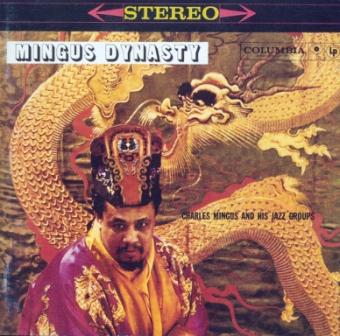

No single book has succeeded in doing full justice to Mingus either. Maybe it’s because he had a genius for straddling musical categories such as traditional, modern, avant-garde, jazz, and classical (as Gunther Schuller points out in one of this film’s interviews, Mingus studied Arnold Schoenberg’s music in his teens, during the 30s, when few people here were familiar with it). Read more
From the July 30, 1999 issue of the Chicago Reader. This is also reprinted in my book Discovering Orson Welles. In retrospect, I clearly should have given this movie four stars. — J.R.
The Third Man
Rating *** A must see
Directed by Carol Reed
Written by Graham Greene
With Joseph Cotten, Alida Valli, Orson Welles, Trevor Howard, Bernard Lee, Wilfrid Hyde-White, Ernst Deutsch, Siegfried Breuer, and Erich Ponto.
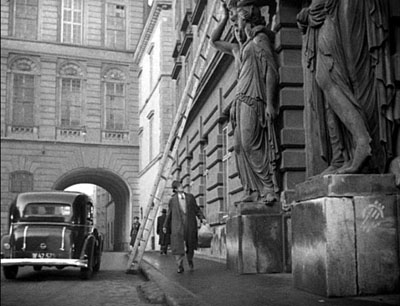
Ironically, the most successful and beloved movie Orson Welles was ever associated with — and the one that may have had the most significant effect on the remainder of his career — has not been one of his own. Admittedly, Citizen Kane has more prestige, but that’s a relatively recent development; for the first quarter of a century after it was made, it was criticized as “uncinematic” in the few standard works of film history available, such as The Liveliest Art and The Film Till Now. Instead it was The Third Man (1950) that was most often cited with pleasure when Welles’s name came up. “Didn’t he direct that?” was something I used to hear a lot. Today I hear “Didn’t he direct at least some of the scenes?” Read more
From Cineaste (Spring 2010; Vol. XXXV, No. 2). Considering the continuing lack of contact between most Americans and the remainder of the world, it probably shouldn’t be too surprising to find James Wolcott still rattling on about the alleged French worship of Jerry Lewis in the September 2011 Vanity Fair — a myth addressed briefly in my second paragraph here, whose limited factual basis in fact hasn’t really been operative for almost half a century. As Lewis himself has often pointed out, his popularity in many places around the world has clearly surpassed his reputation in France. (Today, for instance, Woody Allen is immensely more popular there, with intellectuals as well as the general public — and more popular there than he has ever been in the U.S., which has never been true with Lewis.) But presumably this cherished piece of idiocy will continue to be trotted out as long as Americans remain clueless about France and its culture and proud of its ignorance. It’s a little bit like saying, “Oh, those naughty French — ooo-la-la!” — J.R.
Jerry Lewis
by Chris Fujiwara. Urbana/Chicago: University of Illinois Press,
162 pp., illus. Hardcover: $60.00. Paperback: $19.95.
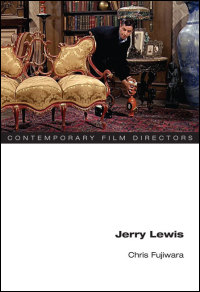
I hope I can be forgiven for repeating an anecdote I recounted in these pages in 2004,while writing about Charlie Chaplin’s films on DVD. Read more
A lecture written circa fall 2002, I forget for which occasion. I’m not even sure if this represents a complete or final draft. This was written before the belated rediscovery of The Third Man in Vienna (not one of the better episodes in Around the World with Orson Welles, alas, and now available on DVD). — J.R.


My point of departure for this paper is remarks that have been made by myself and others about Orson Welles’ three completed features of the 1950s —- Othello, Mr. Arkadin, and Touch of Evil—- and how these reflect his attitudes towards what was happening in the United States around the same time. More specifically, I’m thinking of my own speculation that Othello (1952) may have something to do with the Hollywood blacklist and witch hunts, and James Naremore’s observation that the character of Van Stratten (Robert Arden) in Mr. Arkadin (1955), “quite by accident, bears an uncanny resemblance to a young, athletic Richard Nixon,” relates to the Cold War (with Arkadin having been modeled to some degree on Josef Stalin and the character of Van Stratten suggesting Richard Nixon in certain respects).
Now I hasten to add that the conscious intentionality of Welles in relation to either of these relationships or many others like them probably fluctuates a good deal, and that this isn’t my only frame of reference. Read more
From the Chicago Reader (June 14, 1996). — J.R.
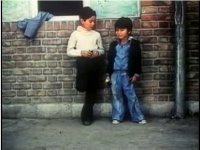
Films by Abbas Kiarostami
By Jonathan Rosenbaum
This month is an unusually rich one at the Film Center, especially for work that’s generally unavailable. Every Thursday there’s a classic film noir, with the rarely screened ultraminimalist Murder by Contract (1958) a particular highlight. Every Friday and Tuesday there are features by the late mannerist maestro Jean-Pierre Melville — an innovative director of French art movies (The Silence of the Sea, Les enfants terribles) who eventually became a specialist in American-style gangster films (Le doulos, Second Breath, Le samourai) and a homoerotic cult favorite of Quentin Tarantino and John Woo. (Catch Melville’s 1965 Second Breath this Friday and marvel at the bizarre sensibility and consummate craft that combine to lovingly duplicate the texture of a cheesy, nondescript Columbia Pictures noir of the 50s.) And best of all is a program devoted to Iranian master Abbas Kiarostami, including his four major features, over the next two weekends.
Both the Melville and the Kiarostami retrospectives are close to being complete. The missing Melville titles are 24 Hours in the Life of a Clown (his only short film, 1946), When You’ll Read This Letter (1953), and The Elder Ferchaux (1962), but no less than 11 features are showing this month. Read more
From the Chicago Reader (May 15, 1992). — J.R.
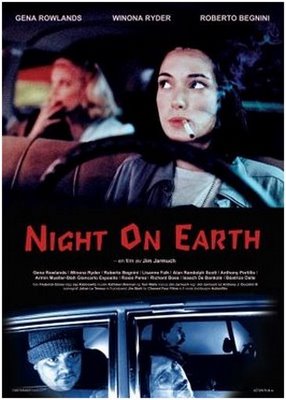
NIGHT ON EARTH
** (Worth seeing)
Directed and written by Jim Jarmusch
With Winona Ryder, Gena Rowlands, Giancarlo Esposito, Armin Mueller-Stahl, Rosie Perez, Isaach de Bankolé, Beatrice Dalle, Roberto Benigni, and Matti Pellonpaa.
As the most popular American independent filmmaker around, Jim Jarmusch carries a special burden: his reputation makes his work particularly hard to evaluate. Other American independents who haven’t enjoyed his commercial success — he’s the only independent who comes to mind who works mainly in 35-millimeter and owns all his own pictures — envy and even resent him, questioning whether he offers a serious alternative to the commercial mainstream. Indeed, Jarmusch has come to be so identified with artistic freedom that it’s difficult to see how any of his movies can live up to his reputation.
“Jim Jarmusch’s planet is the Lower East Side,” began Karen Schoemer in an awestruck feature in the New York Times late last month. “Its bars, its bodegas and its pavement make up his home, his office and his hangout.” “The director finds drama in the ordinary” reads a pull quote in the following hagiography, and clearly so does the Times: it finds a special magic and potency in a run-down neighborhood simply because Jarmusch lives there. Read more
From the Chicago Reader (April 26, 2002). — J.R.
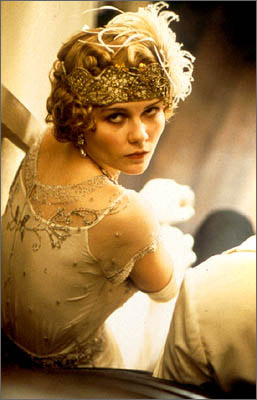
The Cat’s Meow
*** (A must-see)
Directed by Peter Bogdanovich
Written by Steven Peros
With Kirsten Dunst, Cary Elwes, Edward Herrmann, Eddie Izzard, Joanna Lumley, Jennifer Tilly, Victor Slezak, James Laurenson, and Claudia Harrison.

ORSON WELLES: In the original script [of Citizen Kane] we had a scene based on a notorious thing Hearst had done, which I still cannot repeat for publication. And I cut it out because I thought it hurt the film and wasn’t in keeping with Kane’s character. If I’d kept it in, I would have had no trouble with Hearst. He wouldn’t have dared admit it was him.
PETER BOGDANOVICH: Did you shoot the scene?
ORSON WELLES: No, I didn’t. I decided against it. If I’d kept it in, I would have bought silence for myself forever. — This Is Orson Welles
I edited This Is Orson Welles, a series of interviews Peter Bogdanovich did with Welles, at the request not of Bogdanovich but of Oja Kodar, Welles’s companion and collaborator for the last 20-odd years of his life, to whom Welles had willed the rights. The incident Welles alluded to in this exchange is the subject of The Cat’s Meow, directed by Bogdanovich and adapted by Steven Peros from his own play. Read more
From the Chicago Reader (February 28, 1997). — J.R.
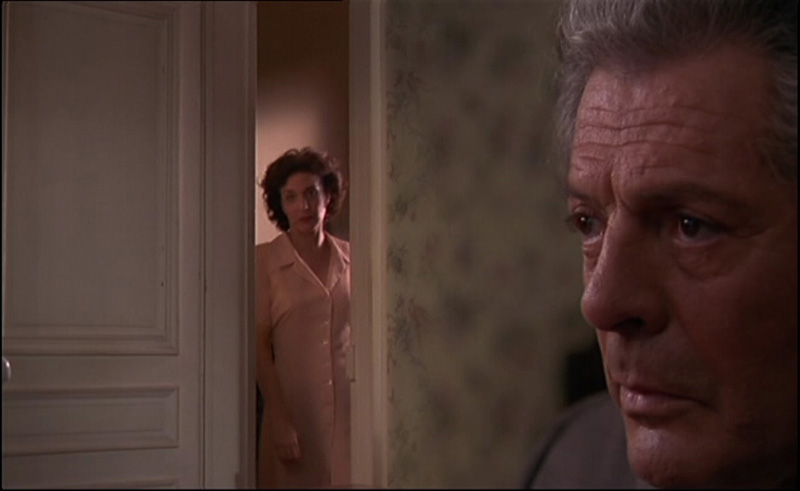
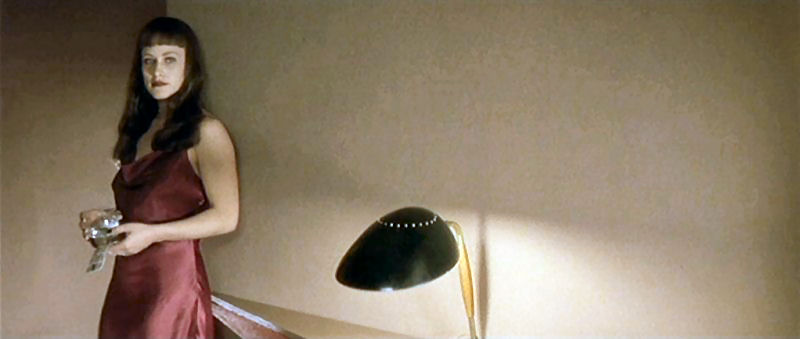
Three Lives and Only One Death
Rating *** A must see
Directed by Raul Ruiz
Written by Ruiz and Pascal Bonitzer
With Marcello Mastroianni, Anna Galiena, Marisa Paredes, Melvil Poupaud, Chiara Mastroianni, Arielle Dombasle, Feodor Atkine, and Lou Castel.
Lost Highway
Rating *** A must see
Directed by David Lynch
Written by Lynch and Barry Gifford
With Bill Pullman, Patricia Arquette, Balthazar Getty, Michael Massee, Robert Blake, Gary Busey, Lucy Butler, Robert Loggia, and Richard Pryor.

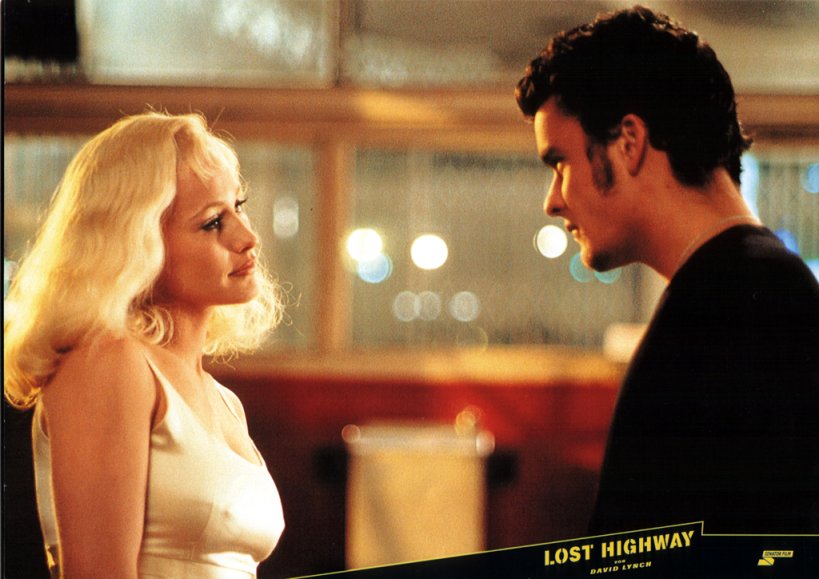
By coincidence, two major features by two of the most talented postsurrealist filmmakers open this week, both convoluted parables about heroes with multiple identities. Though Raul Ruiz and David Lynch are separated by a world of differences — political, cultural, national, intellectual, and temperamental — both are expanding the options in filmmaking as well as filmgoing. Each offers a different kind of roller-coaster ride that manages to be bewildering, provocative, kaleidoscopic, scary, visually intoxicating, and funny.
Ruiz — a Chilean who moved to Paris in 1974 and who makes movies all over the world (in France, Italy, Taiwan, and the U.S. in the past year alone) — has made 90-odd films and videos to date, though he’s only five years older than Lynch. Read more