With Michelle Pfeiffer, Treat Williams, Jonathan Jackson, Ryan Merriman, Whoopi Goldberg, Cory Buck, John Kapelos, and Michael McElroy.
The two best reasons for seeing The Deep End of the Ocean are the story and Michelle Pfeiffer, not necessarily in that order. But these two calling cards are sometimes at odds, so the film’s virtues and problems grow out of the same source. On the one hand, you’ve got the star system creating certain expectations about the story’s focus; on the other, you’ve got a narrative about a 12-year-old boy trying to figure out his identity by reconciling two sets of parents. Because these two factors are at cross-purposes, you start out watching a star vehicle and wind up watching a coming-of-age story; the transition from one to the other is what makes The Deep End of the Ocean feel somewhat uncertain.
Certainly one can rationalize this shift of gears. The late Dwight Macdonald — the film critic for Esquire back in the early 60s, when it was still possible to write for that magazine about movies as an art form rather than as a combination of sport and business — suggested in one of his columns that a shift of focus from one character to another is often a good thing. Read more
Commissioned and published online by BBC.com in November 2018. — J.R.
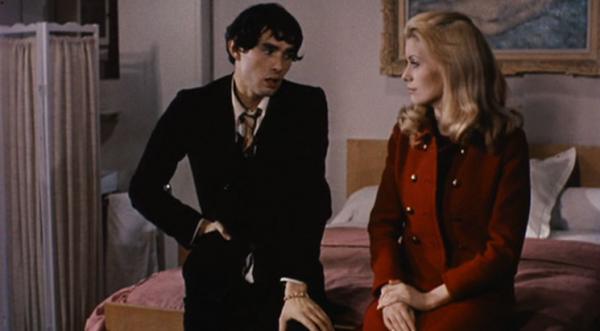
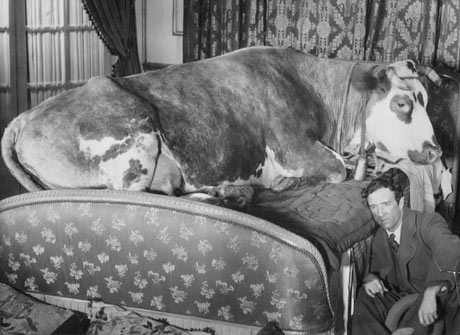
Luis Buñuel was the greatest of all Spanish film-makers. He is also known as the greatest of all Surrealist film-makers – someone who kept returning to dreams and the unconscious, all the way from Un Chien Andalou, the silent avant-garde shocker he made with Salvador Dali, to Belle de Jour, in which sado-masochistic fantasies lurk beneath Catherine Deneuve’s chic surface. It’s no wonder that in critical studies of his films, the emphasis is on Freud as a “guide” to Bunuel’s greatness. But the influence of another thinker, Marx, was just as important. However surreal Bunuel’s work may be, political revolt and an acute feeling for class struggle informed all of it, whether it was French, Mexican or Spanish.
Truly a child of the 20th century, Luis Bunuel Portoles was born in 1900, the oldest child in a prosperous Catholic family based in the Aragon region of Spain. He first made his mark four years after he moved to Paris in 1925, when he joined forces with Dali to make Un Chien Andalou. Buñuel and Dali began collaborating again on the hour-long L’Age d’or (1930), but their political differences were already driving them apart: Buñuel’s Marxism versus Dali’s conservatism. Read more
From the Chicago Reader (September 14, 1990). — J.R.
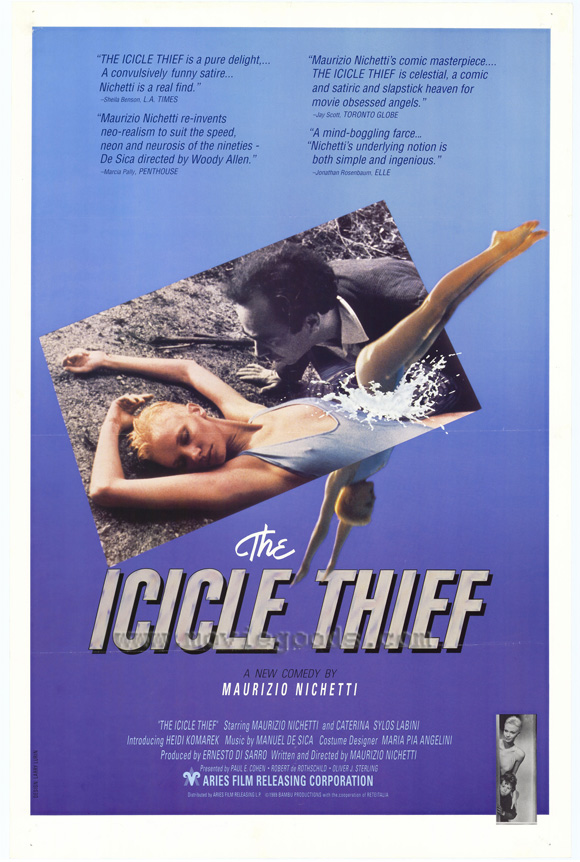
THE ICICLE THIEF
**** (Masterpiece)
Directed by Maurizio Nichetti
Written by Nichetti and Mauro Monti
With Nichetti, Caterina Sylos Labini, Federico Rizzo, Heidi Komarek, Renato Scarpa, Carlina Torta, Lella Costa, and Claudio G. Fava.
There is still so much we have to learn about TV! — Kurt Vonnegut, Hocus Pocus
Some people have called Maurizio Nichetti the Italian Woody Allen, an unfortunate appellation in more ways than one. Not only does it not do him justice, it also attributes to him an urban snobbishness that couldn’t be further from his world and persona. In the New York Times, where Allen’s movies are ranked higher than the late works of Welles and Antonioni — apparently because Allen, unlike Welles and Antonioni, reflects the worldview of many New Yorkers — the label can only backfire. But take a look at both actors and ask yourself which of the two is funnier.
The first time I saw a Nichetti movie, all it took was the opening sequence to convince me that there was no contest.
At an international conference in Milan, a distinguished participant suffers a stroke. A desperate call is made across the city to Colombo — a short nebbish with a mop of hair and a Groucho mustache, who operates a hilltop refreshment stand — for a glass of mineral water for the poor man. Read more
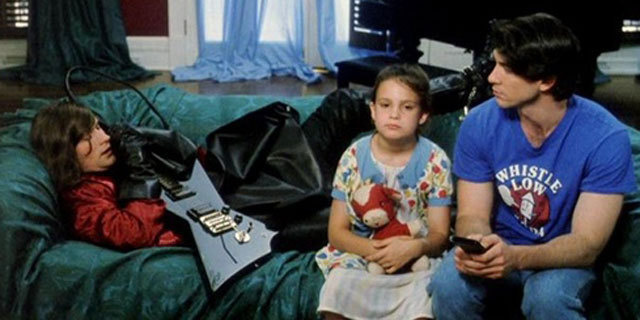
With Heather Matarazzo, Brendan Sexton Jr., Telly Pontidis, Herbie Duarte, Daria Kalinina, and Matthew Faber.
Nelly and Monsieur Arnaud
Rating *** A must see
Directed by Claude Sautet
Written by Sautet, Jacques Fieschi, and Yves Ulmann
With Emmanuelle Beart, Michel Serrault, Jean-Hugues Anglade, Claire Nadeau, Francoise Brion, Michele Laroque, and Michael Lonsdale.
It’s hard to think of two stark depictions of blocked libido more dissimilar than Todd Solondz’s Welcome to the Dollhouse and Claude Sautet’s Nelly and Monsieur Arnaud. But they share at least one trait that deserves to be cherished — a trait that sets them apart from most other new movies. Both offer lively alternatives to the current lackluster, middlebrow exemplars of “literary” cinema — Cold Comfort Farm, The Horseman on the Roof, The Postman, Sense and Sensibility — clogging up our art theaters, beckoning us to feel more educated and civilized and thereby keeping out other movies that might address our everyday lives more directly. (I haven’t seen Moll Flanders, but I suspect that it and the horrendous Disney animated feature Hunchback of Notre Dame are mainstream versions of the same spreading disease.) Read more
From the Chicago Reader (November 16, 2001). — J.R.
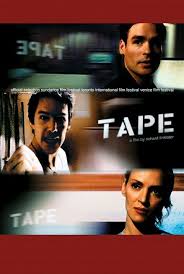
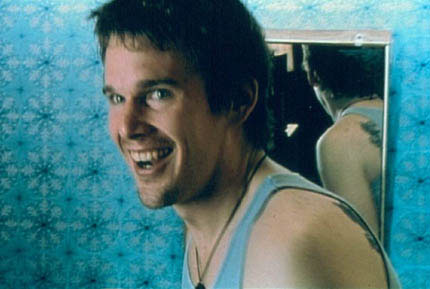
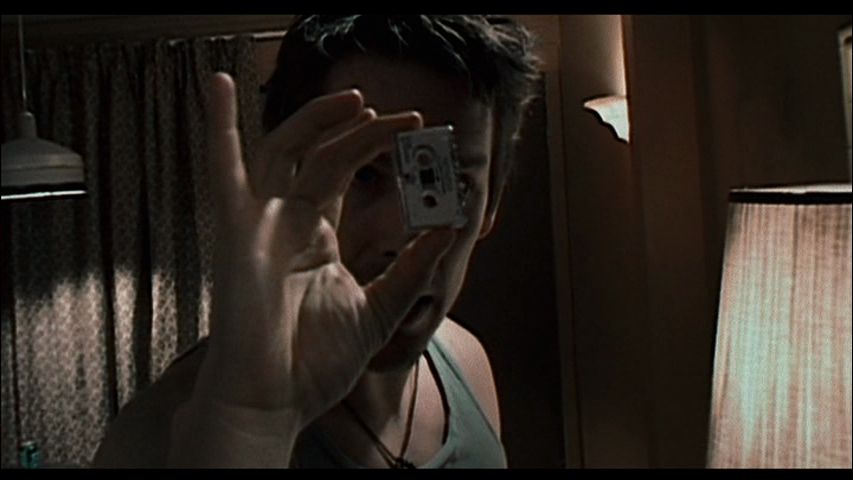
Tape ***
Directed by Richard Linklater
Written by Stephen Belber
With Ethan Hawke, Robert Sean Leonard, and Uma Thurman.
It seems that the less we know about a subject, the likelier we are to be assertive about it. And journalists play a big role in making people feel knowledgeable about what they don’t know. That’s why we keep encountering more and more twaddle about the state of world cinema even though the growth of digital video makes it impossible for anyone to keep up with the state of local cinema in any large city, much less any country, still less the world. All journalists can honestly say is that more and more works are being made and that keeping up with them is no longer possible. It was only days after an Iranian friend and I completed a book about Abbas Kiarostami that a New York critic E-mailed us about two new Kiarostami works we hadn’t even heard of — a ten-minute short for an episodic feature and a fiction feature in DV that he’s in the final stages of editing.
DV equipment is so easy to shoot with –it’s compact, light, inexpensive, unobtrusive — that it’s hard to keep up with how filmmakers are using the technology. Read more
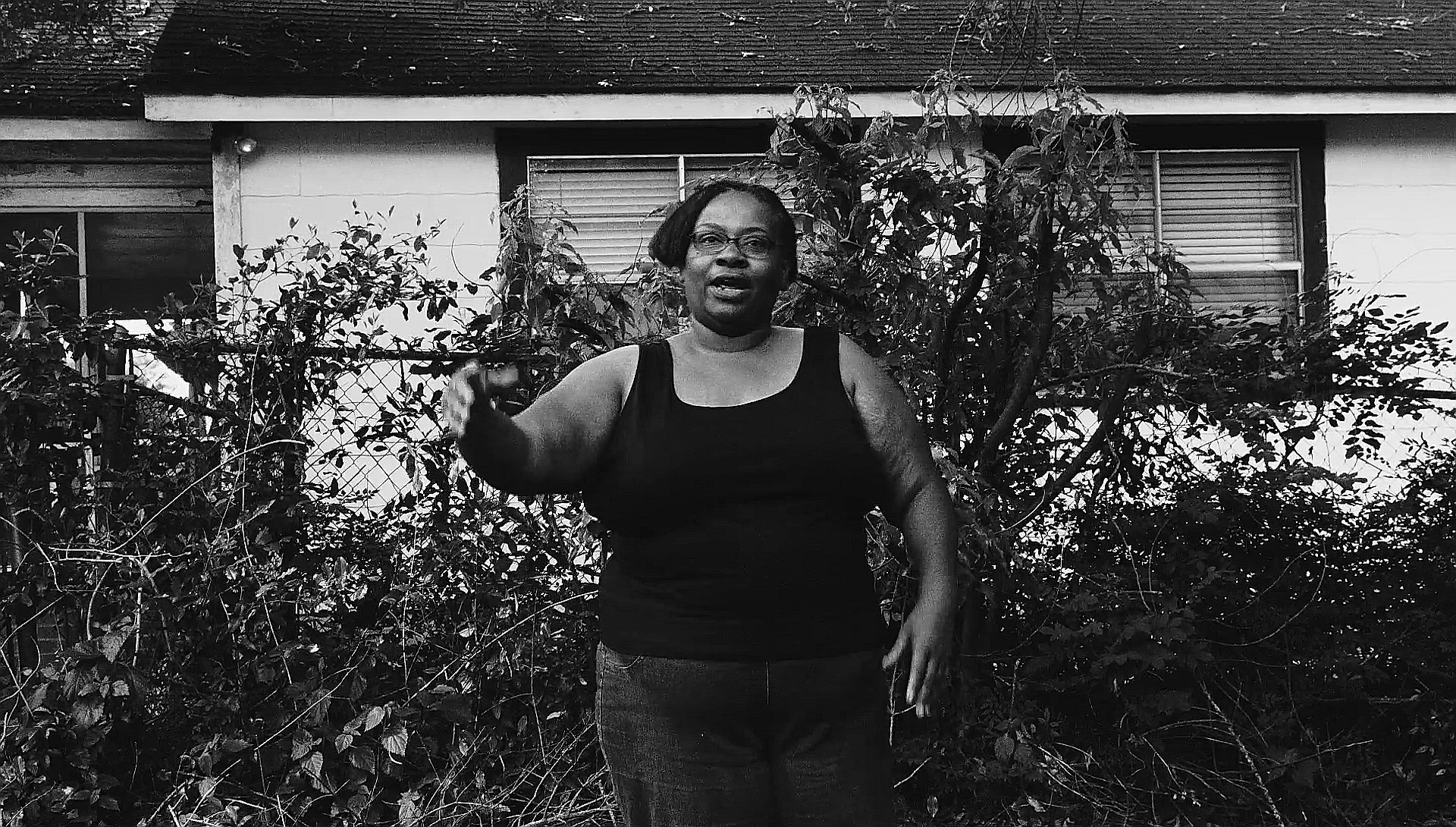
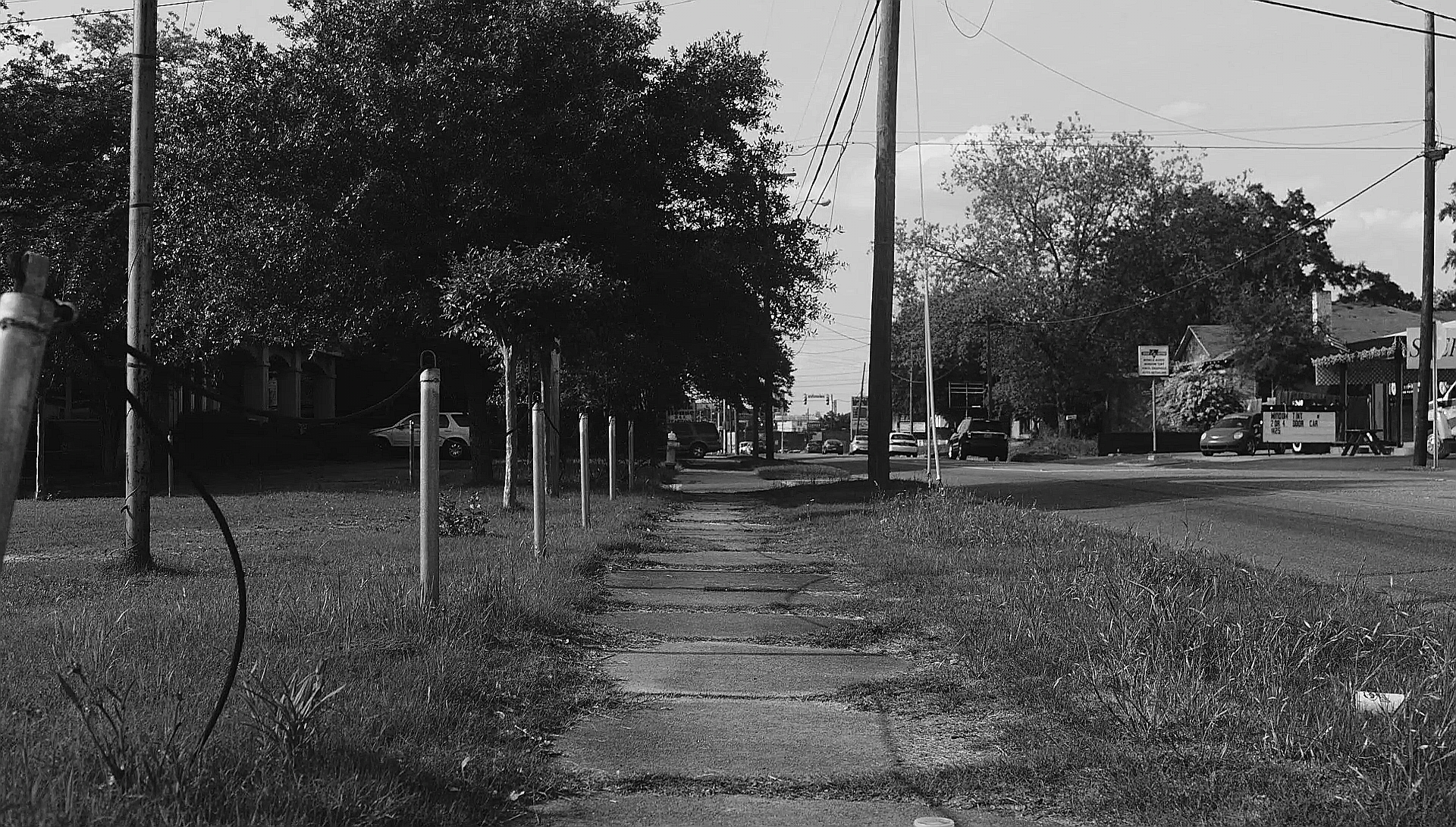
I gather that Travis Wilkerson’s amazing personal essay film about the murder of a black man by his great-grandfather in Dothan, Alabama in 1946 will be at New York’s Film Forum through March 13. I’m grateful to A.O. Scott for his enthusiastic review, which, by alerting me to this film’s existence, made me forgive Scott for what appeared to be his blindness to the subtler forms of racism and class bias practiced by Woody Allen in the reviewer’s latest “troubled” Times ruminations about that profoundly overrated figure. Even if I’m not the only one who views Manhattan as a hipper version of Trump’s “Make America great [i.e., white] again” — it was the late Allan Sekula who first pointed out to me how the absence of people of color on the streets of New York was part of what made it all seem so dreamy and romantic — the habit of avoiding racism when it appears in your own backyard is hardly unique to Scott. It’s even part of what makes New Yorkers and Alabamans seem similar to me, after living for many years in both places. (I grew up in Florence, to the northwest of Dothan — the other side of the state, and closer to the part of Tennessee where Wild River was filmed and is set.) Read more
From the Chicago Reader (November 3, 2000). — J.R.
Book of Shadows: Blair Witch 2
rating: 0
Directed by Joe Berlinger
Written by Dick Beebe and Berlinger
With Kim Diamond, Jeffrey Patterson, Erica Geersen, Tristine Ryler, and Stephen Ryan Parker.
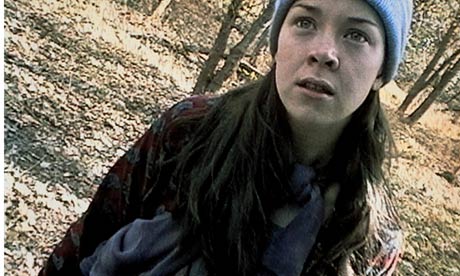
Call me naive, but unlike many of my colleagues I thought the unexpected runaway success of The Blair Witch Project in the summer of 1999 was encouraging, not depressing. I saw it as an indication that contemporary teenagers are far from the hardened cynics media “experts” make them out to be and that special effects and a handful of stars aren’t their sole reasons for wanting to see a movie. Its appeal offered a clear challenge to the studios and even forced the film industry to let it play in malls — an astonishing accomplishment for an independent pseudodocumentary that cost only $30,000.
I don’t consider the movie any sort of masterpiece and fully acknowledge its primitive conceptual and technical aspects, but I still think it expresses something about its young fans that’s authentic and powerful: a feeling of helplessness about their isolation and ignorance in relation to the world that’s central to its impact as a horror movie. If that isolation and ignorance led some viewers to initially see it as a real documentary, this is a tribute to the movie’s effectiveness — which makes it similar in some respects to Jim McBride’s David Holzman’s Diary, a 1967 low-budget pseudodocumentary that also fooled many young viewers. Read more
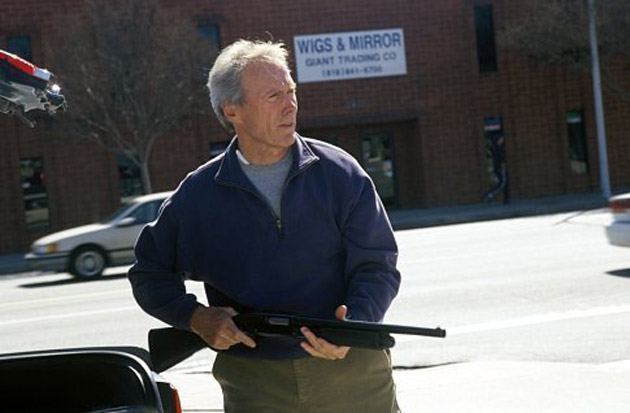
With Eastwood, Wanda De Jesus, Jeff Daniels, Anjelica Huston, Tina Lifford, Igor Jijikine, Alix Koromzay, Dylan Walsh, and Paul Rodriguez.
Clint Eastwood’s latest slugfest, Blood Work, is ultimately just another Dirty Harry opus. And by now Harry has become boring, not because Eastwood keeps trying to redefine the character the public tends to remember him for, but because he doesn’t try to redefine the punk villains who keep Harry busy and dirty.
In Blood Work — not technically but generically and existentially a Dirty Harry adventure — the villain is a standard-issue serial killer. It’s a truism that there are more serial killers in movies than there could possibly be in life, and what keeps them mythic seems to have less to do with the world we live in than with the sadistic and infantile ways we like to think about that world. I have come to associate pleasure in cinema with the absence of serial killers, and the pleasure I associate with Blood Work includes everything that doesn’t relate to the silly one lodged near its center. Read more
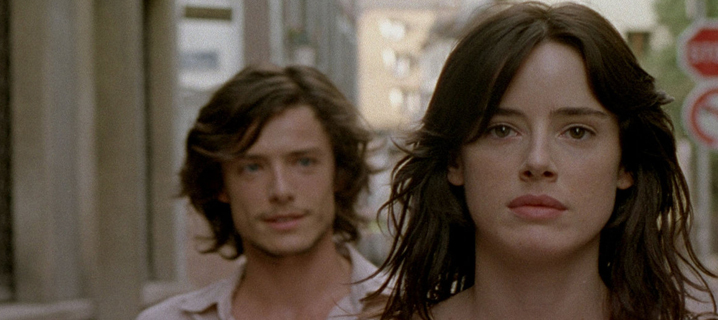
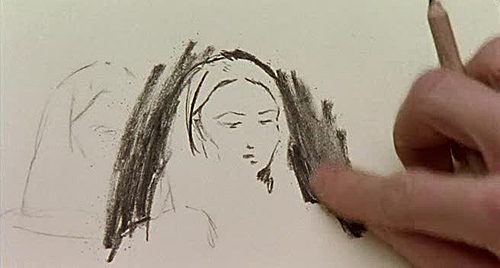
Written in April 2011 for the Cinema Guild DVD of In the City of Sylvia and Some Photos in the City of Sylvia. Alas, most of the illustrations used here come from the former of these, the second to have been made. — J.R.
José Luis Guerín’s Some Photos in the City of Sylvia has been described, by myself and others, as a silent, black and white “study” (or filmed “treatment,”or “scenario”) in 2007 that formed the basis for In the City of Sylvia, a color and sound “remake”of the following year. Whether or not this might be technically accurate in terms of causality and financing, it now strikes me as an inadequate way of summarizing the fascinating relation between these two works. I even think it’s an error to view these two films as two versions of the same story — a mistake I made myself when I reviewed them together back in 2008 — because assuming this overlooks too many other things.
Just as there are viewers who prefer Chantal Akerman’s Golden Eighties (1983), her feature-length “preview” to her 1986 musical Window Shopping, and others who prefer Jean-Luc Godard’s 54-minute Scenario du Film “Passion” (1982) to his 88-minute Passion (made the same year), it’s entirely possible to prefer Guerín’s 67-minute “sketch” to his 84-minute feature. Read more
From the Chicago Reader (August 31, 1990). — J. R.
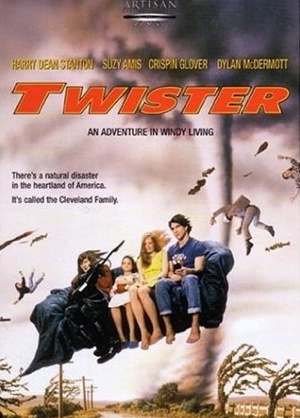
TWISTER
*** (A must-see)
Directed and written by Michael Almereyda
With Suzy Amis, Dylan McDermott, Crispin Glover, Harry Dean Stanton, Lindsay Christman, Charlaine Woodard, Lois Chiles, and Jenny Wright.
“Happy families are all alike; every unhappy family is unhappy in its own way.” The second part of the opening sentence of Tolstoy’s Anna Karenina applies pretty well to the eccentric Kansas family in Michael Almereyda’s oddball comedy Twister, but in a way that’s only half the story. Not only is the family as a whole unhappy in its own particular way, most of its members are out of whack with themselves, each other, and everybody else too.
The father is Eugene Cleveland (Harry Dean Stanton), a distracted, long-divorced retired multimillionaire who made his fortune in soda pop and miniature-golf courses. His main distraction is courting Virginia (Lois Chiles), the born-again hostess of “Wonderbox,” a local Sunday-morning TV kiddie show that teaches toddlers about “the weather, animals, and God.” Maureen, or Mo (Suzy Amis), his 24-year-old chain-smoking alcoholic daughter, is a crabby recluse who hasn’t quite grown up or broken away from home; she occasionally camps out in the backyard of the family mansion, which borders a golf course. Read more
Written in late November 2011 for a book on Ruiz published by the Spanish Cinematheque. A shorter version appears with the Blu-Ray of the theatrical version of Mysteries of Lisbon released in 2012 by Music Box Films. — J.R.
It was disconcerting to see a passage from a 1997 article of mine about Raúl Ruiz quoted in several of his mainstream obituaries: “Ruiz is the least neurotic of filmmakers; he doesn’t even seem to care whether what he’s doing is good or not.” Not because this was false when I wrote it but because it related to my earliest encounters with his work and its seeming challenges to film commerce, not to his better known big-budget efforts such as Marcel Proust’s Time Regained and Klimt.
This is why some of these latter films disappointed me, pointing towards what Ruiz himself frankly described to me in a 2002 interview as a “capitulation”. With money often comes anxiety about audiences and investors — and, even worse, not always being able to distinguish clearly between the two – and the cheerful freedom from this anxiety that characterized the extraordinary productivity of first two decades Ruiz spent as a Paris-based exile (roughly 1975 to 1997) seemed to be threatened by his escalation to higher budgets. Read more
From the Chicago Reader (April 24, 1998). I’m not sure why, but this is one of my long reviews for the Reader that appears to have disappeared from their web site. — J.R.
I’ve seen Ross McElwee’s documentary Six o’Clock News (1996) twice, on video about eight months apart, and each time there was a moment roughly halfway through when I felt that he was finally about to turn a corner as a filmmaker. This Boston-based North Carolinian is known as an independent autobiographer, yet what I’ve come to appreciate most in his work are those moments when autobiography leads him away from himself to other people.
His old friend and former teacher Charleen, for instance, is a far more vibrant presence and far wiser commentator than he is in Charleen (1978), Sherman’s March (1986), and Time Indefinite (1993). Of course, McElwee’s personality and style of filmmaking are what makes a Charleen possible, filmically if not existentially, so extracting her from his works would be as difficult as removing Falstaff from Shakespeare or Humphrey Bogart from the cozy miniature environments of To Have and Have Not and The Big Sleep. Yet the points at which McElwee’s appreciation of Charleen fuses with mine, turning him into a vehicle rather than a destination, are the moments when he functions as a journalist. Read more
With “Beat” Takeshi [Kitano], Tadanobu Asano, Michiyo Ookusu, Yui Natsukawa, and Gadarukaru Taka.
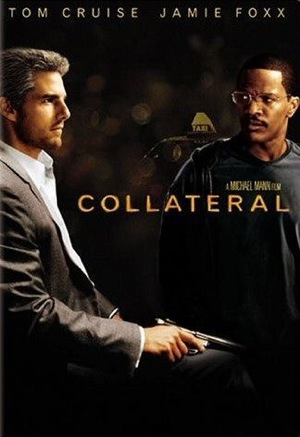
Collateral
*** (A must-see)
Directed by Michael Mann
Written by Stuart Beattie
With Tom Cruise, Jamie Foxx, Jada Pinkett Smith, Mark Ruffalo, Peter Berg, Javier Bardem, Bruce McGill, and Irma P. Hall.
What do Takeshi Kitano’s Zatoichi and Michael Mann’s Collateral, both opening this week, have in common? Judging by what some of my colleagues have been saying, they’re both effective action movies directed by talented genre specialists. But I would argue that this description applies only to Collateral.
Although Mann stretched himself somewhat with Ali, The Last of the Mohicans, and The Insider, he’s first and foremost a maker of adroit crime thrillers: Thief, Manhunter, Heat, and now Collateral. Kitano, on the other hand, is actually an adventurous director of art movies who periodically defaults to the crime genre in order to finance his other projects. In this respect he resembles Clint Eastwood, who, since emerging as an auteur in his own right, has alternated between making action movies for the studio and art movies for himself. Read more
From the Chicago Reader (December 6, 1996). – J.R.
Featured On Photobucket
Breaking the Waves
Rating *** A must see
Directed and written by
Lars von Trier
With Emily Watson, Stellan
Skarsgard, Katrin Cartlidge,
Jean-Marc Barr, Adrian Rawlins,
Jonathan Hackett, and Udo Kier.
Ever since I first encountered Lars von Trier’s Breaking the Waves in Cannes, where it won the grand jury prize, I’ve been debating within myself about it, because I find it simultaneously shameless, boldly original, contrived, highly affecting, transparent, cynical, hopeful, ironic, sincere, ugly, beautiful, and downright baffling. In a way, my debate isn’t so different from that of Bess (Emily Watson) — the innocent and high strung (or unstrung) young heroine who lives on the northwest coast of Scotland in the early 70s and for much of the film carries on a furious internal debate with “God,” speaking her own part in a squeaky high voice and God’s in a patriarchal low one.
Where Bess, a devout believer, has God, I, a nonbeliever, have the late Carl Dreyer, the film artist von Trier and I both revere above all others. And where Bess speaks to herself not as God but as her sense of God (which overlaps on rare occasion with her sense of Jan), I speak to myself not as Dreyer but as my sense of Dreyer’s achievement (which overlaps on rare occasion with my sense of von Trier’s achievement). Read more