From Take One (January 1979). — J.R.
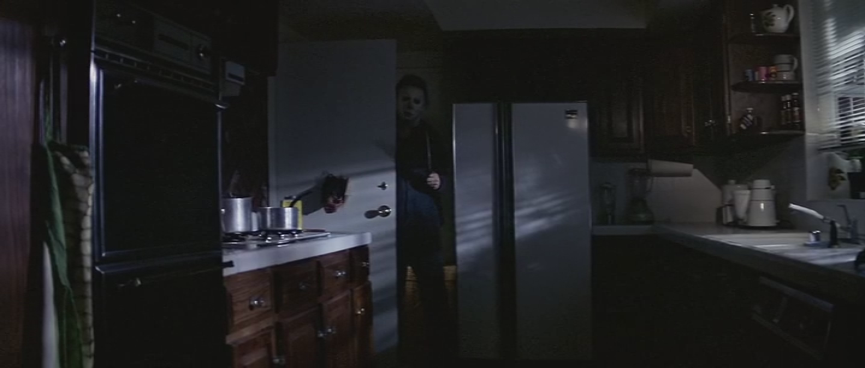
In order to do justice to the mesmerizing effectiveness of Halloween, a couple of mini-backgrounds need to be sketched: that of writer-director John Carpenter, and that of the Mainstream Simulated Snuff Movie — a popular puritanical genre that I’ll call thw MSSM for short.
(1) On the basis of his first two low-budget features, it was already apparent that the aptly-named Carpenter was one of the sharpest Hollywood craftsmen to have come along in ages — a nimble jack-of-all-trades who composed his own music, doubled as producer (Dark Star) and editor (Assault on Precinct 13), and served up his genre materials with an unmistakably personal verve. Both films deserve the status of sleepers; yet oddly enough, most North American critics appear to have slept through them, or else stayed away. Somehow, the word never got out, apart from grapevine bulletins along a few film-freak circuits.
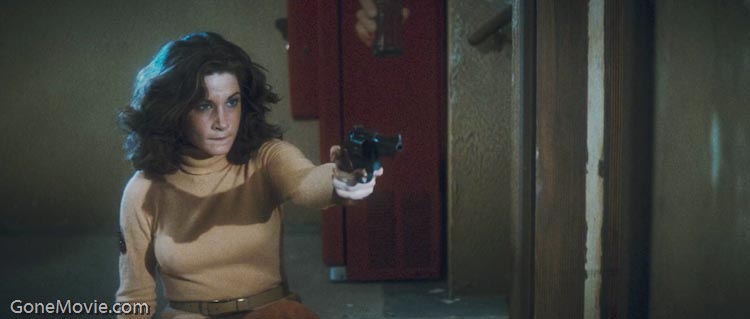
Dark Star proved that Carpenter could be quirky and funny; Assault showed that he could be quirky, funnu, and suspenseful all at once. Halloween drops the comedy, substitutes horror, and keeps you glued to your seat with ruthless efficiency from the first frame to the last. Read more
From the Chicago Reader (June 7, 1996). — J.R.
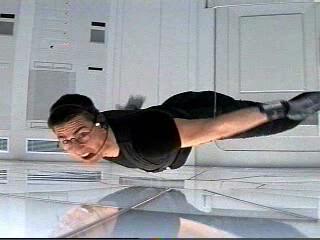
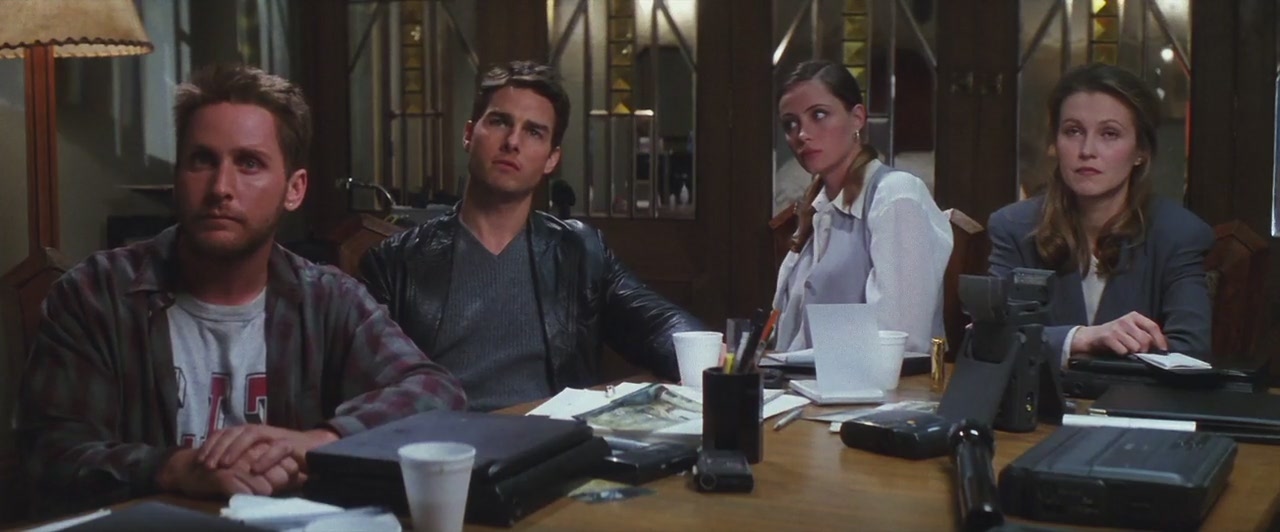
Mission: Impossible
Rating * Has redeeming facet
Directed by Brian De Palma
Written by David Koepp, Steven Zaillian, and Robert Towne
With Tom Cruise, Jon Voight, Henry Czerny, Emmanuelle Beart, Jean Reno, Ving Rhames, Kristin Scott-Thomas, and Vanessa Redgrave.
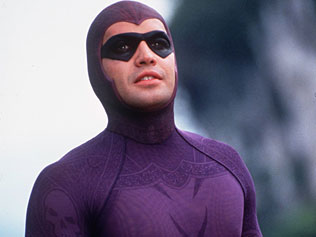
The Phantom
Rating * Has redeeming facet
Directed by Simon Wincer
Written by Jeffrey Boam
With Billy Zane, Kristy Swanson, Treat Williams, Catherine Zeta Jones, James Remar, and Cary-Hiroyuki Tagawa.
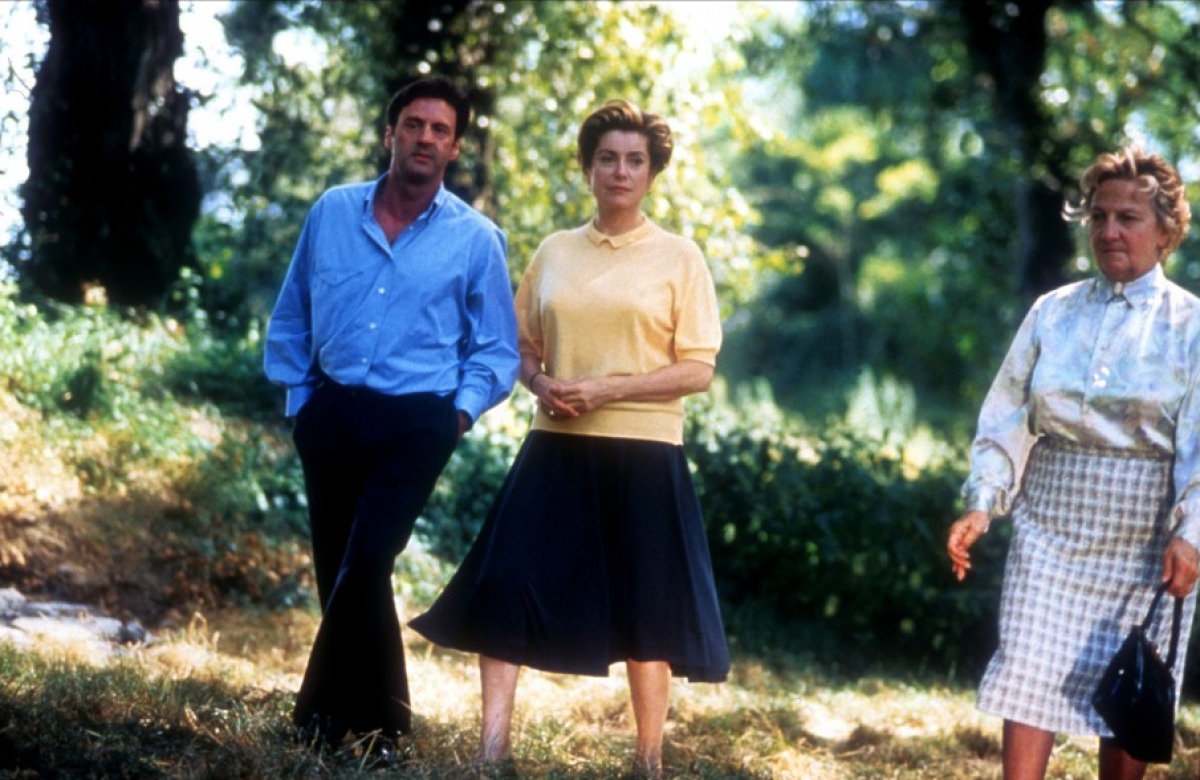
My Favorite Season
Rating *** A must see
Directed by Andre Téchiné
Written by Téchiné and Pascal Bonitzer
With Catherine Deneuve, Daniel Auteuil, Marthe Villalonga, Jean-Pierre Bouvier, Chiara Mastroianni, Carmen Chaplin, Anthony Prada, and Michèle Moretti.


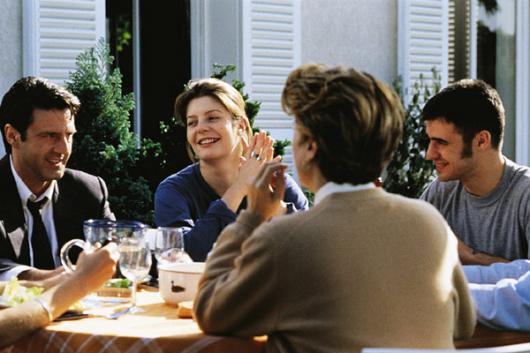
I think that one never grows up emotionally. We grow up physically, intellectually, socially, and even morally but never emotionally. Recognition of this fact can be either terrifying or deeply moving. Everyone handles it in their own way. — Andre Téchiné


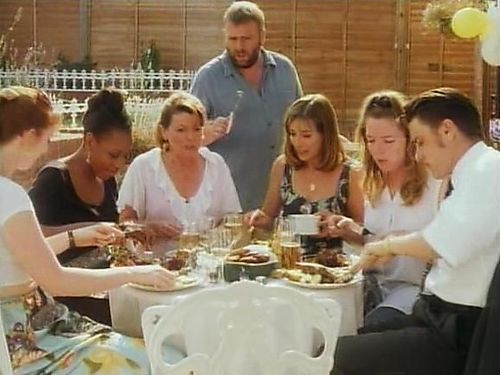
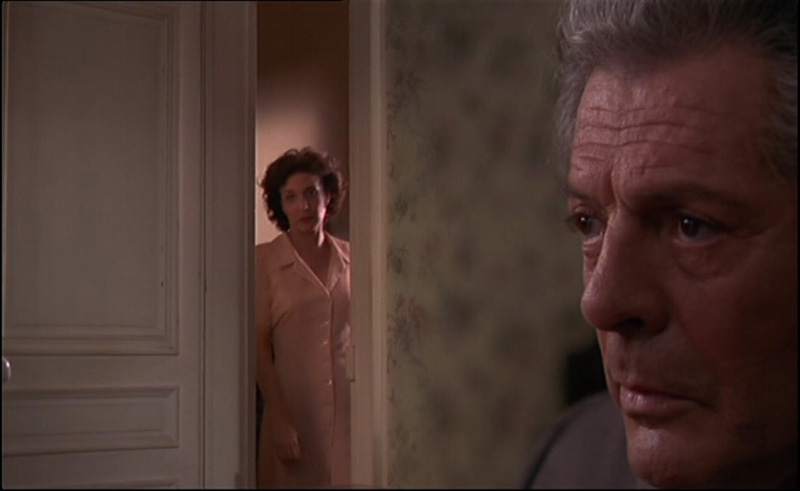

The principal pleasure of the Cannes festival for me was a two-week vacation from the “fun” of American movies. Maybe this fun — which points to our inability to grow up emotionally — would seem less oppressive if it didn’t also inform the American experience of news, politics, fast food, sports, economics, education, religion, and leisure in general; this kind of fun is less an escape than an enforced activity, a veritable civic duty. Read more
From the Chicago Reader (July 31, 1992). — J.R.
![]()
DEATH BECOMES HER
No stars (Worthless)
Directed by Robert Zemeckis
Written by Martin Donovan and David Koepp
With Goldie Hawn, Meryl Streep, Bruce Willis, Isabella Rossellini, Ian Ogilvy, Adam Storke, and Sydney Pollack.
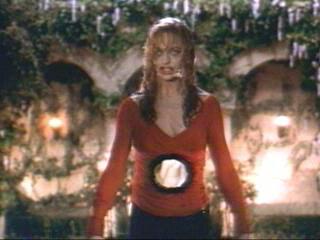
“The copper is fair game for pies, likewise any fat man. Fat faces and pies seem to have a peculiar affinity. If the victim is fat enough the movie public will tolerate any kind of rough stuff.
“On the other hand, movie fans do not like to see pretty girls smeared up with pastry. Shetland ponies and pretty girls are immune.
“It is an axiom of screen comedy that a Shetland pony must never be put in an undignified position. People don’t like it. You can take any kind of liberties with a donkey. They even like to see the noble lion rough-housed, but not a pony. You might as well show Santa Claus being mistreated.
“The immunity of pretty girls doesn’t go quite as far as the immunity of the Shetland pony, however. You can put a pretty girl in a comedy shower bath. You can have her fall into mud puddles. They will laugh at that. But the spectacle of a girl dripping with pie is displeasing. Read more
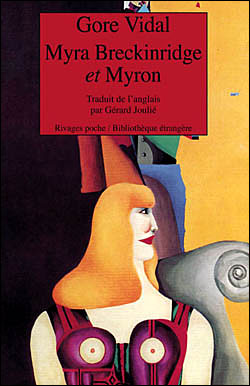
I wrote this book review for The Village Voice shortly after I moved to London from Paris in 1974 (which helps to explain how I could cite the English paperback of Myra Breckinridge), so I was more than likely a little miffed when the Voice noted at the end of the piece, “Jonathan Rosenbaum is a film critic presently living in Paris.” Although I think this review suffers a bit from the Voice‘s overheated smart-alecky manner during this period, which I was only too willing to adopt (and which makes some of my gripes potentially open to the charge of the pot calling the kettle black), I was reminded of both this review and Myra Breckinridge/Myron while recently reading Vidal’s somewhat similar 1978 novel Kalki, which has a similarly formidable heroine-narrator with a comparably ambiguous relation to gender. — J.R. [4/3/09]
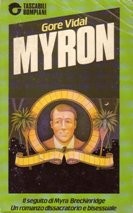
More Vidal
By Jonathan Rosenbaum
_____________________________________________________
Myron
Gore Vidal
Random House, $6.95
______________________________________________________
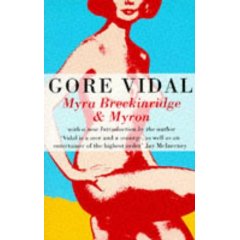
Myra Breckenridge was a stunt: a clever gay trick pulled on a straight audience — or, if one prefers, a bisexual prank pulled on a unisexual audience — with kibitzers and spectators welcome on either side of the ironies, different jokes for different folks. Read more
This piece by Ehsan for Fandor’s Keyframe originally appeared on the day before my 70th birthday (February 26, 2013).– J.R.
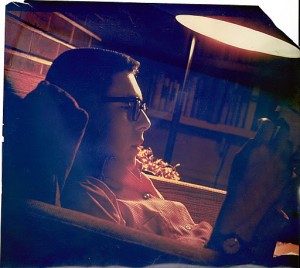
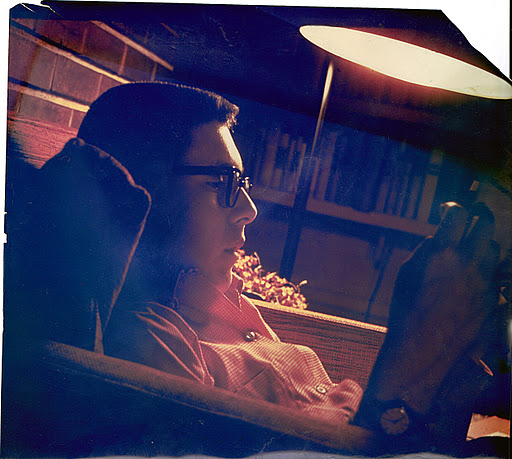
Jonathan Rosenbaum at 15, imagination in the process of being liberated.
Jonathan Rosenbaum, at the cusp of seventy, talks about a life of jazz and cinema.
By Ehsan Khoshbakht February 26, 2013
The needs-no-introduction film critic Jonathan Rosenbaum turns seventy this month, but that does not mean that he has grown out of touch. His latest book, Goodbye Cinema, Hello Cinephilia (University Of Chicago Press, 2010), displays Rosenbaum’s engagement with digital-era realities, and manages something few if any critics of his generation are capable of in the current environment: optimism. Self-catalogued on his own website, the critic’s life of writing, from his late teens to the two-thousand-and-teens, coheres, and the collection of work is unmatched by any living film writer for its breadth and rigor. A closer look at his contribution to film literature (with featured articles in the weightiest of magazines and translations of his baker’s dozen books into languages as diverse as Chinese and Farsi) finds Rosenbaum generally bringing a sense of urgency to his subjects, no matter the decade.
My rather personal ties with the Chicago-based critic comes from our mutual love of jazz, which, aside from its ecstatic pleasures (that sometimes surpasses cinema’s), can assist writers in the ways they approach any other art form. Read more
From the May 20, 1988 Chicago Reader. — J.R.

BABETTE’S FEAST
** (Worth seeing)
Directed and written by Gabriel Axel
With Stephane Audran, Jean-Philippe Lafont, Gudmar Wivesson, Jarl Kulle, Hanne Stensgard, Bodil Kjer, Vibeke Hastrup, and Birgitte Federspiel.
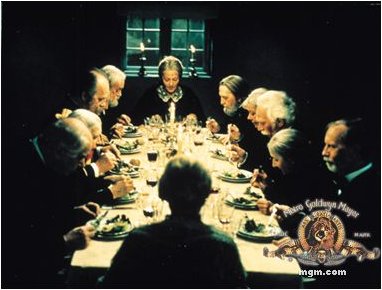
Only when she had lost what had constituted her life, her home in Africa and her lover, when she had returned home to Rungstedlund a complete “failure” with nothing in her hands except grief and sorrow and memories, did she be come the artist and the “success” she never would have become otherwise — “God loves a joke,” and divine jokes, as the Greeks knew so well, are often cruel ones. What she then did was unique in contemporary literature though it could be matched by certain nineteenth century writers — Heinrich Kleist’s anecdotes and short stories and some tales of Johann Peter Hebel, especially Unverhofftes Wiedersehen come to mind. Eudora Welty has defined it definitively in one short sentence of utter precision: “Of a story she made an essence; of the essence she made an elixir; and of the elixir she began once more to compound the story.” — Hannah Arendt on Isak Dinesen
When Ernest Hemingway accepted his Nobel prize in 1954, he was gracious enough to acknowledge that it should have gone to Isak Dinesen instead. Read more
From the Chicago Reader (October 24, 1997). — J.R.
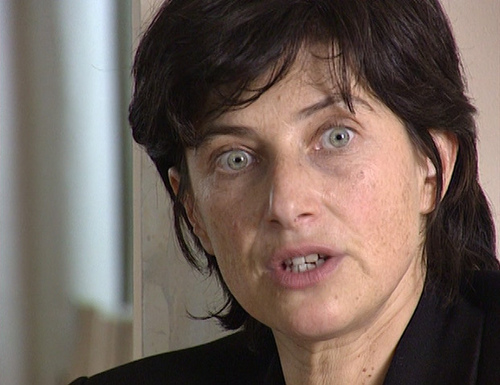
Chantal Akerman by Chantal Akerman
Rating *** A must see
Directed and written by Chantal Akerman.
This weekend the Museum of Contemporary Art, as part of its exhibit “Hall of Mirrors: Art and Film Since 1945,” is presenting not only Chantal Akerman, one of the finest filmmakers working anywhere, but also the two features I would describe as her greatest achievements — the 200-minute narrative Jeanne Dielman, 23 quai du Commerce, 1080 Bruxelles (1975) and the 107-minute documentary From the East (D’est, 1993). To make the program even more fully rounded, the museum is also showing a 64-minute self-portrait, Chantal Akerman by Chantal Akerman (1996), which provides an excellent introduction to her work as a whole. (This film and Akerman herself will appear on Sunday; From the East shows on Friday, and Jeanne Dielman on Saturday.)
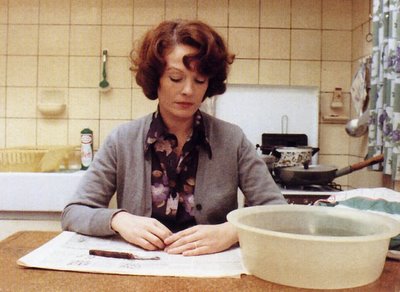

Despite her significant and still growing international reputation, Akerman isn’t yet considered an “established” mainstream or avant-garde artist, because many critics in both spheres still treat her as something of an interloper, even an irritation or a threat. A friend who’s a highly respected novelist and film critic recently told me that he regards all her work as worthless, even though he hasn’t bothered to look at all of it. Read more
From Oui (August 1974). — J.R.
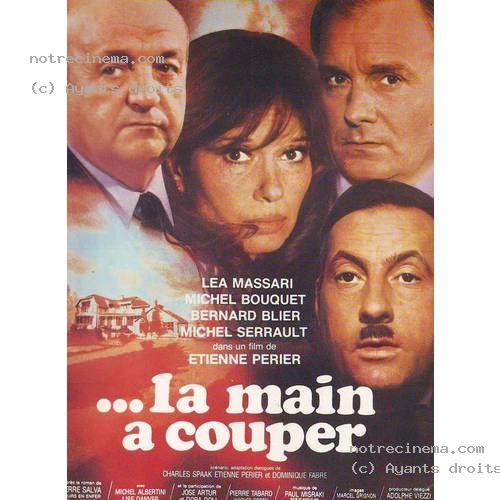
La main à couper. It’s been suggested that one reason why movies are so popular in Paris is that French TV is so bad. In point of fact,a conventional Gallic thriller such as the current La main à couper is not very different from what an American spectator is likely to see in a weekly series like Alfred Hitchcock Presents. The central intrigue, of course, is classically Continental: bourgeois adultery, the same subject that Claude Chabrol staked out years ago, although it is as perpetually common to French melodrama as raincoats are to spy thrillers. A married woman (Lea Massari) is having an affair with a young sculptor who is roughly the same age as her son. One day she goes to meet him at his studio and finds him dead, murdered with a blunt instrument. From this point on, practically all of the suspense and tensions develop out of the hypocrisy that her position requires, She can’t go to the police or tell her husband (Michel Bouquet), her daughter, or her son. The task of behaving normally becomes even more of an ordeal when an odd little fellow with a Hitler mustache (Michel Serrault) turns up and starts blackmailing her.This, Read more
Researching Iranian cinema, even contemporary Iranian cinema, can sometimes be a dicey undertaking, in part because of the variant spellings of names and even a few film titles. I thought enough of Seyyed Reza Mir-Karimi ‘s first feature, The Child and the Soldier (2000), to include it on my list of my 1000 favorite films, included as an appendix in my 2004 collection Essential Cinema. And Fred Camper thought enough of his second feature, Under the Moonlight (2001), to begin his capsule review for the Chicago Reader by writing, “A refreshing version of Islam in which charity and justice are more important than rigid adherence to rules.” And now that I’ve seen his latest feature, which is Iran’s official entry for this year’s Academy Awards, Today — or Today!, as it appears to be written on the screen in Persian -– it’s clear that this director qualifies as a master. But now (today) his name is mainly given in Western sources as Reza Mirkarimi, without the Seyyed or the hyphen, so when I looked up this name on my own web site, I could find nothing. So it seems both ironic and ironically appropriate that the most ethical and humanist cinema we can find in the world today both engages directly with and is often confounded by our ignorance about the world we inhabit. Read more
From the Chicago Reader‘s blog, the Bleader. — J.R.
Holiday Jitters
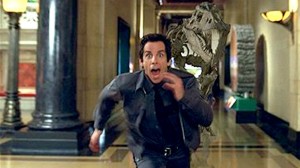
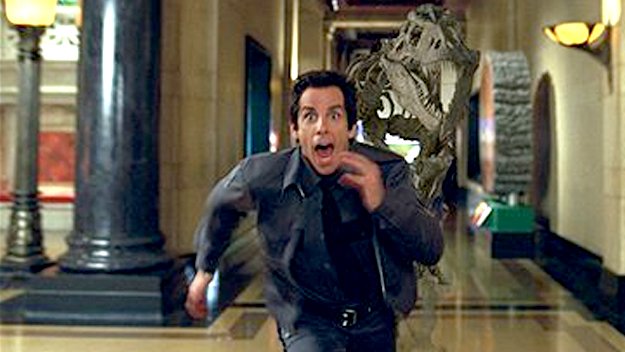
Allied Advertising recently informed me that the Ben Stiller comedy Night at the Museum is being previewed only to the daily press, not to weekly reviewers — which naturally raises the question of whether the company in question (Twentieth Century Fox) is deciding in advance that we weekly reviewers won’t like this release. Whether that’s the meaning of their strategy or not, it does show a kind of uncertainty that is much more general among the so-called majors. For instance, Warner Brothers has at this pointed shifted the Chicago opening date of Clint Eastwood’s Letters From Iwo Jima several times, with the result that it’s bounced on and off my ten-best list according to whether it’s opening here in 2006 or 2007. New York and Los Angeles reviewers get to consider Flags of Our Fathers and Letters From Iwo Jima as part of the same package; Chicago reviewers don’t.
I differ from some of my local colleagues in refusing to consider 2007 releases for my 2006 list just because many of the film companies persist in treating Chicago as a cow town in contrast to New York and Los Angeles — both of which will be premiering Letters from Iwo Jima this year. In
Read more
Posted on Film Comment‘s blog, November 16, 2012. — J.R.
Much as Godard’s special brand of cultural tourism quickly became a dominant influence at international film festivals half a century ago, the literal tourism of the late Chris Marker became a major reference point in many of the edgiest offerings at the Viennale, celebrating its 50th anniversary this year. Fittingly, the last to date of the festival’s annual commissioned one-minute trailers, 19 of which were just issued on a DVD, was by Marker himself — a somewhat jaundiced view of the “perfect” film viewer as sought by Méliès, Griffith, Welles, and Godard, eventually and rather sadly achieved in the sad figure of Osama bin Laden watching a Tom and Jerry cartoon on a TV set.
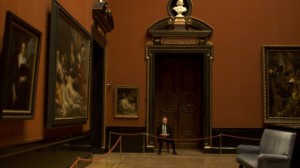
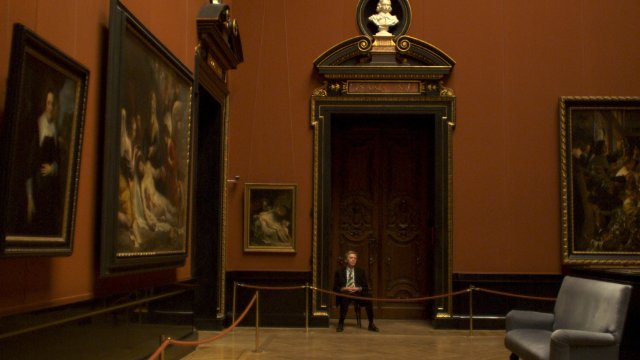
Marker’s more benign influence was especially evident in Jem Cohen’s magisterial Museum Hours, a luminous mix of fiction and essay set in Vienna itself, where it takes the form of a casual friendship developing between a guard at the Kunsthistorisches Art Museum (played by Bobby Sommer — a familiar and friendly Viennale presence, who has worked for many years at its guest office) and a Canadian tourist (Mary Margaret O’Hara) who arrives to visit a dying cousin and turns up at the museum. Read more
From the Chicago Reader (March 16, 2007), slightly corrected (in terms of title and running time).. — J.R.
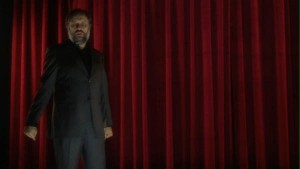
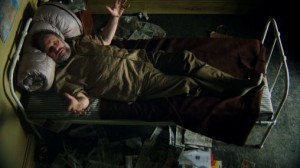
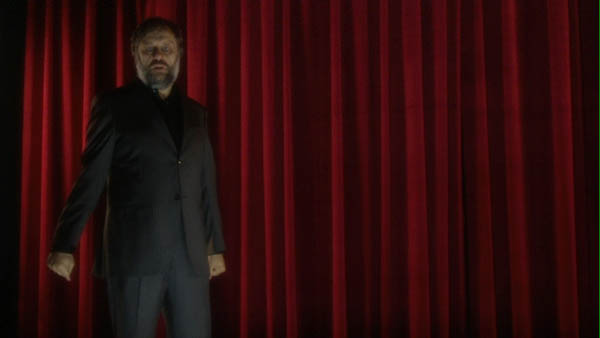
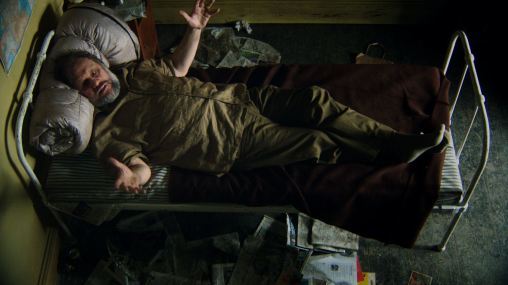
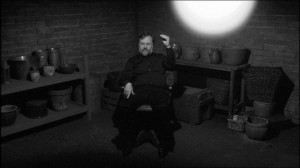
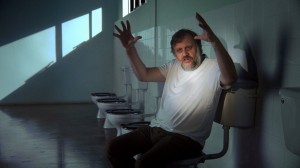
If Daffy Duck ever became a film critic informed by Lacanian psychoanalysis, this three-part English entertainment (2006) by Sophie Fiennes would surely qualify as his Duck Amuck. Theorist Slavoj Zizek, inside beautifully constructed sets matching various films’ locations, lectures provocatively and dynamically about 43 screen classics, often sputtering like Daffy himself. Hitchcock and Lynch are favored, but among the many other filmmakers considered are Coppola, Lang, Powell, and Tarkovsky. Zizek is especially sharp about manifestations of the maternal superego in Psycho and The Birds, maverick fists in Dr. Strangelove and Fight Club, and voices in The Great Dictator and The Exorcist. 143 min. (JR)
 Read more
The following short essay was commissioned by the Walker Art Center in early 2007 for a brochure accompanying a retrospective (“Michel Gondry: The Science of Dreams”) presented between May 11 and June 23, and a Regis Dialogue that I conducted with him on June 23. –J.R.
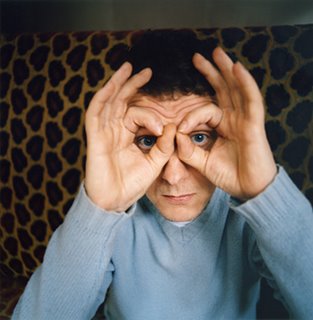
What’s sometimes off-putting about the postmodernity of music videos is tied to both the presence and absence of history in them — the dilemma of being faced simultaneously with too much and too little. On the one hand, one sees something superficially resembling the entire history of art — often encompassing capsule histories of architecture, painting, sculpture, dance, theater, and film — squeezed into three-to-five-minute slots. The juxtapositions and overlaps that result can be so violent and incongruous that the overall effect is sometimes roughly akin to having a garbage can emptied onto one’s head. Yet on the other hand, radical foreshortenings and shotgun marriages of this kind often have the effect of abolishing history altogether, making every vestige of the past equal and equivalent to every other via the homogenizing effect of TV itself. Back in 1990, sitting through nearly eight hours of a touring show called “Art of Music Video,” I was appalled to discover that the two most obvious forerunners of music videos, soundies from the 40s and Scopitone from the 60s, were neither included in the show nor even acknowledged in its catalog’s history of the genre. Read more
Here are five more of the 40-odd short pieces I wrote for Chris Fujiwara’s excellent, 800-page volume Defining Moments in Movies (London: Cassell, 2007). — J.R.

Scene
1957 / Paths of Glory – Timothy Carey kills a cockroach.
U.S. Director: Stanley Kubrick. Cast: Ralph Meeker, Timothy Carey.
Why It’s Key: A quintessential character actor achieves his apotheosis when his character kills a bug.
To cover up his vain blunders, a French general (George Macready) in World War I orders three of his soldiers (Ralph Meeker, Joe Turkel, Timothy Carey), chosen almost at random, to be court-martialed and then shot by a firing squad for dereliction of duty, as an example to their fellow soldiers. When their last meal is brought to them, they can mainly only talk desperately about futile plans for escape and the hopelessness of their plight. Then Corporal Paris (Meeker) looks down at a cockroach crawling across the table and says, “See that cockroach? Tomorrow morning, we’ll be dead and it’ll be alive. It’ll have more contact with my wife and child than I will. I’ll be nothing, and it’ll be alive.” Ferrol smashes the cockroach with his fist and says, almost dreamily, “Now you got the edge on him.” Read more
Written in late 2019 for Grasshopper Film’s digital release in 2020 of Pedro Costa’s masterpiece, recently selected as Portugal’s official submission for best international feature at the 93rd Academy Awards. — J.R.

“A film with no commercial prospects whatever,” lamented The Nation’s Stuart Klawans, in the course of his passionate defense, after it won both the Golden Leopard and best actress awards in Locarno and the Silver Hugo in Chicago, among other festival prizes. Soon afterwards, Film Comment announced on its cover, “Pedro Costa’s Breathtaking Vitalina Varela Goes to Sundance,” and it was also declared the best film of 2019 by Roger Koza’s international poll of 169 critics, filmmakers, and programmers, beating even Quentin Tarantino’s very-commercial Once Upon a Time in…Hollywood by eleven votes.
How to explain the appeal of a movie named after a real person, a displaced “non-professional” who is also its star? Or the nature of a film driven by its refusal to separate art from life or fiction from non-fiction — feeling more like a place to visit or a person to hang out with, and less like an event or a story?
Seemingly shared by Film Comment and Klawans is the assumption that the fate of Vitalina Varela is tied to commerce — something we can assume as well about the fate of Vitalina the person. Read more