Daily Archives: November 30, 2024

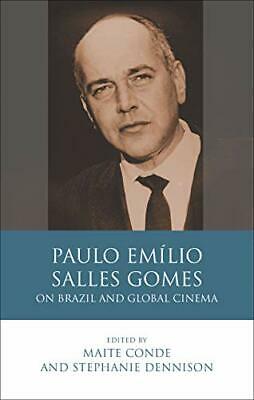
Review of Paulo Emílio Salles Gomes collection

For CineasteSpring 2020.  — J.R.

SALLESGOMES


Paulo Emílio Salles Gomes

On Brazil and Global Cinema 

Edited by Maite Conde and Stephanie Dennison.

Cardiff: University of Wales Press, 2018, 242 pp.,

Hardcover: $199.99, Kindle: $64.60, Paperback (from 

University of Chicago Press): $68.00
 

unnamed 

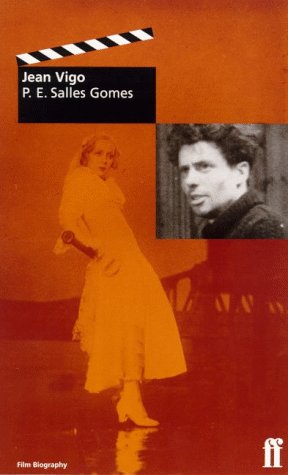
Brazilian critic, film historian, and teacher Paulo Emílio Salles Gomes (1916-77) is principally known outside of Brazil as P.E. Salles Gomes, the author of the 1957 book Jean Vigo — not only a definitive biography, essential to Vigo’s posthumous rediscovery, first published in France (and translated from French to English in the early 1970s by the author), but also clearly one of the first major critical biographies of any filmmaker in any language. The editors of this volume, however, usually refer to him simply as Paulo Emílio, and picking up on their friendly Brazilian etiquette, I will follow suit.


$68.00 is an outrageous price for a paperback book less than 300 pages long, suggesting a volume intended only for well-funded libraries and professors with institutional perks to spare. But I’m also obliged to report that this first collection by a major and widely neglected figure in film studies redirects my thoughts about cinema like few other recent books. Read more

Bites of Reality

From the Chicago Reader (October 27, 2006). — J.R.

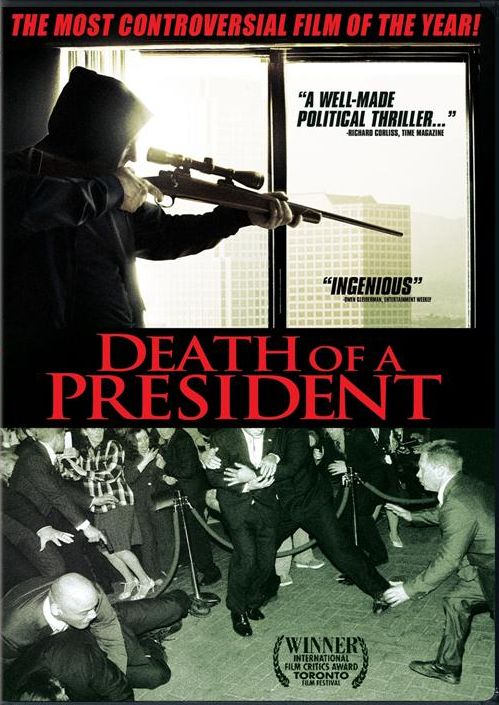
Death of a President **

Directed by Gabriel Range

Written by Simon Finch and Range

With Hend Ayoub, Brian Boland, Patricia Buckley, Jason Abustan, and Chavez Ravine

I dislike few buzzwords more than mockumentary, which even academics now use casually and uncritically. People often assume it’s a neutral descriptive term, but unlike pseudodocumentary — an honest and serviceable label — mockumentary leads many to conclude that the documentary form that’s being imitated is also being made fun of. Most of the works that get labeled mockumentaries are actually honoring the form, by using its techniques to make them seem more real.

According to Wikipedia, the term was first used by Rob Reiner while describing his own This Is Spinal Tap (1984), a popular spoof that led to many successors, including movies directed by Christopher Guest like Best in Show and A Mighty Wind. But these films weren’t so much mocking the documentary form as mocking documentary content. Of course there are films that mock documentary form much more directly, including Peter Watkins’s The Battle of Culloden, Jim McBride’s David Holzman’s Diary, and Orson Welles’s Citizen Kane and F for Fake. Read more