A shorter version of these responses appeared with the responses of several other film critics in the November 2013 issue of Verite Magazine, a digital monthly. — J.R.
Film Criticism “Then and Now”:
1.How has film criticism and the role of a film critic evolved since you first started?
One very striking change is the inordinate number of surveys of this kind that exist now as opposed to then. Even after I factor in the frequency with which I’m asked to participate nowadays, because of being better known today than I was in the 1970s, I think the interest in film criticism as a topic has grown quite a bit.
Thanks to academia, the Internet, and other factors, there are many more forms of criticism and outlets for its dissemination now. We also have more ways of discovering these forms and outlets in the present, at least if we’re interested. The conversations and exchanges begin more quickly and can travel much greater distances. There’s much more good stuff and much more bad stuff, which means the task of determining and then focusing on what one is looking for becomes much more complicated — unless one is passive and simply follows the industry’s discourse, which of course is what most people tend to do, one way or another, and what most people also tended to do half a century ago. Read more
From the Chicago Reader (April 1, 1994). — J.R.
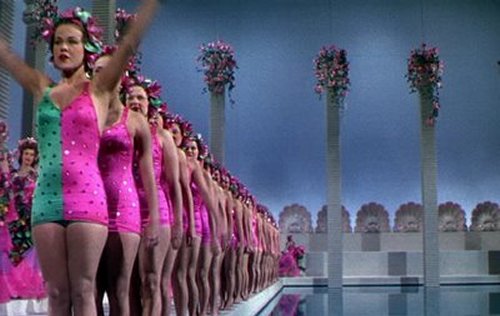
This third compilation of clips from MGM musicals — introduced, like its predecessors, by many of the leading performers (June Allyson, Cyd Charisse, Lena Horne, Howard Keel, Gene Kelly, Ann Miller, Debbie Reynolds, Mickey Rooney, and Esther Williams) — has so much pleasure to offer that any purist quibbles seem minor. Not only have writers-directors-producers Bud Friedgen and Michael J. Sheridan, who worked as editors on the two previous films, come up with heaps of wonderful and fascinating new material (excluded numbers from Singin’ in the Rain, The Band Wagon, Cabin in the Sky, The Harvey Girls, Easter Parade, and even I Love Melvin); they’ve also introduced a welcome critical note into the proceedings, demonstrating how dubious some of MGM’s aesthetic decisions were and allowing Horne to voice some of her own misgivings about the bigoted policies that limited her activity. Indeed, after Horne introduces her own clips, her terse introduction to an unused Judy Garland number from Annie Get Your Gun, “I’m an Indian Too,” doesn’t have to allude to the number’s racism because in the context she’s established the evidence speaks for itself. The original screen ratios of the films are generally respected — the rule apparently is broken only when the filmmakers are doing a montage or want the dramatic benefits of a full screen even if it means cropping the image. Read more