From Sight and Sound (Summer 1973). – J.R.
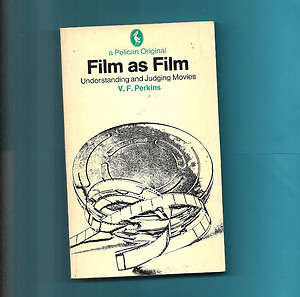
FILM AS FILM: Understanding and Judging Movies
By V.F. Perkins
PENGUIN BOOKS, 35p
Responding polemically to some of the more antiquated notions found in Rotha, Lindgren, Manvell, Arnheim and others, the title of Victor Perkins’ short and engaging book carries a sympathetic resonance. A major part of his enterprise is to clear away cobwebs from the attics of film theory and lay a few outdated texbooks to rest, and ‘Film as Film’ adequately summarizes the central thrust of his yarious charges. But as we know, theories arc usually debunked to clear the way for newer models, and as soon as Perkins’ own theory gets under way, his title begins to seem much more inclusive than anything he claims to offer in his text. Unavoidably, alternate titles come to mind: “Action as Presentation”, or, perhaps more to the point, ‘Movie as Movie’.
As Perkins indicates in his preface, ‘The examples discussed are not drawn from the (rightly or wrongly) accepted classics of Film Art nor from the fashionable “triumphs” of the past few years, but generally from films which seem to representwhat the Movies meant to their public in the cinema’s commercial heyday.’ Read more
Slightly tweaked from its original appearance in the Autumn 1975 issue of Sight and Sound. — J.R.
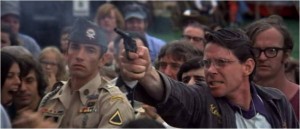
Nashville
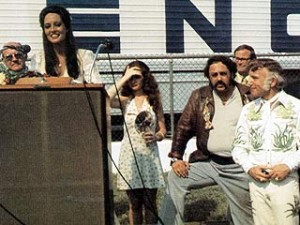
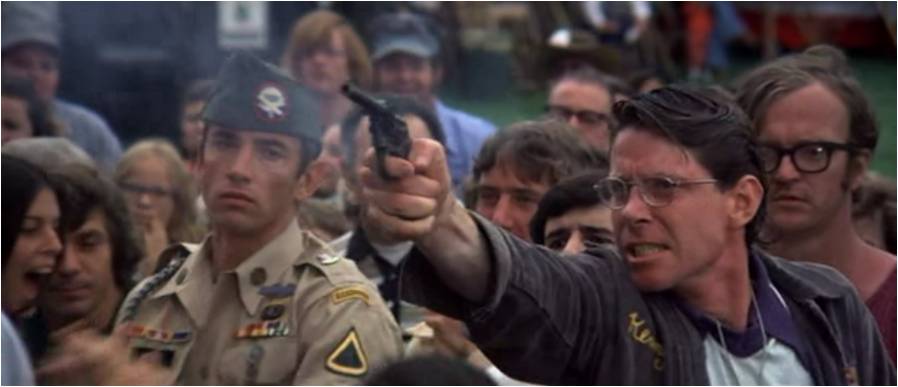
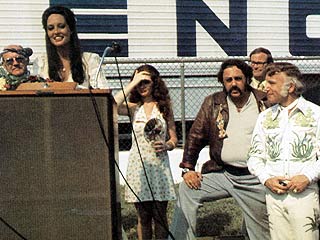
‘A dialectic collage of unreality,’ remarked pop singer Brenda Lee, emerging from the Nashville premiere in August. After a summer full of humourless rhetoric in the American press about ‘the true lesson of ‘Watergate’, ‘the failure of our civilization,’ ‘the long nauseating terror of a fall through the existential void,’ and equally grave matters — most of it implying that a movie has to be about ‘everything’ (i.e., the State of the Union) before it can be about anything — it was refreshing to discover that someone, at long last, had finally got it right. Even if Lee’s comment was intended as a slam, it deserves to be resurrected as a tribute. For if Nashville is conceivably the most exciting commercial American movie in years, this is first of all because of what it constructs, not what it exposes.
From the moment we begin with an ad for the film itself — a blaring overload of multi-media confusion — and pass to a political campaign van spouting banalities, then to a recording studio where country music star Haven Hamilton (Henry Gibson) is cutting a hilariously glib Bicentennial anthem, Nashville registers as a double-fisted satire of its chosen terrain, and it would be wrong to suggest that its targets of derision are beside the point, even if the angle of vision subsequently widens to take in more than just foolishness. Read more