
SCIENCE: GOOD, BAD AND BOGUS (book review)
From the Village Voice (June 1, 1982). — J.R.
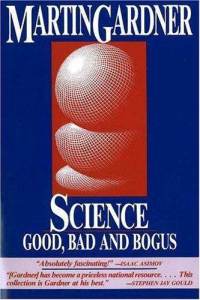
SCIENCE: GOOD, BAD AND BOGUS by Martin Gardner. Prometheus, $18.95.
As an old fan of Fads and Fallcies in the name of Science, Martin Gardner’s classic ’50s “study in human gullibility,” I’ve been looking forward to a sequel for quite some time. This collection of 38 skeptical pieces about “pseudoscience” (from Uri Geller to UFOs, by way of ESP) and “eccentric fringes” (such as black holes, catastrophe theory, and talking apes) isn’t that sequel, but it’s the next best thing — an elegant paste-up of articles and book reviews Gardner has written over the past three decades.
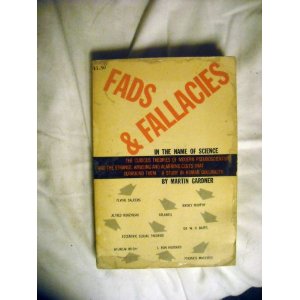
Fads and Fallacies took up a veritable rogues’ gallery of cranks, bumblers, and hustlers through the ages — like Wilbur Gleen Voliva, who thought the earth was shaped like a pancake, or Colonel Dinshah Ghadiali, whose Spectro-Chrome Therapy prescribed colored lights and a proper diet for every ailment. Thanks to the warm amusement of the man who brought us The Annotated Alice, these characters were often imbued with a certain Gogolian density even as Gardner dispassionately tore their science to shreds. Faced with his less humorous contemporaries in Science: Good, Bad and Bogus, Gardner has to forgo much of this novelistic bent — an aesthetic loss, in some ways, but also a practical gain. Read more