While I was in Vienna in October 2009, helping to launch my film series “The Unquiet American: Transgressive Comedies from the U.S.,” Der Standard commissioned the following article from me. Since they didn’t run it, I decided to post it here, spurred in part by an excellent article by David Walsh on a related subject that Christa Fuller brought to my attention.
To update my concerns to the present, one might substitute condemnations of Woody Allen and/or Ronan Farrow to those of Roman Polanski and his accusers, which are currently being treated in the press and social media at times as more important than the crimes of, say, Donald Trump or Vladimir Putin. — J.R.
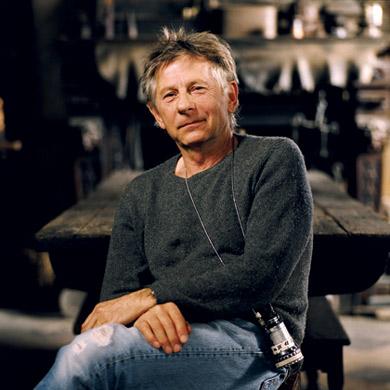
Roman Polanski and The Catastrophe of Public Discourse
By Jonathan Rosenbaum
The recent arrest of Roman Polanski in Switzerland, on charges for fleeing to France 31 years earlier before standing trial for illegal sexual intercourse with a 13-year-old girl, was obviously a notable news item. But that alone could hardly have accounted for the indignant outcries from the American press and blogosphere about the nature of Polanski’s crime and the justice of his arrest.
Why should the case of Polanski be considered more relevant to the present moment than the multiple war crimes of Dick Cheney, for instance? Read more
This appeared in the Chicago Reader (February 21, 1992), and is reprinted in my 1997 collection Movies as Politics. — J.R.
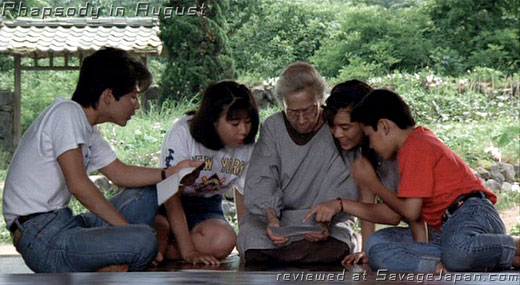
RHAPSODY IN AUGUST
*** (A must-see)
Directed and written by Akira Kurosawa
With Sachiko Murase, Hisashi Igawa, Mie Suzuki, Tomoko Ohtakara, Mitsunori Isaki, Hidetaka Yoshioka, and Richard Gere.
Next month, Akira Kurosawa will be celebrating his 82nd birthday. Having long outlived the two other supreme masters of the Japanese cinema — Kenji Mizoguchi, who died in 1956, and Yasujiro Ozu, who died in 1963 — he bears the handicap of living on in an era that clearly seems remote and alien to him, despite the fact that his work has enjoyed much more currency in the 80s and early 90s than that of any of his near-contemporaries.
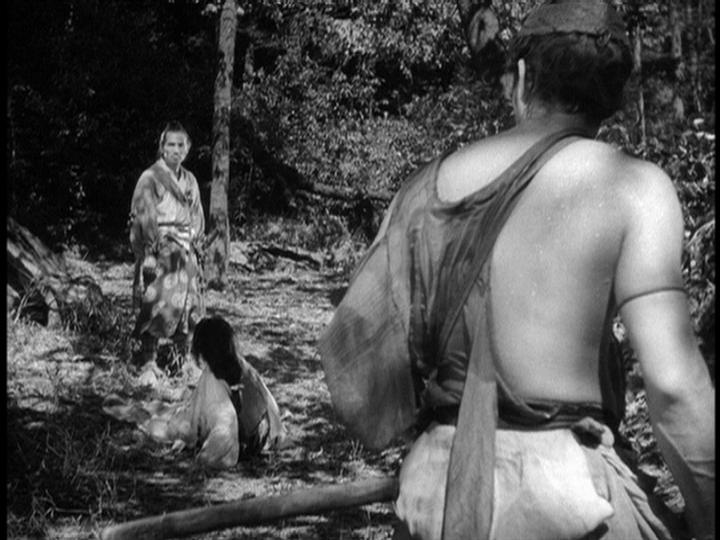
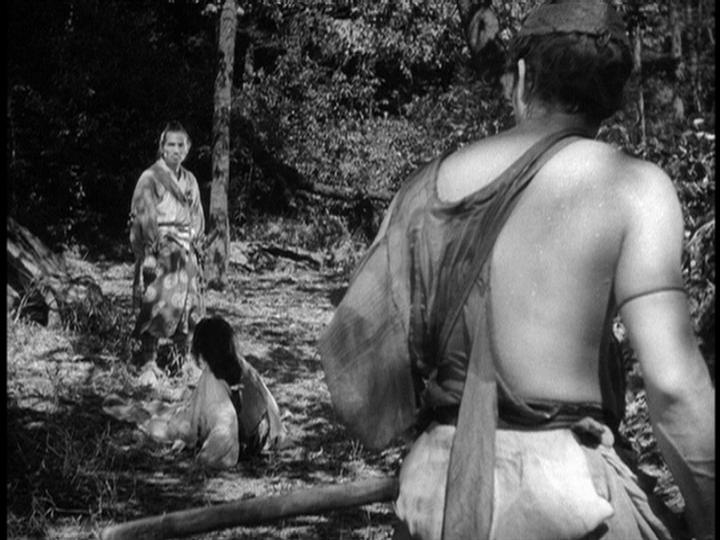
I’ve always been somewhat slow to appreciate the mastery of Kurosawa in relation to the works of Mizoguchi and Ozu, perhaps in part because I started off on the wrong footing. The first Kurosawa film I ever saw was Rashomon (1950), the single movie that was most responsible for introducing the western world to the Japanese cinema, and, as it happens, I saw it as a teenager only after reading the two short stories by Ryunosuke Akutagawa that it was based on. Read more
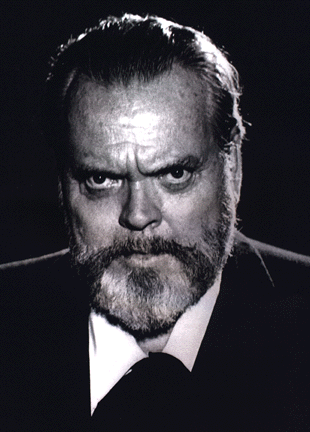
It’s obvious by now that David Thomson is never going to relinquish his unwarranted and unvarying baseline assumption about Orson Welles (see his column in today’s Guardian) that he was a failure whose life and career consisted of nothing but “decline”. Why? Because what Thomson means by success is precisely what he’s achieved himself: uncontroversial popularity and acclaim, taking popular and comforting positions that irritate no one except for a few diehards like me. If failure actually means failure to tell people what they already think and failure to support what they already believe, then I can only agree — Welles was a failure through and through. Unlike Thomson, a glorious success whose career can be described only as continuous ascent into the stratosphere. If only Welles could have turned himself into a David Thomson, goes the apparent assumption, then everybody would be happy. [10/23/09]
Postscript (10/25/09]: In a state of relative calm, I’ve just reread Thomson’s column, and can see that, okay, he’s trying to imply that Welles might have conceivably been happy when he died even without having millions in the bank. Fair enough. But his insufferable pose of pseudo-knowingness about matters he knows little or nothing about, which also suffuses every page of his Welles biography, continues to gall me.”He Read more
Posted Fri, Dec 8, 2006 at 11:21 AM

It’s interesting to see how some of the most difficult and challenging examples of art cinema have become increasingly popular over the past decade. Back in the 60s and 70s, Robert Bresson was virtually a laughing-stock figure to mainstream critics, and someone whose films characteristically played to almost empty houses. Yet by the time that he died, a retrospective of his work that circled the globe was so successful in drawing crowds that in many venues—including Chicago’s Film Center — it had a return engagement. Much the same thing has happened with Andrei Tarkovsky — another uncompromising spiritual filmmaker, and one whose films are even tougher to paraphrase or even explain in any ordinary terms.
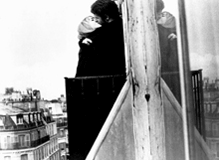
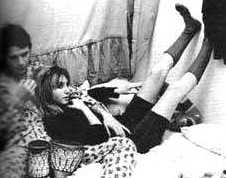
I’m just back from a trip to the east coast where I was gratified to find, when I turned up to introduce a screening of Jacques Rivette’s 252-minute L’amour fou (1968) in Astoria’s Museum of the Moving Image, that the film was playing to a nearly packed house. (Incidentally, this galvanizing love story about the doomed relationship between a theater director and his wife, played by Jean-Pierre Kalfon and Bulle Ogier, has never looked better to me, though I’ve been a big fan since the early 70s.) Read more
This was my second posting for the Chicago Reader blog post, although it might have been the first one I wrote (and the second to have been edited) — I can no longer remember for sure. –J.R.
Film history that is open to the present
Tue, Nov 14, 2006 at 4:07 PM
Last month Alexander Horwath, director of the Austrian Film Museum, sent me a press release about an ambitious and audacious retrospective he’s presenting throughout November entitled “Notre Musique,” devoted to “forty major works of fictional and documentary cinema made between 2000 and 2006.” “Film museums are often — and justifiably — viewed as places where an awareness of the historic foundations of contemporary cinema can evolve,” he begins. “Yet a reverse perspective is equally important — an approach to film history that is open to the present.” His selection, he adds, “is not so much influenced by the best-known or `most-discussed’ films of recent years but rather by the unbroken capacity of cinema to bear witness to life on this planet [his emphasis] — not just in the sense of documentation but also as an illumination of circumstances that habor a potential for change.” What he’s put together, in short, is a group of films that are supposed to bear witness, politically and responsibly, to the present moment — a daring gesture if one considers Jacques Rivette’s plausible statement in a Cahiers du Cinéma roundtable over 40 years ago, that it’s virtually impossible for a critic to know the long-term value of a film when it first appears. Read more
From the Chicago Reader, July 27, 1990. –J.R.
THE FRESHMAN
*** (A must-see)
Directed and written by Andrew Bergman
With Matthew Broderick, Marlon Brando, Bruno Kirby, Penelope Ann Miller, Frank Whaley, Maximilian Schell, and Bert Parks.
“The overwhelming attractiveness of the screwball comedies involved more than the wonderful personnel. It had to do with the effort they made at reconciling the irreconcilable. They created an America of perfect unity: all classes as one, the rural-urban divide breached, love and decency and neighborliness ascendant. –Andrew Bergman, We’re in the Money (1971)
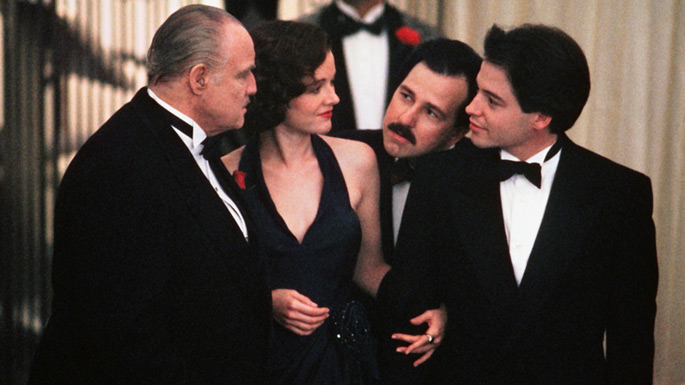
Most reviews of The Freshman have understandably focused on Marlon Brando. After all, everybody knows Brando, while hardly anyone is familiar with Andrew Bergman, the writer-director. But a movie as outlandish as this needs to be seen in some sort of context if one is going to make any sense of it, and it seems to me that Bergman is more important to this context than Brando is. It was his script, after all, that lured Brando into his first major role in a decade.
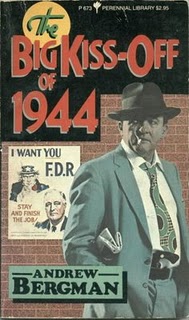
Bergman was born in Queens, the son of a New York Daily News radio and TV columnist named Rudy Bergman, and was an early fan of TV comics like Ernie Kovacs, Victor Borge, and Bob and Ray. Read more
This appeared as the lead article in the May-June 1974 issue of Film Comment — a somewhat pared-down revamping of my entry about Stroheim for Richard Roud’s belatedly published Cinema: A Critical Dictionary (New York: The Viking Press, 1980), and, if memory serves, the longest of my several contributions to that long out-of-print collection. — J.R.
Second Thoughts on Stroheim
by Jonathan Rosenbaum
Preface
Total object, complete with missing parts,
instead of partial object. Question of degree.
— Samuel Beckett, “Three Dialogues”
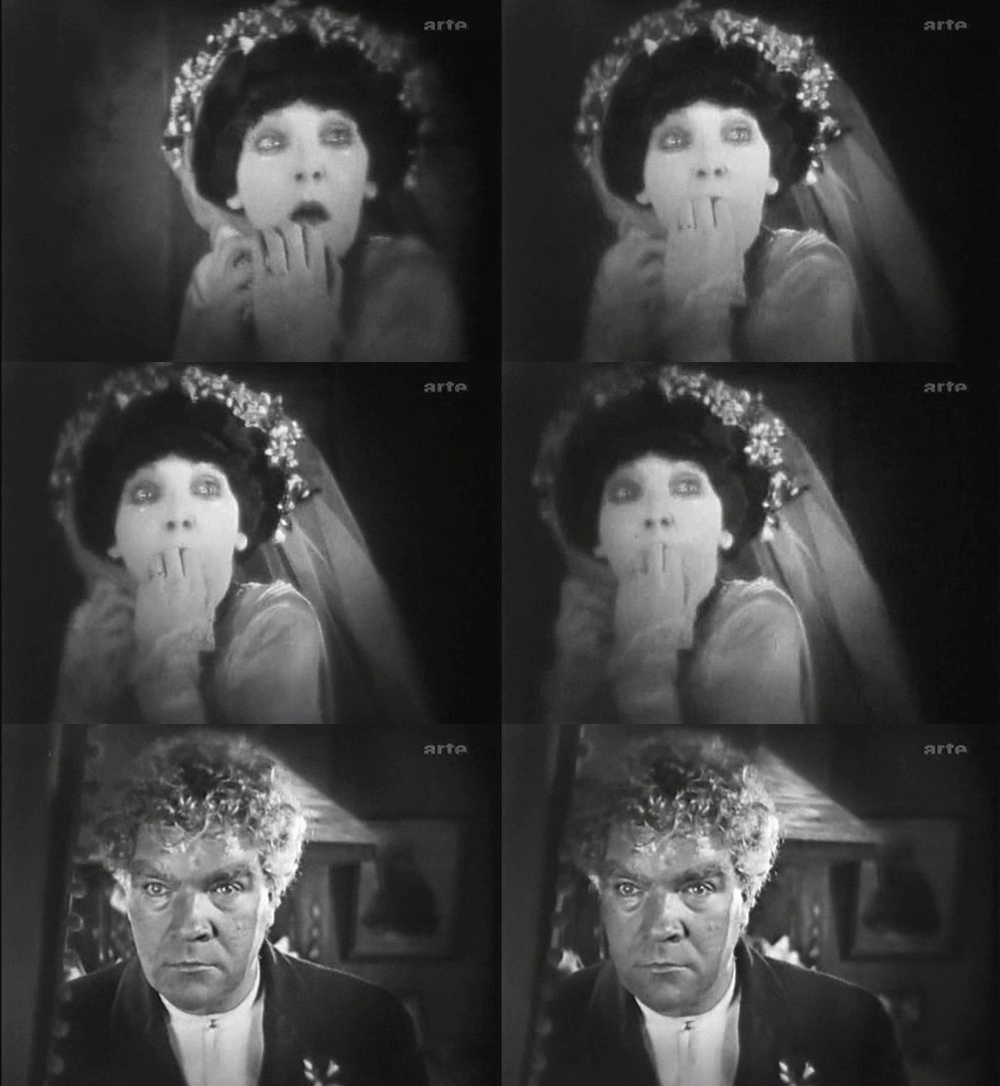
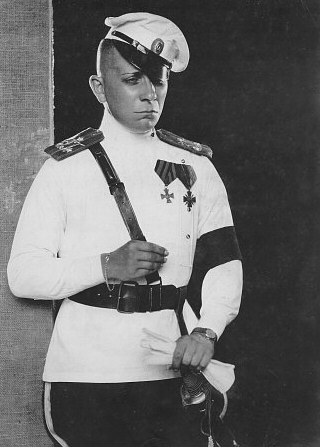
Two temptations present themselves to any modern reappraisal of Erich von Stroheim’s work; one of them is fatal, the other all but impossible to act upon. The fatal temptation would be to concentrate on the offscreen image and legend of Stroheim to the point of ignoring central facts about the films themselves: an approach that has unhappily characterized most critical work on Stroheim to date. On the other hand, one is tempted to look at nothing but the films — to suppress biography, anecdotes, newspaper reviews, reminiscences, and everything else that isn’t plainly visible on the screen.
Submitting Stroheim’s work to a purely formal analysis and strict textural reading of what is there — as opposed to what isn’t, or might, or would or could or should have been there — may sound like an obvious and sensible project; but apparently no one has ever tried it, and there is some reason to doubt whether anyone ever will. Read more
This essay, published in Film Comment in September-October 1976, represented one particular round in a series of initiatives and polemical forays I conducted on behalf of Jacques Rivette’s Duelle, which included getting it into the Edinburgh International Film Festival that year (and then writing about that festival at length in the Winter 1976/77 issue of Sight and Sound). One part of my effort was to engage the attention and interest of writers associated with the English theoretical magazine Screen, and this portion of the effort mainly failed: the principal response of the Screen writers who bothered to see it, as I recall in terms of their comments to me, was that it was basically warmed-over Cocteau and/or Franju — a reaction that I consider now, as I did then, to be rather obtuse and philistine. On the other hand, I no longer relish Duelle with quite the same fervor that I did at the time, even though there are certain moments in Jim Jarmusch’s very pleasurable The Limits of Control, that remind me of it. (Nowadays I prefer L’amour fou, both versions of Out 1, and Celine and Julie Go Boating — for me the peaks of Rivette’s work.) Read more
This appeared in The Soho News on March 11, 1981. A month earlier, I had launched a kind of weekly column there called “Declarations of Independents” that was in diary form — a bit like some of my Paris Journals and London Journals for Film Comment during the 70s –- and this was the third of these. — J.R.
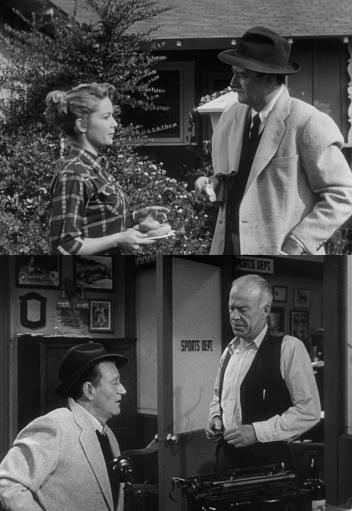
Feb. 24: Why go all the way to the Thalia tonight to see five Screen Directors Playhouse episodes, all half-hour TV shows from the mid-50s? Two professional reasons spring to mind, both essentially recycling operations. As often happens in such cases, I feel myself split between the two — processes that honor my asocial aesthetics on the one hand, my social politics on the other.
Auteurist Retrieval technology (we’ll call it ART for short) — cultivated by me and a lot of other film freaks in the late 60s — is predicated on the pleasure of recognizing the taletale signs of favorite directors in all sorts of unlikely material. And what better excuse to put ART to work than patriarchal episodes by John Ford, Leo McCarey, Frank Borzage, Tay Garnett, and William Seiter? Indeed, to narrow the focus down to the evening’s main event, what better specimen could one hope to find but a crisp 35mm print of Ford’s Rookie of the Year, made immediately before his masterpiece The Searchers, with the same scriptwriter (Frank Nugent) and no less than four of the same actors — John Wayne, Pat Wayne, Vera Miles and Ward Bond — playing central roles? Read more
This review, from the February 4, 1981 issue of The Soho News, is most likely harsher than it needed to be. Since Mary McCarthy’s death, I’ve been moved to reformulate some of my positions about her after reading the wonderful book Between Friends: The Correspondence of Hannah Arendt and Mary McCarthy 1949-1975 (New York: Harcourt Brace Jovanovich, 1995) edited by Carol Brightman, which reveals a side of McCarthy that seems quite contrary to her much better-known bitchiness as a critic. It proves to me that unforeseen and unforeseeable sides of some people tend to come out only in specific relationships with certain other people, and the loving generosity of McCarthy’s letters to Arendt are a particular striking example of this. —J.R.
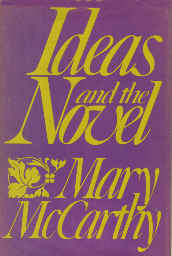
McCarthy’s Law
Ideas and the Novel
By Mary McCarthy
Harcourt Brace Jovanovich, $7.95
Despite her wicked way with some words and ideas, Mary McCarthy has never exactly thrilled me with her aesthetics. With a taste stuck so comfortably, nostalgically, even trivially in the prosaic 19th century that even the avant-garde that she values often seems furnished with fog and brass doorknobs à la Doyle, Verne, or Poe, her acute critical intelligence usually whiles away its time polishing statues and suits of armor — rather like the New York Times Book Review — whenever she turns to the Novel. Read more
This was originally published in the July 1976 issue of the Monthly Film Bulletin (vol. 43, no. 510), to coincide with the release of Hitchcock’s Family Plot (illustrated on the cover, and reviewed in that issue by the editor, Richard Combs). — J.R.
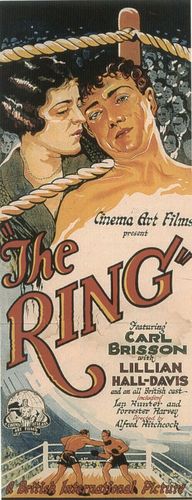
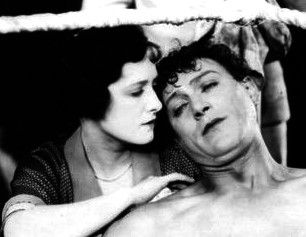
Ring, The
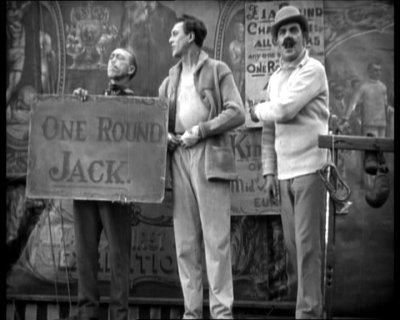
Great Britain, 1927
Director: Alfred Hitchcock
Dist—BFI. p.c–British International Pictures. p–John Maxwell. asst. d—Frank Mills. story/sc—Alfred Hitchcock. continuity—Alma Reville. ph—John J. Cox. a.d—Wilfred Arnold. l.p—Carl Brisson (“One Round” Jack Sander), Lillian Hall-Davies (Nelly), Ian Hunter (Bob Corby), Forrester Harvey (Harry), Harry Terry (Barker), Gordon Harker (Trainer), Billy Wells (Boxer). 3,179 ft. (at 16 f.p.s.) 132 min. (16mm). Original 35 mm footage—8,400 ft.
At a traveling circus, prizefighter “One Round” Jack Sander is knocked out and defeated for the first time in his show by Bob Corby, an Australian heavyweight, and a mutual attraction develops between the latter and Nelly, Jack’s ticket-seller fiancée. With his prize money, Bob buys Nelly an arm bracelet which she hides from Jack, and Bob’s manager offers Jack the chance of a job as the champion’s sparring partner if he wins a trial match, which he grudgingly accepts. Read more
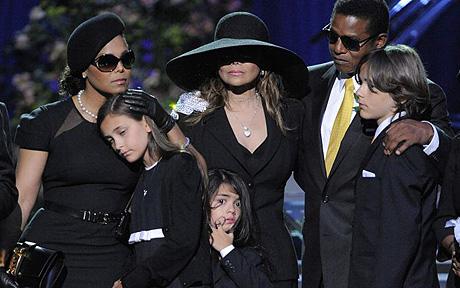
“Michael Jackson’s unforgettable memorial proved a moving high point in a saga that has captivated the world,” reads a headline in the July 17 issue of Entertainment Weekly. Since that’s (unsurprisingly) their lead story, this must mean that the Jackson memorial, whatever and whenever it was, must have qualified as entertainment — and that anyone and everyone who wasn’t captivated and entertained by it doesn’t belong to the world.
An interesting and highly diverse demographic — including, among others, me and my best friends, all the members of the Taliban, and, I presume, most of the people in China. I wonder if we could start a new religion based on this common ground. [7/11/09] Read more

An extraordinary piece of chicanery by Kelefa Sanneh entitled “Discriminating Tastes” heads off the Talk of the Town section in the current (August 10 & 17) issue of The New Yorker. The subject is the alleged “reverse racism” or “anti-white” bias of President Obama, as kicked off by his controversial offhand remark last month that a policeman who arrested a man in his own home “acted stupidly”. This was later described by Fox News‘s terminally stupid Glenn Beck as a revealing exposure of Obama’s “deep-seated hatred for white people.”
Not even once in this article does Sanneh bother to mention or even acknowledge the fact that Beck and so many other commentators are so eager to suppress and/or obfuscate — that Obama is half-white. As far as this article (and, it would appear, an alarming amount of other American punditry) is concerned, Obama is simply and unambiguously (and irrevocably) “a black President,” not someone who was born to a white mother and a black father. So in other words, according to this peculiar argument, Obama harbors a “deep-seated hatred” not only for his late mother but for half of himself — although this latter portion of the equation is almost never brought up. Read more
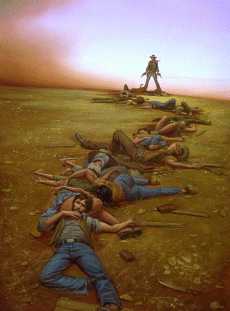
It seems significant that a good many defenders of Inglourious Basterds that I’ve been reading happily buy into the popular myth that scalping is basically something that indigenous Americans did, full stop. It seems that we non-indigenous Americans are still in almost complete denial about our own heritage of genocide in North and South America, which came much closer to succeeding than even the Nazi efforts with the Jews did — an estimated 70 million victims. I assume that some of the indigenous Americans who are still around must be aware of this obscene misrepresentation, but why should we care what they think?
Anyway, here’s some useful information gleaned from the Internet:
Euro-American traditions of scalping
Scalping: Fact & Fantasy
—By Philip Martin
Stereotypes are absorbed from popular literature, folklore, and misinformation. For instance, many children (and adults) incorrectly believe that fierce native warriors were universally fond of scalping early white settlers and soldiers. In fact, when it came to the bizarre practice of scalping, Europeans were the ones who encouraged and carried out much of the scalping that went on in the history of white/native relations in America. Read more
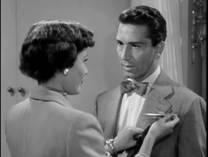
Christian Keathley is currently writing a book about Otto Preminger. I don’t know whether this lucid theoretical essay, centered around a textual analysis of an early scene in Preminger’s Whirlpool (1949) — which appeared in the second issue of World Picture Journal last fall, and which I’ve just discovered (following a Paul Fileri lead in the new Film Comment) — will form part of this book. But it does suggest that Keathley will have plenty to say on the subject of Preminger.
Consider, just for starters, the end of his fifth paragraph, before he even gets around to Whirlpool:
The social issues under interrogation in Preminger’s films were not subtextual — they were the manifest content. Indeed, to point out that there is a subtext of incest in Anatomy of a Murder, Bonjour Tristesse, and Bunny Lake is Missing is merely to state the obvious. As a result, since the early 1970s, Preminger has been a severely under-examined filmmaker.
And when Keathley analyzes the sequence from Whirlpool, charting the dialogue and gestures between a kleptomaniac (Gene Tierney) and her psychiatrist husband (Richard Conte), he has more to say about Preminger’s mise en scène and its power than just about anyone I’ve read on the subject. Read more