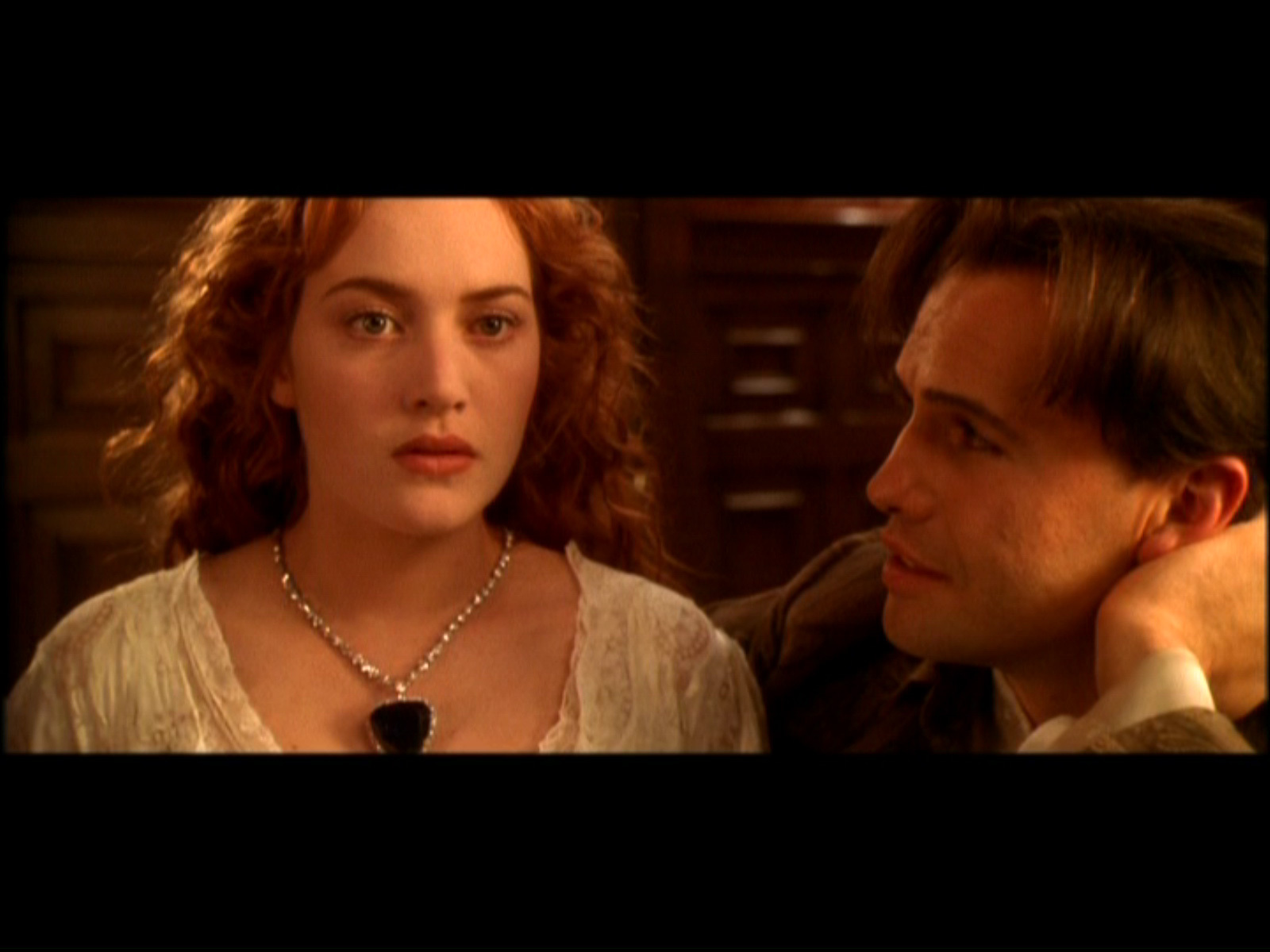
For better and for worse, James Cameron’s hokey yet moving $200 million blockbuster (1997) tells you quite a bit about first class, a little about third class, and nothing at all about second class. This is mainly because Titanic, unlike most disaster movies, has virtually no subplots; the whole 194 minutes pivot around a fictional love story on the doomed ship between a rebellious bride-to-be (Kate Winslet) and a penniless artist (Leonardo DiCaprio). The elemental style and broadly defined characters recall D.W. Griffith at times (though there’s no equivalent to either of the Gish sisters), and for a movie set in 1912 this seems entirely appropriate. Some of the invented story is certainly fanciful, and a few details are downright stupid, yet overall what the movie has to say about its era and, more implicitly, our own in terms of class rings true. All things considered, Titanic is old-fashioned epic filmmaking that carries a wallop. With Billy Zane, Kathy Bates, Frances Fisher, David Warner, and Bill Paxton. (JR)
Written for the 2019 catalogue of Il Cinema Ritrovato in Bologna. Tim Lucas has helpfully and subsequently furnished us with the following on Facebook: “According to his autobiography, Roger Corman — then a script reader at Fox — retrieved this script from a slush pile and presented it to a producer acquaintance as having worth, given a proper rewrite. He did it himself, then presented it to the producer, who — without telling him — got the film greenlit as a Peck vehicle and took all the credit. Corman promptly quit his job and set about becoming a producer outside the Hollywood studio structure.” — J.R.
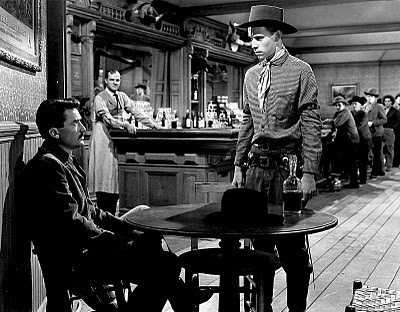
Commonly described as an “adult” Western, The Gunfighter (1950) differs from both the Freudian Pursued (1947) and the classical The Furies (1950). Though it comes close to equating screen time with real time, without any rhetorical emphasis (as High Noon brings with clocks), its method is historical revisionism, postulating a “real” West that tragically undermines the ones we accept in other Westerns. It plays an intricate double game with genre expectations, satisfying some demands and implicitly chiding us for certain others. Significantly, the film’s first and final images are almost identical but register as antithetical in moral significance. Read more