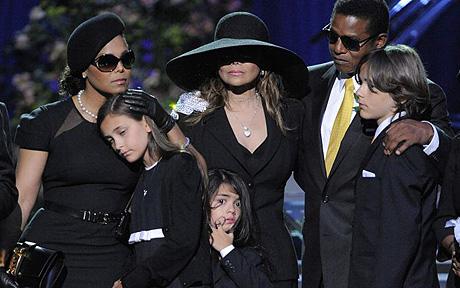
“Michael Jackson’s unforgettable memorial proved a moving high point in a saga that has captivated the world,” reads a headline in the July 17 issue of Entertainment Weekly. Since that’s (unsurprisingly) their lead story, this must mean that the Jackson memorial, whatever and whenever it was, must have qualified as entertainment — and that anyone and everyone who wasn’t captivated and entertained by it doesn’t belong to the world.
An interesting and highly diverse demographic — including, among others, me and my best friends, all the members of the Taliban, and, I presume, most of the people in China. I wonder if we could start a new religion based on this common ground. [7/11/09] Read more

An extraordinary piece of chicanery by Kelefa Sanneh entitled “Discriminating Tastes” heads off the Talk of the Town section in the current (August 10 & 17) issue of The New Yorker. The subject is the alleged “reverse racism” or “anti-white” bias of President Obama, as kicked off by his controversial offhand remark last month that a policeman who arrested a man in his own home “acted stupidly”. This was later described by Fox News‘s terminally stupid Glenn Beck as a revealing exposure of Obama’s “deep-seated hatred for white people.”
Not even once in this article does Sanneh bother to mention or even acknowledge the fact that Beck and so many other commentators are so eager to suppress and/or obfuscate — that Obama is half-white. As far as this article (and, it would appear, an alarming amount of other American punditry) is concerned, Obama is simply and unambiguously (and irrevocably) “a black President,” not someone who was born to a white mother and a black father. So in other words, according to this peculiar argument, Obama harbors a “deep-seated hatred” not only for his late mother but for half of himself — although this latter portion of the equation is almost never brought up. Read more
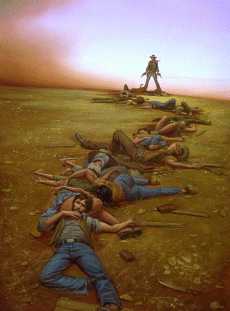
It seems significant that a good many defenders of Inglourious Basterds that I’ve been reading happily buy into the popular myth that scalping is basically something that indigenous Americans did, full stop. It seems that we non-indigenous Americans are still in almost complete denial about our own heritage of genocide in North and South America, which came much closer to succeeding than even the Nazi efforts with the Jews did — an estimated 70 million victims. I assume that some of the indigenous Americans who are still around must be aware of this obscene misrepresentation, but why should we care what they think?
Anyway, here’s some useful information gleaned from the Internet:
Euro-American traditions of scalping
Scalping: Fact & Fantasy
—By Philip Martin
Stereotypes are absorbed from popular literature, folklore, and misinformation. For instance, many children (and adults) incorrectly believe that fierce native warriors were universally fond of scalping early white settlers and soldiers. In fact, when it came to the bizarre practice of scalping, Europeans were the ones who encouraged and carried out much of the scalping that went on in the history of white/native relations in America. Read more
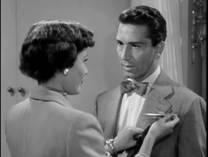
Christian Keathley is currently writing a book about Otto Preminger. I don’t know whether this lucid theoretical essay, centered around a textual analysis of an early scene in Preminger’s Whirlpool (1949) — which appeared in the second issue of World Picture Journal last fall, and which I’ve just discovered (following a Paul Fileri lead in the new Film Comment) — will form part of this book. But it does suggest that Keathley will have plenty to say on the subject of Preminger.
Consider, just for starters, the end of his fifth paragraph, before he even gets around to Whirlpool:
The social issues under interrogation in Preminger’s films were not subtextual — they were the manifest content. Indeed, to point out that there is a subtext of incest in Anatomy of a Murder, Bonjour Tristesse, and Bunny Lake is Missing is merely to state the obvious. As a result, since the early 1970s, Preminger has been a severely under-examined filmmaker.
And when Keathley analyzes the sequence from Whirlpool, charting the dialogue and gestures between a kleptomaniac (Gene Tierney) and her psychiatrist husband (Richard Conte), he has more to say about Preminger’s mise en scène and its power than just about anyone I’ve read on the subject. Read more
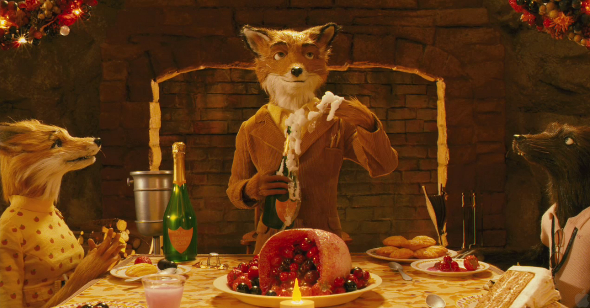
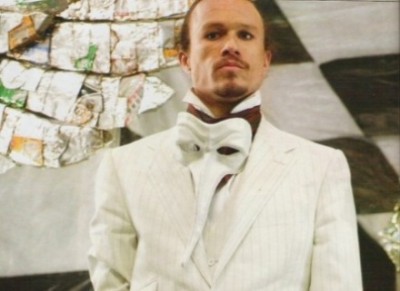
Thanks to John Iltis, the estimable dean of Chicago film publicists, here is a link to a rather eye-opening piece from a few days ago by the London Telegraph‘s Sukhdev Sandhu about changes in Anglo-American film culture over the past decade. Some of the thoughts here seem to corroborate a few of my own recent observations about respective differences — a widening rift, really — in the reception and perception of both Fantastic Mr. Fox and The Imaginarium of Dr. Parnassus in the U.K. and the U.S. (in the latter case in particular, the cross-referencing of Heath Ledger’s character with Tony Blair). –J.R. Read more
This book review was the first thing I ever wrote for The Soho News, a small-time weekly competitor of The Village Voice that I wrote for every week for about a year and a half (1980-81), reviewing books as well as movies on a fairly regular basis. I did 68 pieces for them in all, and this first effort, as I recall, was a kind of trial balloon. — J.R.

The Greening of Switzerland
by Jonathan Rosenbaum
——————————————————-
Doctor Fischer of Geneva or the Bomb Party
By Graham Greene
Simon and Schuster, $9.95
——————————————————-

“The meat is excellent, but I have no appetite,” remarks the noble, grief-stricken narrator of Graham Greene’s opulent 21st novel — plain old Alfred Jones, a middle-class voyeur like us — at the climactic title party, in response to a query from the wealthy title host and villain. Then he adds more confidentially, to the reader, “I helped myself to another glass of Mouton Rothschild; it wasn’t for the flavor of the wine that I drank it, for my palate seemed dead, it was for the distant promise of a sort of oblivion.” The same sort of delicious oblivion, one might add, that we normally expect from a new Greene novel — which is the sort that the latest one amply supplies. Read more
This book review originally appeared in the September 10, 1980 issue of The Soho News. Maybe it qualifies less as a book review than as a short polemic, but if I recall this assignment — my first review of a book by Barthes — accurately, I had some space limitations. — J.R.
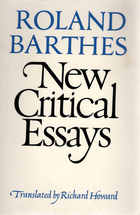
New Critical Essays
By Roland Barthes
Translated by Richard Howard
Hill & Wang, $10.95
It’s reported that when a celebrated American film critic was asked what she thought of French theory, she replied that the trouble with folks like film theorists is that they forget movies are supposed to be fun. When this response was quoted to me, my heart sank. It made me feel as if all the fun I’d had reading Roland Barthes over the years was no longer legal -– that it wasn’t even supposed to exist.
I’m not trying to pretend here that all of Barthes goes down easily: I still haven’t gotten all the way through S/Z, a favorite among some American lit-crit academics. And I’ll grant you that he may be an acquired taste for puritanical empiricists who mistrust too much sensual, imaginative, and poetic play in their literary puddings — particularly when these occur outside of fiction, and under the auspices of social and aesthetic analysis. Read more