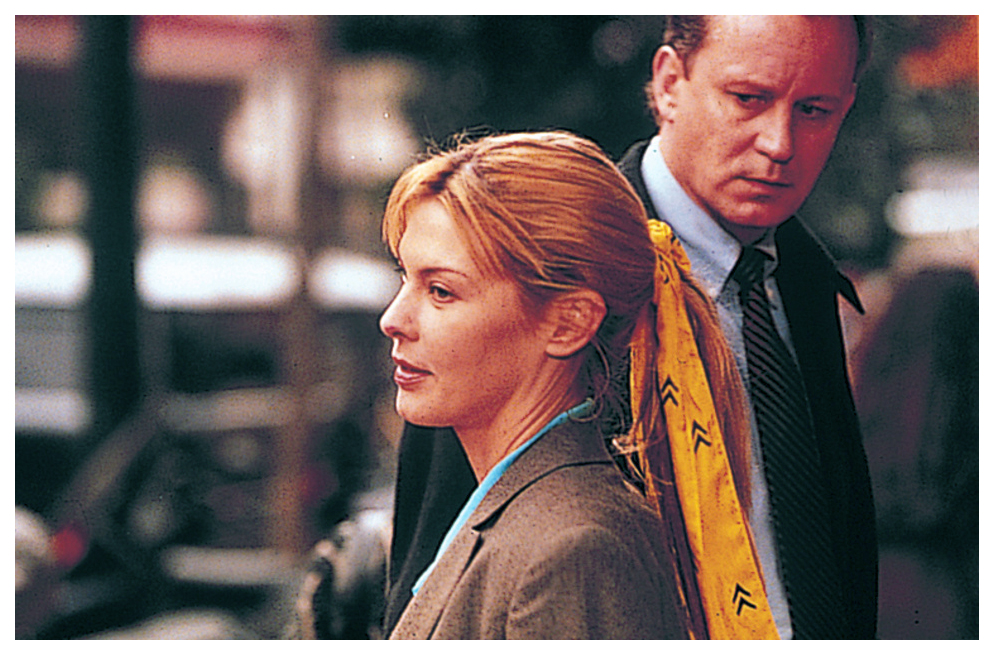
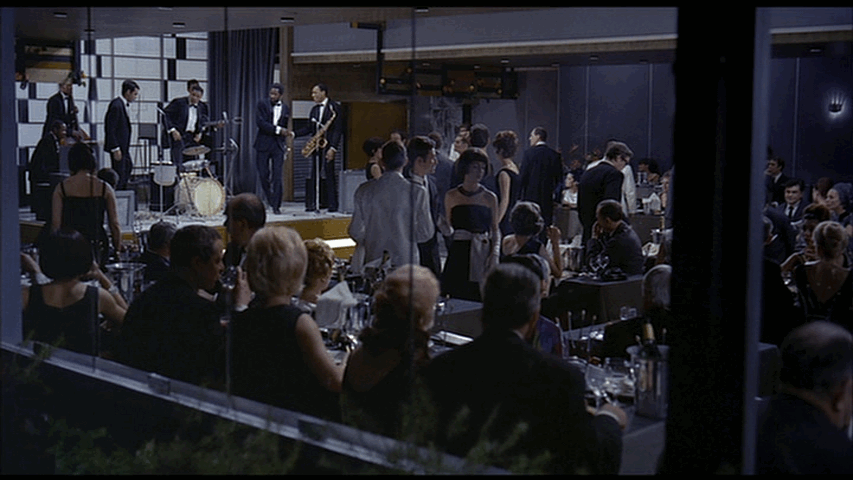
Director Jonathan Nossiter and screenwriter James Lasdun, who collaborated on the very promising Sunday (1997), reunite for this ambitious and ambiguous thriller (2000) involving an Americanized businessman in Athens (Stellan Skarsgard) who has twice left his Greek-American wife (Charlotte Rampling at her best) for another woman (Deborah Kara Unger) but still hasn’t given up on their marriage. Shot in digital video as if it were a documentary, the film at separate junctures evokes Nicolas Roeg, Graham Greene, and Richard Lester’s Petulia, even as it takes up multinational corporations, political amnesia, the mixed blessing of American idealism, and some of the monstrous ways love can turn sour. Clearly it bites off more than it can possibly chew, and ultimately it winds up in a pretentious heap. (Some may feel it starts off that way as well.) But Nossiter, an American who grew up in Europe, and Lasdun, an Englishman who currently lives in the U.S., share a sense of cultural displacement that allows them to create something original and provocative. 104 min. (JR)
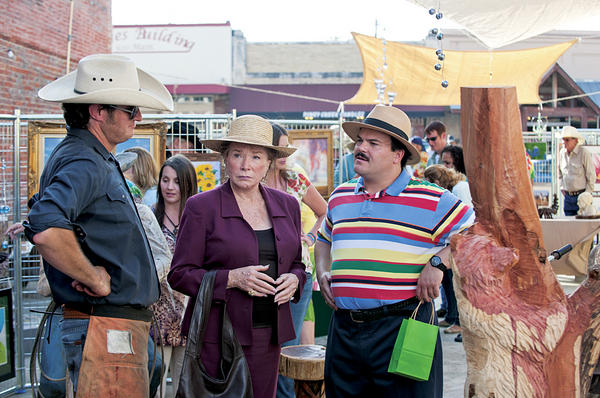
I guess I must have been simply naïve when I concluded, after seeing and flipping out over Richard Linklater’s The Newton Boys 14 years ago, that everyone else would like it as much as I did. But frankly, I’m even more bewildered by the critical coolness being shown now in some quarters towards Bernie, a masterpiece which might be regarded as a kind of companion piece to The Newton Boys, only one that runs still deeper and is in some ways even more accessible: another edifying film about locals from a part of East Texas that Linklater obviously knows like the back of his hand and deeply cherishes, and another one that ponders the notion of justifiable or defensible crime without ever deserting a sturdy moral code.
The writing (by Linklater and Skip Hollandsworth, whose non-fiction article, which first appeared when The Newton Boys was in post-production, inspired the movie) is so good that the humor can’t be reduced to simple satire; a whole community winds up speaking through the film, and it has a lot to say. In fact, it’s hard to think of many other celebrations of small-town American life that are quite as rich, as warm, and as complexly layered, at least within recent years. Read more
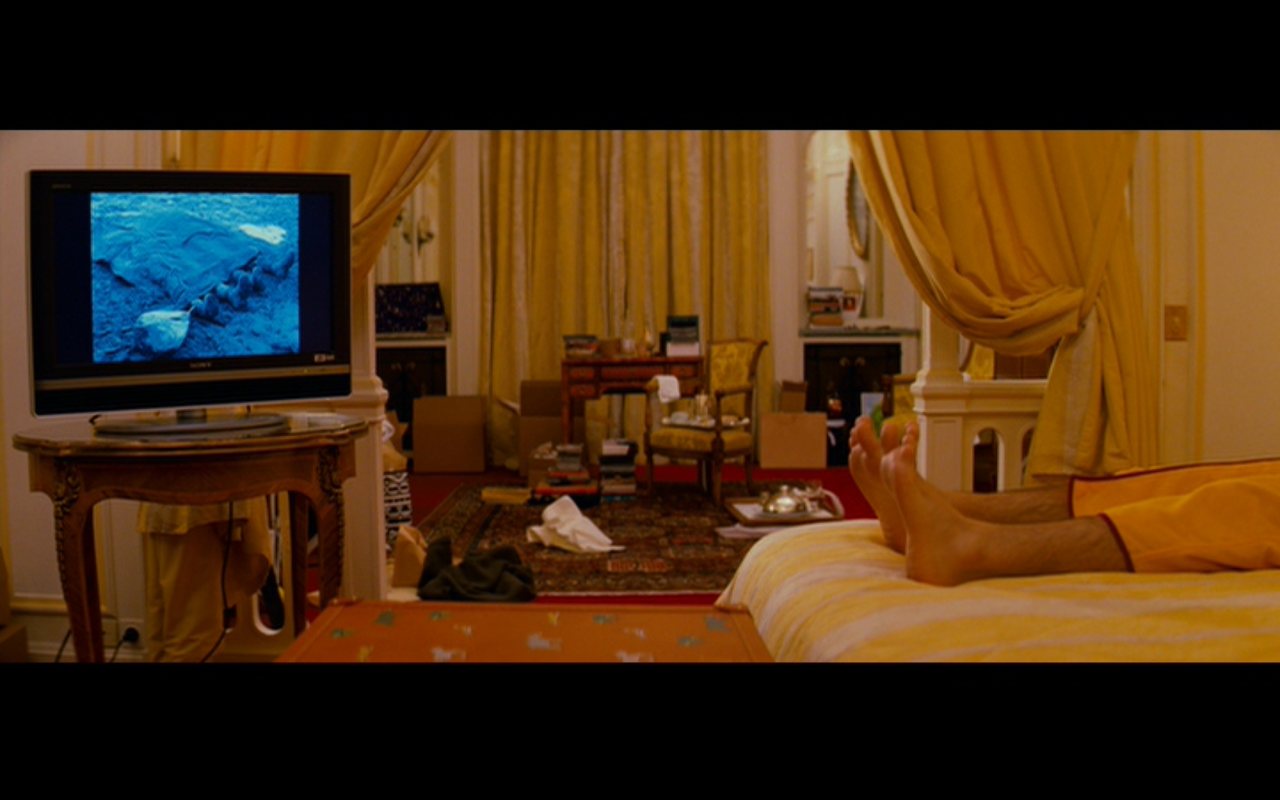
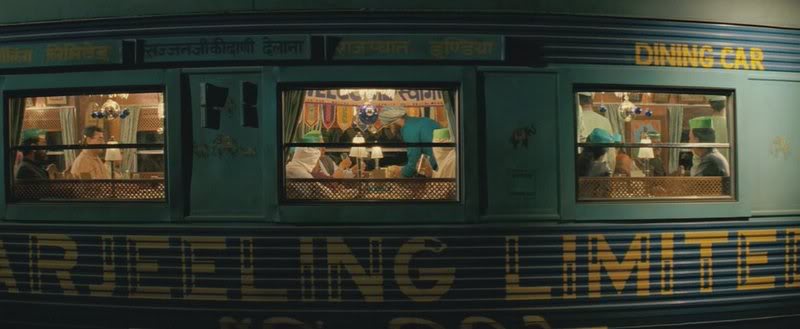
In its story line, this wacky tale from Wes Anderson (Rushmore, The Royal Tenenbaums) about estranged wealthy brothers (Owen Wilson, Adrien Brody, cowriter Jason Schwartzman) reunited for a strained spiritual journey through India is pretty unconvincing as character development. Every bit as precious as Anderson’s preceding features, it differs this time from late Salinger only in the way that these spoiled neurotics are implicitly ridiculed as both ugly Americans in the third world and spiritual poseurs — unlike their more committed mother (Anjelica Huston). What this movie has going for itself in spite of its cloying pleas for indulgence is a playful and interesting narrative structure that precludes much development and comes to the fore only toward the end. The whole thing may drive you batty, but as with Rushmore, the melancholy aftertaste lingers. With Amara Karan and Bill Murray. R, 91 min. a Century 12 and CineArts 6, Renaissance Place. — Jonathan Rosenbaum
From Moving Image Source, April 8, 2011, where it appeared under the title “Sea Change”….Allan Sekula’s untimely recent death remains an incalculable loss. — J.R.
I’m sure that I learned a lot more from The Forgotten Space — an essay film by Allan Sekula and Noël Burch about sea cargo in the contemporary global economy — than I did from any other feature that I saw last year, fiction or nonfiction. In more ways than one, I’m still learning from it, and its lessons start with the staggering but elemental fact that over 90 percent of the world’s cargo still travels by sea — a fact that seems all the more important precisely because so many of us don’t know it.
You can tell a great deal about a nation’s anxieties and aspirations by the discrepancy between reality and popular perception. Polls last year showed that in the US 61% think the country spends too much on foreign aid. This makes sense once you understand that the average American is under the illusion that 25% of the federal budget goes on foreign aid (the real figure is 1%).Read more
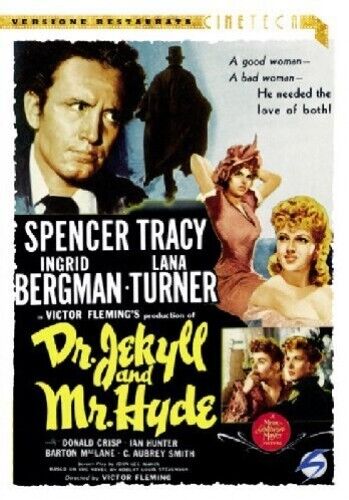
A well-mounted but otherwise disappointing version of the Robert Louis Stevenson classic — inferior to Rouben Mamoulian’s 1932 version with Fredric March, but shown much more frequently. This one costars Spencer Tracy and Ingrid Bergman and is more concerned with cruelty than with horror per se; directed by Victor Fleming, with Lana Turner and Donald Crisp (1941). (JR) Read more
I should credit my editor at The Soho News, Tracy Young, for the title of this review, which ran in their November 26, 1980 issue. For my younger readers, and even for some of my older ones, it might be helpful to add that the “snake oil salesman” alluded to in my final sentence is (or, rather, was) Ronald Reagan. — J.R.
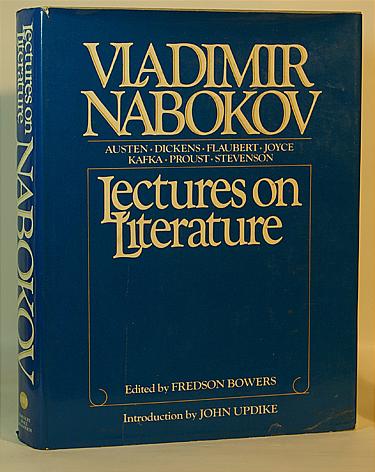
Lectures on Literature
By Vladimir Nabokov
Harcourt Brace Jovanovich, $19.95
“Let us not kid ourselves,” intones the tall athletic Russian professor to his students at Cornell. “Let us remember that literature is of no practical value whatsoever, except in the very special case of somebody’s wishing to become, of all things, a professor of literature. The girl Emma Bovary never existed; the book Madame Bovary shall exist forever and ever. A book lives longer than a girl.”
No doubt. And even at the price of four first-run movies, this long-awaited volume of aristocratic riches has got to be the publishing bargain of the year. Comfortably oversized, decked out with plentiful reproductions of the Great Man’s notes, annotated teaching copies, diagrams, and sketches, it might be the best analysis of fiction by a practitioner to have come along since The Lonely Voice, Frank O’Connor’s masterly study of the short story. Read more
From the October 1976 issue of Monthly Film Bulletin (vol. 43, no. 513.
Obsession
U.S.A., 1976
Director: Brian De Palma
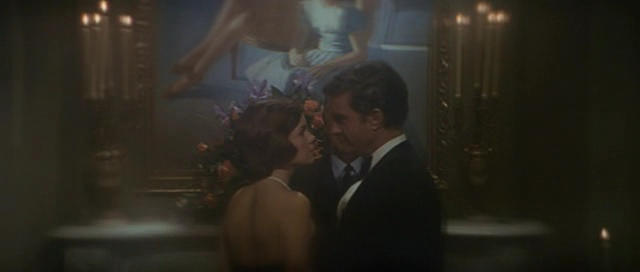
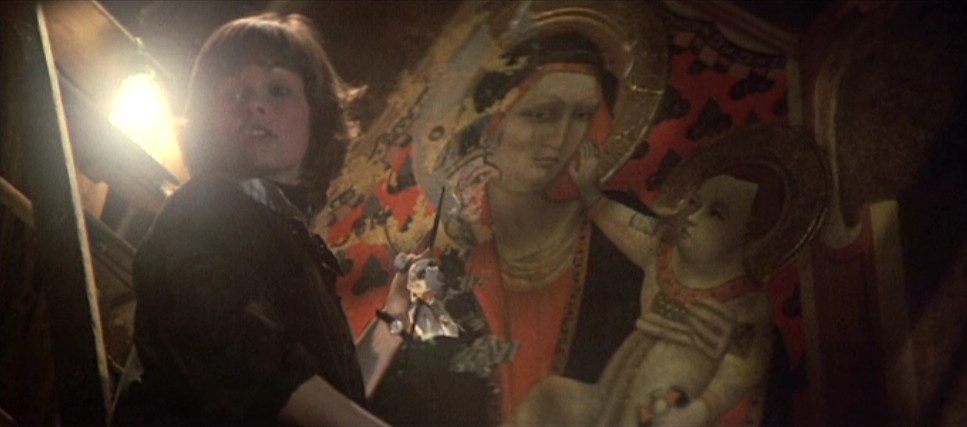
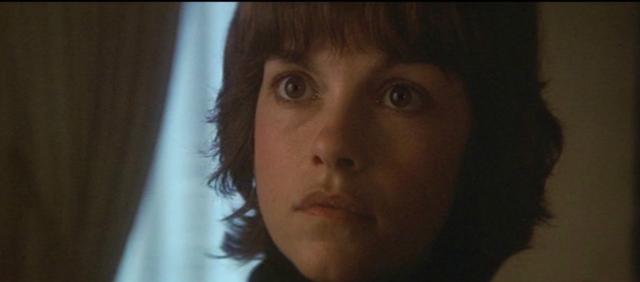
Pondering over her restoration work in a Florence cathedral, Sandra (Geneviève Bujold) wonders aloud to Michael (Cliff Robertson) whether she should risk removing a painting’s surface to see what lies beneath it, or else restore only the first layer. “Hold on to it”, Michael replies, giving voice not only to his surface obsession but to De Palma’s cool strategy –- to reconstruct or “restore” the mood and manner of Hitchcock’s Vertigo some eighteen years after the fact without worrying too much about the reasons or impulses underlying them. An effective variant on the director’s earlier Sisters — with mother and daughter taking over the symmetrical “mirror” pattern formerly established by Siamese twins, and diverse echoes of Vertigo, Rebecca, Dial M for Murder, and Marnie assuming much the same function here as Rear Window and Psycho did in the earlier film — Obsession also resurrects some of Hitchcock’s most visible characteristics (tight plot construction, extended doppelgänger effects, precise control of point-of-view) while blithely neglecting others (above all, humor and a consistent moral position). What results is a lot closer to the pure engineering of a Spielberg or a Friedkin than to the “personal” nostalgia of a Truffaut or a Bogdanovich, revealing a cleanly constructed mechanism whose limitations are merely the reverse of its expediency (as in the outlandishly contrived scene where Robert improbably exposes his deceptions to Michael, a move dictated more by the spectator’s needs than those of either character). Read more
This appeared in the January 23, 1997 issue of the Chicago Reader. — J.R.
Mother
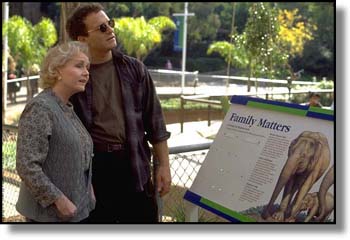
Rating *** A must see
Directed by Albert Brooks
Written by Brooks and Monica Johnson
With Brooks, Debbie Reynolds, Rob Morrow, Lisa Kudrow, Isabel Glasser, and Peter White.
Everyone Says I Love You
Rating * Has redeeming facet
Directed and written by Woody Allen
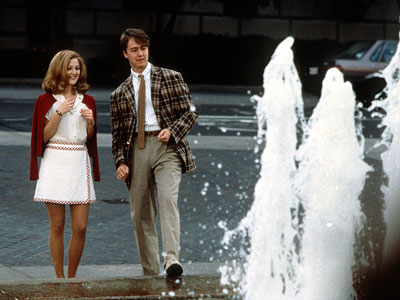
With Allen, Goldie Hawn, Edward Norton, Alan Alda, Julia Roberts, Drew Barrymore, Lukas Haas, Gaby Hoffmann, Natasha Lyonne, Natalie Portman, Tim Roth, and David Ogden Stiers.
Everyone who’s grown up with Hollywood movies has a different tolerance for their lies and comforts, their snares and temptations — and that tolerance changes as we grow older. A fantasy that’s easy to swallow when we’re young might seem pernicious after we discover its falsity, though later it may be cherished as a memento of our former innocence and capacity to believe. But for some individuals the rude awakening is so severe that it becomes impossible to encounter a particular Hollywood fantasy again without wincing. How we respond is a consequence of what Hollywood once did to our susceptibilities — whether it made our lives happier or unhappier, offered guidance or misguidance, solace or trauma. Read more
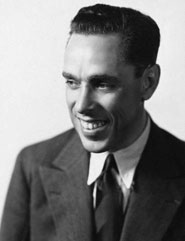
Harry d’Abbadie d’Arrast (1897-1968) made eight films, all between 1927 and 1935, and apparently some of these are lost. (He was fired from the early talkie Raffles — which seems to retain a few d’Arrastian qualities — and replaced by George Fitzmaurice, and reportedly he also did some uncredited work on Wings.) I’ve seen three of his films — the two briefly described below (both for the 2009 catalogue of Il Cinema Ritrovato in Bologna) and Topaze (1933) — and all of them are pretty remarkable. (The latter is a Pagnol adaptation with one of John Barrymore’s most touching performances.) As far as I know, the only one who ever wrote about this figure in any detail was Herman G. Weinberg in Saint Cinema. According to Pierre Rissient, who knows a lot about d’Arrast (and passionately denies that he was antisemitic — a gossipy accusation I’ve sometimes heard about him, presumably as a partial explanation for why he fought as often as he did with producers), d’Arrast also had a lot to do with the preparation of one of my favorite musicals, Hallelujah, I’m a Bum! (1933), which wound up being directed by Lewis Milestone.
The following capsules were written for the catalogue of Il Cinema Ritrovato in June 2009.Read more
Written by Alan R. Trustman, Leslie Dixon, and Kurt Wimmer
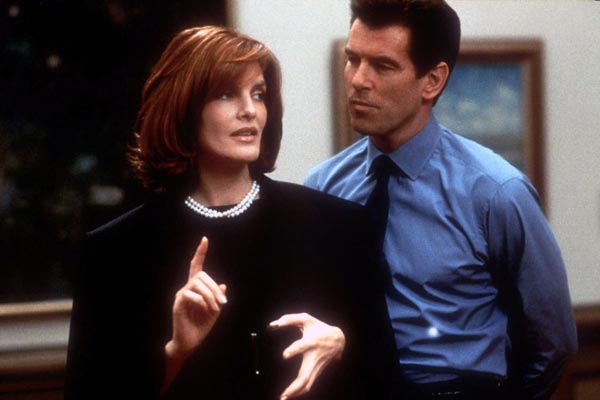
With Pierce Brosnan, Rene Russo, Denis Leary, Frankie R. Faison, and Faye Dunaway.
By Jonathan Rosenbaum
Seeing an original movie and its remake in reverse order is a bit like reading a novel (as opposed to a novelization) after you’ve seen the movie. It usually distorts your sense of priorities, forcing you to see the ideas and images of the original in terms of the remake. That’s why I suspect I’ll never know whether the remake of The Thomas Crown Affair is inferior to the 1968 original. Both are entertaining pieces of trash, but look at them in succession — in either order — and they start to undermine each other.
Both are about a classy investigator for an insurance company (Faye Dunaway in 1968, Rene Russo in 1999) going after a debonair zillionaire (Steve McQueen then, Pierce Brosnan now) who pulls off elaborately planned, outrageous robberies with hired helpers just for the fun of it. In the original, set in Boston, he robs a bank; in the remake he steals a Monet from New York’s Metropolitan Museum and then, just to show how cool he is, replaces it without getting caught. Read more
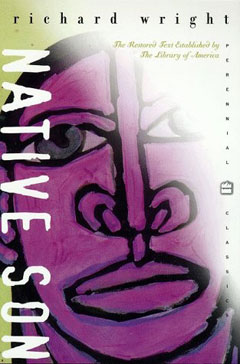
Political incorrectness has a lot to do with what still gives this novel much of its shocking power: the fact that Richard Wright refuses to make Bigger Thomas sympathetic or his crimes in any way excusable, even though he understands perfectly and very cogently how and why this character can murder as readily as he does— not only a white philanthropist’s daughter, whom he accidentally smothers, but also Bigger’s own girlfriend, whom he kills with a brick quite deliberately, almost immediately after they have sex. Recently reading this 1940 Chicago novel for the second time, I was reminded of both Dostoevsky and Camus (even though, novelistically speaking, Wright is miles ahead of L’Étranger). There’s something schizophrenic as well as dialectical about the way Wright can grasp the thought processes of his primitive young hero and then can offer a lengthy intellectual discourse about those processes. Eventually the communist discourse and arguments in the book’s second half drown out Bigger’s identity, but the way Bigger himself is allowed to dominate the discourse in the first half is the book’s unambiguous and terrifying triumph. Read more
I urge any Chicagoans reading this post to rush out and see this local stage production (and world premiere), the most exciting piece of theater I’ve ever seen in this city. But I’m sorry to say that the only illustration I can access on the Internet and reproduce here is the above image, which is what’s used in the ads. [Postscript, 2/9: Lara Goetsch, TimeLine’s director of marketing and communications, has subsequently sent me four of her own photos of the production; my two favorites are reproduced below.] This isn’t bad when it comes to dealing thematically with Masha Obolensky’s play (which is about the creative processes involved in playwriting—specifically, about the processes by which real-life playwright Sophie Treadwell turned the 1927 murder case and execution of Ruth Snyder into a very successful expressionist play, Machinal, produced on Broadway with Zita Johann and Clark Gable in 1928), which bears a certain relationship to David Cronenberg’s film of Naked Lunch. (Admittedly, Cronenberg’s politically incorrect and highly idiosyncratic adaptation of William S, Burroughs is a far cry from Obolensky’s feminist play when it comes to comes to sexual politics; but even so, what this play and this film does with typewriters as pivotal props in relation to transformations between real life and fiction does seem comparable.)Read more
From the Village Voice (February 28, 1974). -– J.R.
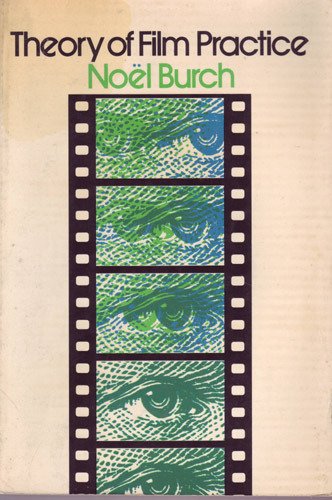
Theory of Film Practice
A book by Noël Burch
Praeger, $3.95 and $8.95
“These comments were written before the release of Tati’s ‘Playtime’. Even if they still hold true for films in general, they are not applicable to Tati’s film, the first in the history of cinema that not only must be seen several times, but also must be viewed from several different distances from the screen. In its form, it is probably the first truly ‘open’ film. Will it remain an isolated experiment? Masterpieces somehow eventually assert their authority and become models.”
— “Theory of Film Practice”
It seems oddly appropriate that “Theory of Film Practice” should appear in Cahiers du Cinéma that same year (1967) that “Playtime” opened in Paris, and also that they should arrive in America at approximately the same time. Films that re-define the language and syntax of cinema are rare in any period, and it is hardly surprising that books that do the same are even less common.
Both works, emerging out of years of reflection, stand defiantly apart from the surrounding landscape, inviting us to share that broad perspective. Each offers us a fresh garden of possibilities in the midst of a familiar terrain by drawing us into a kind of creative collaboration that requires, at least implicitly, that we become film makers. Read more
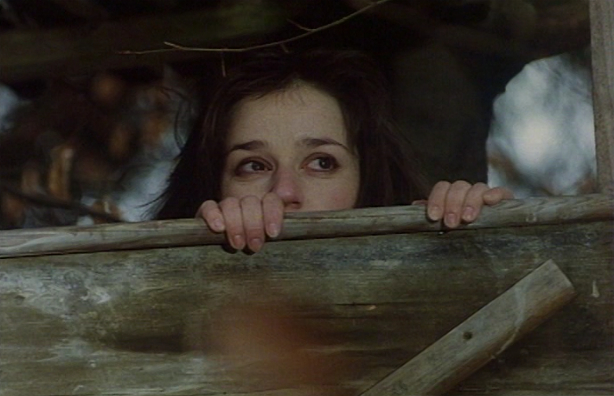
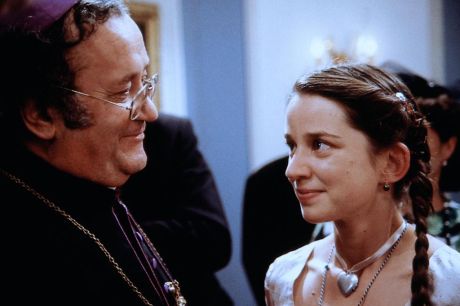
With Lena Stolze, Monika Baumgartner, Michael Gahr, Fred Stillkrauth, Elisabeth Bertram, Robert Giggenbach, and Hans-Richard Muller.
We’re told at the outset of Michael Verhoeven’s The Nasty Girl that Anja Rosmus inspired this film. What we aren’t told is who Rosmus is or how closely this film is based on what happened to her in the 1980s.
Born in 1960 and raised in the Bavarian city of Passau — where Adolf Hitler spent part of his childhood and where Adolf Eichmann was later married — Anja Elisabeth Rosmus, the daughter of two schoolteachers, had a comfortable, middle-class, Catholic upbringing. When she was 20, she won first prize in a national essay contest, writing about privacy and public freedom in European politics and history. The following year she entered another national essay contest, this time settling on a local topic: “An Example of Resistance and Persecution: Passau, 1933-1939.” Having been brought up to believe that her hometown was a bastion of resistance against the Nazis, largely through the efforts of the local Catholic church, she thought she was undertaking a project that would enhance local pride and was surprised by the defensiveness and hostility she encountered from certain quarters outside the church. Read more
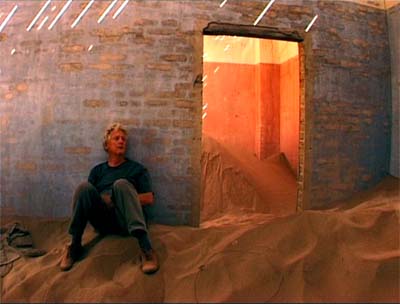
With Miles Anderson, Romane Bohringer, David Bradley, David Calder, Bruce Davison, Brion James, Peter Kubheka, Vusi Kunene, Jennifer Jason Leigh, Janet McTeer, Chris Walker, and Lia Williams.
The King Is Alive, directed and cowritten by Kristian Levring, is the fourth film to have the dubious honor of qualifying for certification under the rules of the Dogma 95 manifesto, whose professed aim is to get back to the basics of realism — shooting, for example, in natural locations with handheld cameras, direct sound, and natural lighting. But what’s basic or realistic and what isn’t, in terms of film history and technique? The manifesto also insists that movies be shot in color, a rather ahistorical reading of what’s basic — unless one labels all possible uses of color in film realistic and all possible uses of black and white artificial.
If that’s the operative assumption, The King Is Alive triumphantly refutes it. The movie was shot with three digital video cameras — unlike Thomas Vinterberg’s Dogma film The Celebration, which was shot with only one, and Lars von Trier’s Dancer in the Dark (not a Dogma film, but made by one of Dogma’s founders), which was shot with a hundred — and that might make it seem new as well as passé.Read more