From the July 1, 2005 Chicago Reader.To celebrate a lovely new restoration coming out. — J.R.
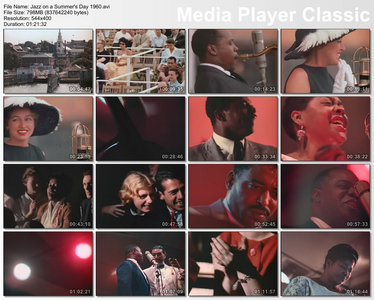
Bert Stern’s film of the 1958 Newport Jazz Festival (1960; his only film) features Thelonious Monk, Louis Armstrong, Eric Dolphy, Chuck Berry, Dinah Washington, Mahalia Jackson, Anita O’Day, Gerry Mulligan, Chico Hamilton, and many others. Shot in gorgeous color, it’s probably the best feature-length jazz concert movie ever made. Despite some distracting cutaways to boats in the opening sections, it eventually buckles down to an intense concentration on the music and the audience’s rapport with it as afternoon turns into evening. Jackson’s rendition of “The Lord’s Prayer” is a particularly luminous highlight. Stern doesn’t seem to know what distinguishes mediocre from good or great jazz — he didn’t even bother to film Miles Davis at the same festival, and he allows a stupid announcement about boats to cover up part of a Monk solo — so all three get equal amounts of his attention. But he’s very good at showing people listening. 85 min. Gene Siskel Film Center. Read more
From the Chicago Reader (January 14, 2005). — J.R.
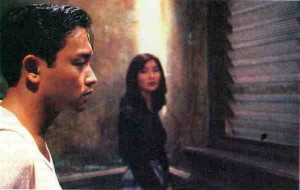
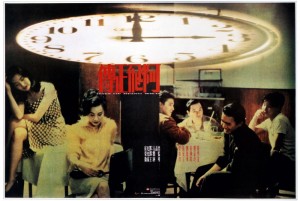
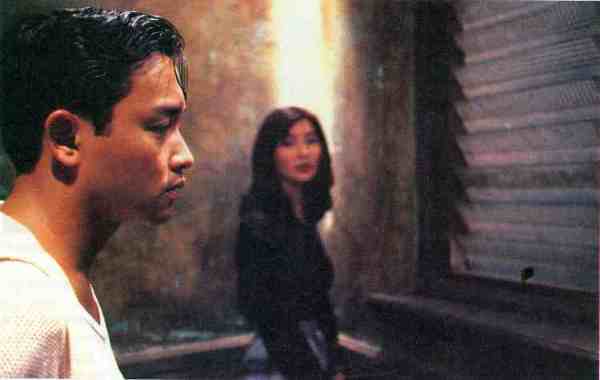
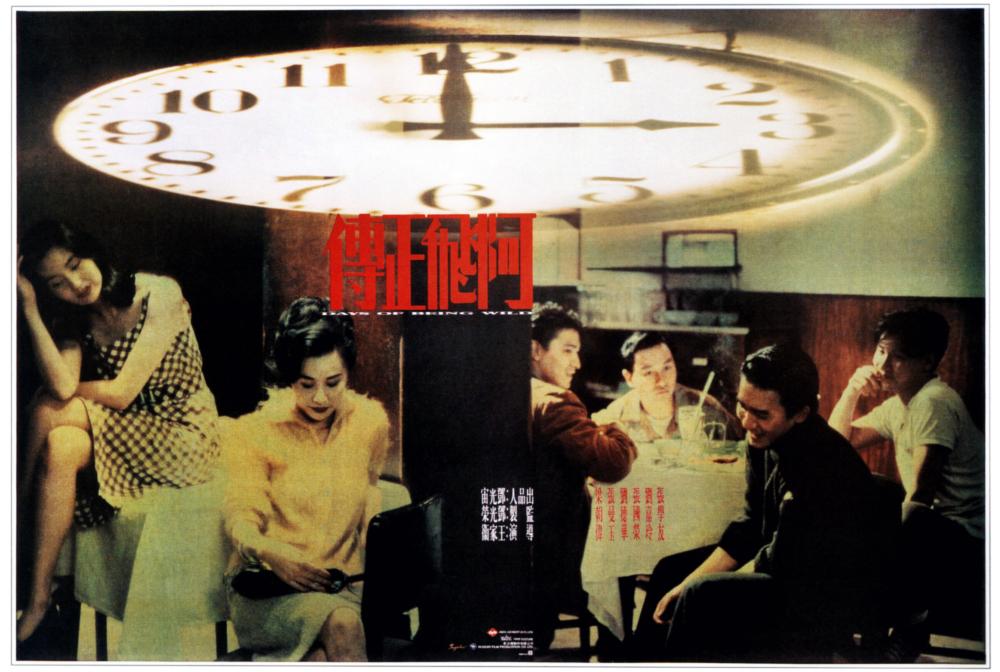
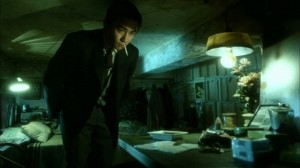
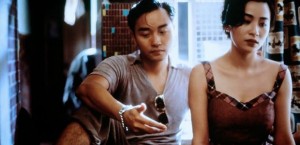
Wong Kar-wai’s idiosyncratic style first became apparent in this gorgeously moody second feature (1991), whose romantic vision of 1960 Hong Kong as a network of unfulfilled longings would later echo through In the Mood for Love. Leslie Cheung, Hong Kong’s answer to James Dean (in fact the movie appropriates its Cantonese title from Rebel Without a Cause), plays a heartless ladies’ man, raised by a prostitute, who eventually leaves for the Philippines in search of his real mother. Maggie Cheung is a waitress at a soccer stadium whom the man woos with his philosophical ruminations on a wall clock, and Andy Lau is a lonely cop who yearns for her. This was conceived as the first of two movies, and its puzzling coda was intended as a teaser for the second part; the box office failure of Days of Being Wild precluded a sequel and delayed its stateside release for years, though its lack of dramatic closure now seems almost appropriate. As critic Tony Rayns has noted, it’s “the first film to rhyme nostalgia for a half-imaginary past with future shock.” In Cantonese with subtitles. 94 min. Music Box.
Read more